

Beer, Alcohol and Cannabis: Do They Really Cause Man Boobs?
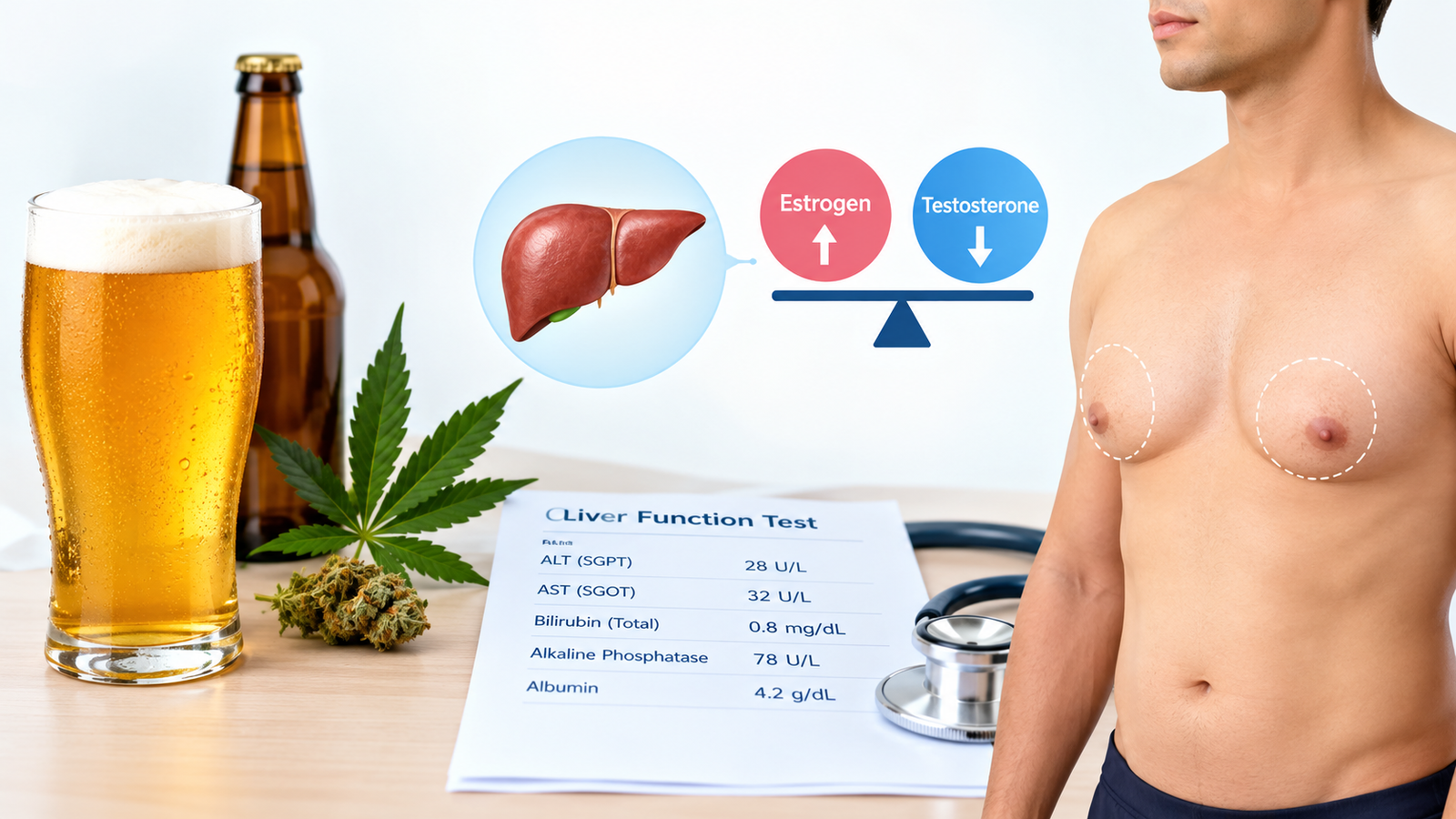
Can beer, alcohol, or cannabis cause man boobs? The answer depends on the substance, the amount used, and whether the chest enlargement involves glandular breast tissue or excess fat. Heavy, long-term alcohol use can contribute to true gynecomastia, particularly when alcohol-related liver disease affects hormone regulation. Beer can also add calories that contribute to chest fat. However, scientific evidence has not established that cannabis directly causes gynecomastia.
Understanding these differences matters because true gynecomastia and excess chest fat do not always respond to the same treatment. Dr. Ashutosh Shah, a plastic and reconstructive surgeon with more than 22 years of surgical experience, evaluates male chest enlargement at Elegance Clinic. Identifying the cause is the first step towards appropriate management.
What Is the Difference Between Gynecomastia and Man Boobs?
The term “man boobs” commonly describes an enlarged male chest, but it does not identify the underlying cause.
True gynecomastia occurs when glandular breast tissue grows in men. It may cause a firm or rubbery area beneath the nipple, sometimes with tenderness.
Chest fat, also called pseudogynecomastia, develops when excess fat accumulates around the chest. It is often associated with overall weight gain, although body fat distribution varies between individuals.
Some men have both glandular tissue and excess fat. Therefore, chest appearance alone cannot reliably establish the diagnosis.
Read our guide to why men get chest fat and how it can be treated.
Does Alcohol Cause Gynecomastia?
Heavy, long-term alcohol consumption can contribute to true gynecomastia, particularly when it causes significant liver damage. However, drinking alcohol does not automatically cause breast gland enlargement in every man.
The liver plays an important role in processing hormones and producing proteins involved in hormone transport. Advanced liver disease can change sex hormone levels and their availability, potentially contributing to breast tissue growth.
Alcohol may also affect reproductive hormone function. However, the relationship between alcohol consumption and gynecomastia is complex, and not every man who drinks heavily develops the condition.
How Does Alcohol Affect Oestrogen and Testosterone?
Testosterone is an important male sex hormone, while oestrogen is also naturally present in men. Gynecomastia can develop when the balance of these hormones' effects favours breast tissue growth.
In men with advanced alcohol-related liver disease, several changes may contribute:
-
Altered hormone metabolism: A damaged liver may process hormones differently.
-
Changes in hormone availability: Liver disease can affect sex hormone-binding globulin, a protein that carries sex hormones in the blood.
-
Reduced testosterone availability: Some men with advanced liver disease have reduced biologically available testosterone.
-
Changes in oestrogen levels: Oestrogen levels or their effects may become relatively greater in some patients.
Research on alcohol-related cirrhosis supports an association between liver disease, altered sex hormones, and gynecomastia. Nevertheless, the precise mechanism can vary between individuals.
Does Beer Contain Oestrogen?
Beer is not considered a meaningful source of human oestrogen that directly causes gynecomastia. Some beer ingredients contain plant compounds, but their presence does not establish that drinking beer causes male breast gland enlargement.
A more practical concern is the calorie content of beer. Regularly consuming excess calories can contribute to weight gain, which may increase fat around the chest.
Consequently, a man who develops a larger chest while drinking beer regularly may have excess chest fat, true gynecomastia, or a combination of both. A clinical examination can help distinguish these possibilities.
Can Cannabis Cause Gynecomastia?
The relationship between cannabis and gynecomastia remains uncertain. Although concerns about cannabis affecting male hormones have appeared in medical discussions, a direct causal relationship with breast gland enlargement has not been established.
A 2023 commentary published in Radiology specifically addressed this question and concluded that the causal relationship between marijuana smoking and gynecomastia remains unproven.
Some earlier reports and proposed mechanisms have raised questions about whether cannabis could influence reproductive hormones. However, limited or inconsistent evidence cannot establish that cannabis causes gynecomastia in young men or adults.
If breast enlargement develops during cannabis use, other explanations should also be considered, including weight changes, puberty, medications, hormonal disorders, and underlying medical conditions.
Avoid assuming that cannabis is the cause without a proper assessment. If you are concerned about your health or substance use, discuss it openly with a healthcare professional.
Alcohol, Cannabis and Chest Fat: What Does the Evidence Show?
The distinction between an established association and an unproven causal claim is important.
| Substance or factor | Proposed mechanism | Strength of evidence | What may improve after stopping? |
|---|---|---|---|
| Heavy, long-term alcohol use | Liver disease and changes in sex hormone regulation | Established association between advanced liver disease and gynecomastia | Alcohol-related health risks and some reversible liver changes may improve, depending on the extent of damage |
| Beer and other alcoholic drinks | Excess calories can contribute to weight gain and chest fat | Well-established relationship between excess energy intake and weight gain | Chest fat may decrease with sustained weight management |
| Cannabis | Possible effects on reproductive hormones have been proposed | Direct causation of gynecomastia remains unproven | Stopping removes ongoing exposure, but reversal of breast enlargement is not guaranteed |
| Anabolic steroids | Hormonal disruption, including conversion of some steroids to oestrogen | Established cause of gynecomastia with certain exposures | Early changes may improve, but persistent glandular tissue may remain |
This evidence comparison draws on clinical reviews of gynecomastia, literature on alcohol-related liver disease, and the published assessment of cannabis evidence.
Is a Beer Belly Chest Fat or Glandular Gynecomastia?
A rounded chest that develops alongside weight gain may be caused mainly by fat. However, a man can have a beer belly and true gynecomastia at the same time.
Features that may suggest glandular gynecomastia include:
-
A firm or rubbery disc beneath the nipple.
-
Tenderness around the nipple or areola.
-
Breast enlargement that persists despite weight changes.
-
Unequal enlargement on the two sides.
Excess chest fat is often softer and more diffuse, but these differences are not reliable enough to diagnose the condition at home.
If you have persistent enlargement, a doctor can review your medical history, examine the chest, and decide whether blood tests or imaging are needed.
Does Stopping Alcohol or Cannabis Reverse Gynecomastia?
Stopping alcohol or cannabis may be a useful step when exposure is contributing to a health problem, but it does not guarantee that enlarged breasts will disappear.
The outcome depends on the underlying cause, how long the enlargement has been present, and whether it involves fat, glandular tissue, or both.
If the enlargement is mainly chest fat: Reducing excess calorie intake, improving physical activity, and achieving a sustainable weight may reduce chest fat over time.
If alcohol-related liver disease is contributing: Stopping alcohol is important for protecting liver health. Some liver-related changes may improve, depending on the severity of the disease. Established glandular enlargement may nevertheless persist.
If true gynecomastia has been present for a long time: Glandular tissue may not disappear simply by stopping a substance or losing weight. Medical assessment can help identify appropriate options.
People who drink heavily or are dependent on alcohol should seek medical guidance before attempting abrupt withdrawal, as withdrawal can be dangerous and may require supervised treatment.
For more information, read our article on hormonal imbalance and gynecomastia.
Which Tests Help Identify the Cause?
Not every man with chest enlargement needs a large panel of blood tests. The appropriate investigations depend on the history, physical examination, symptoms, and suspected cause.
A doctor may consider:
-
Testosterone: To investigate suspected low testosterone.
-
Oestradiol: To assess oestrogen levels when indicated.
-
LH and FSH: To investigate possible testicular or pituitary hormone problems.
-
Liver function tests: To assess possible liver injury, especially when there is a history of heavy alcohol use.
-
Kidney and thyroid function tests: When the history or examination suggests these conditions.
-
Breast imaging: When a lump is unusual, or the examination is inconclusive.
Additional tests may be appropriate if a testicular abnormality or another underlying condition is suspected. A normal liver function test does not, by itself, exclude every form of liver disease.
Read our detailed guide to hormone tests needed for gynecomastia.
Men with a hard or fixed breast lump, nipple discharge, skin changes, or rapidly increasing one-sided enlargement should seek prompt medical assessment rather than attributing these symptoms to alcohol or cannabis.
When Should You Consult a Gynecomastia Specialist?
If chest enlargement persists despite lifestyle changes, causes discomfort or affects your confidence, consider a medical assessment. This is particularly important if you drink heavily, have known liver disease, or notice other symptoms that may indicate a hormonal problem.
How to Find a Gynecomastia Clinic Near Athwa Surat
When searching for a gynecomastia clinic near Athwa Surat, look for a qualified surgeon who can distinguish glandular breast enlargement from excess fat and assess possible underlying medical causes.
Dr. Ashutosh Shah, M.B., M.S., M.Ch., D.N.B., is a plastic and reconstructive surgeon with more than 22 years of surgical experience. At Elegance Clinic, he evaluates patients with male chest enlargement and discusses appropriate treatment options according to their clinical findings.
Treatment may involve observation, management of an underlying condition, lifestyle changes, or surgery. Surgery may be considered when persistent glandular tissue causes concerns about chest appearance or discomfort. The recommended approach depends on the individual assessment.
Conclusion
Heavy, long-term alcohol use can contribute to true gynecomastia, particularly when it leads to liver disease and changes in hormone regulation. Beer can also contribute to chest fat through excess calorie intake. By contrast, the evidence that cannabis directly causes gynecomastia remains weak, and causation has not been established.
Stopping a contributing substance may improve health, but it does not guarantee that established glandular tissue will disappear. A proper assessment helps distinguish chest fat from true gynecomastia and identifies whether hormone tests, liver investigations, lifestyle changes, or surgical treatment may be appropriate.