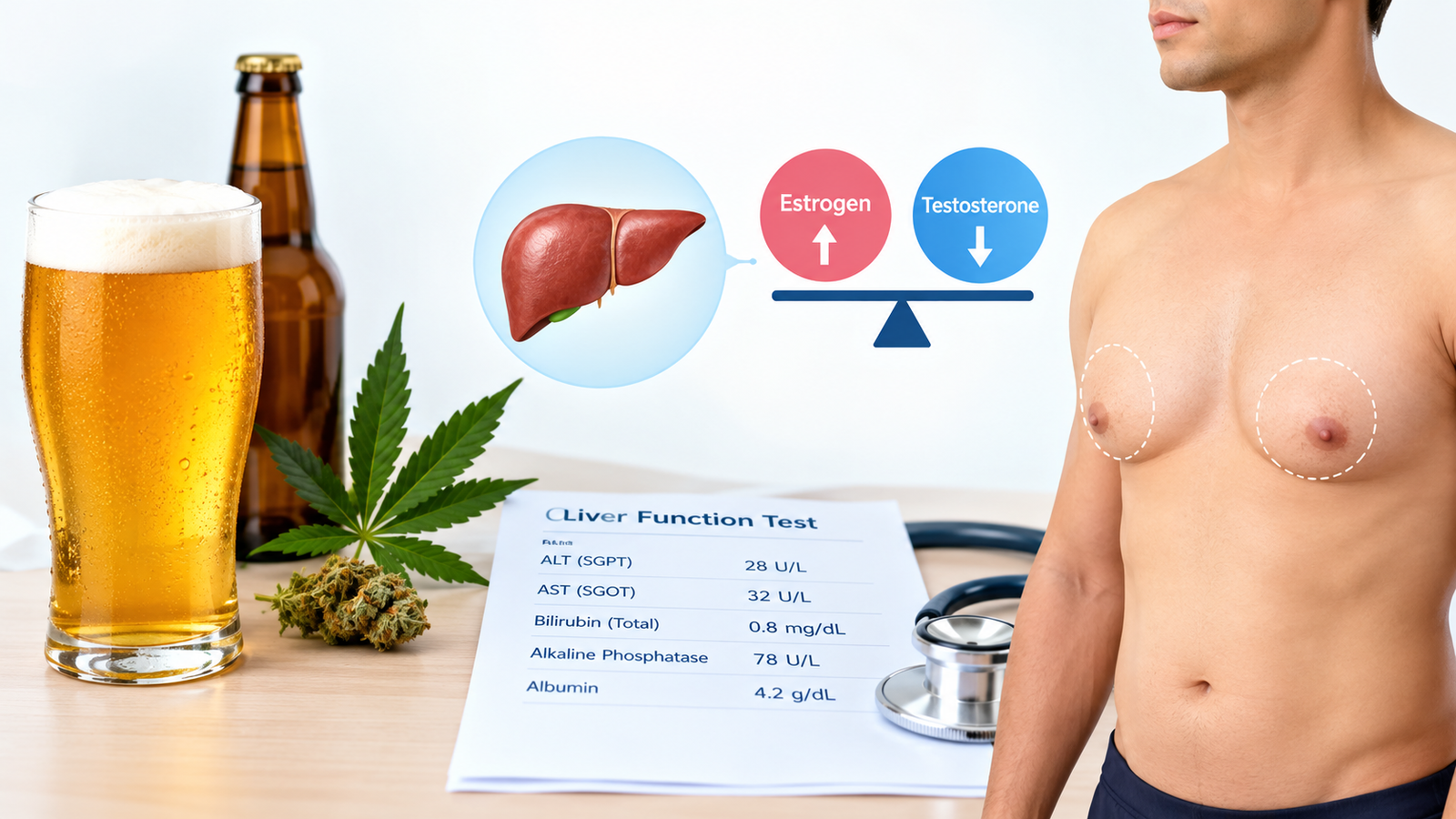


Chest Fat or Gland? How to Tell Gynecomastia Apart
Gynecomastia is enlargement of male breast gland tissue, while pseudogynecomastia is enlargement caused by excess fat. The gland often feels firmer beneath the nipple; fat usually feels softer and more spread out. Both can occur together. These clues cannot confirm the diagnosis at home; a doctor’s examination helps identify the tissue and cause.
A fuller chest does not always mean you need to lose more weight. Some men notice improvement with diet and exercise, while others become leaner but still have prominent nipples or a rounded chest.
Understanding gynecomastia vs chest fat helps explain this difference. It also helps you choose a sensible next step instead of repeatedly changing workouts or trying supplements that may not address the problem.
What is gynecomastia?
Gynecomastia means an increase in breast gland tissue in boys or men. The enlargement can affect one or both sides and may develop unevenly.
Hormonal changes, certain medicines, anabolic steroids, and some medical conditions can contribute. It can also occur during puberty or with ageing.
The gland is commonly felt beneath the nipple and areola. It may feel rubbery or firm, sometimes with tenderness. However, not every firm lump is gynecomastia.
What is pseudogynecomastia?
Pseudogynecomastia describes chest enlargement caused by fat without increased breast gland tissue.
The fullness is often softer and more diffuse. It may occur alongside fat around the abdomen or elsewhere, although body shape alone cannot establish the diagnosis.
A person can also have a mixture of fat and gland. In that situation, weight loss may reduce part of the chest volume while the gland remains.
Gynecomastia vs chest fat: a practical comparison
| Feature | Glandular gynecomastia | Fat-related enlargement |
|---|---|---|
| Main tissue involved | Breast gland | Fat |
| Typical location | Often concentrated beneath the nipple | Usually spread across the chest |
| Typical feel | Firm or rubbery | Softer and more diffuse |
| Tenderness | May occur, particularly with recent enlargement | Less characteristic |
| Response to weight loss | Gland may remain | Fat volume may decrease |
| Can affect a lean person? | Yes | Depends on individual fat distribution |
| Possible treatment | Observation, cause-directed treatment or surgery when appropriate | Weight management; selected contouring procedures |
| How to confirm | Medical assessment | Medical assessment |
These are general patterns rather than a self-diagnosis checklist. Fat can cover the gland, and loose skin can also affect how the chest looks.
Can you tell whether it is gland or fat at home?
You can notice changes, but you cannot reliably confirm the tissue type yourself.
Useful observations include when the enlargement started, whether it is changing, whether both sides look similar, and whether there is tenderness or a distinct lump.
Avoid repeatedly squeezing the nipple or pressing hard into the chest. This can make the area sore without clarifying the cause.
The following findings do not establish a diagnosis:
- Puffy nipples alone.
- A photograph taken in particular lighting.
- A chest that has not changed after a few weeks of exercise.
- Being overweight or having a lean physique.
- Comparing your chest with another person’s.
If you are unsure about gland or fat in the male chest, an examination is more useful than an online “pinch test.”
Can weight loss or exercise remove the enlargement?
Weight loss can reduce the fatty component of an enlarged chest. Exercise can improve fitness, body composition, and pectoral muscle strength.
However, push-ups, bench presses and chest exercises do not reliably remove established breast gland tissue. A person with mixed enlargement may lose fat while a firm area beneath the nipple remains.
There is no requirement to complete six or twelve months of gym training before seeking assessment. You can consult a doctor earlier, particularly if there is a new lump or another concerning change.
Read Can exercise and weight loss remove glandular gynecomastia? for more detail.
Why might the chest remain enlarged after weight loss?
Persistent fullness can have several explanations:
- Remaining gland: Weight loss has reduced fat, but the gland remains.
- Remaining fat: Your chest still contains some fatty tissue.
- Loose skin: Weight changes have affected the skin envelope.
- Mixed enlargement: More than one component contributes.
- Another condition: A lump or unusual change needs separate investigation.
A chest that remains full after weight loss should not automatically be labelled gynecomastia. The examination helps identify which explanation fits.
Continuing to lose weight beyond a healthy, sustainable goal may not provide the chest shape you want.
How does a doctor assess chest enlargement?
The doctor asks about the onset and duration of swelling, weight changes, pain, medical conditions, and medicines. Bodybuilding supplements, steroid use and hormone treatments should also be disclosed.
The examination assesses the breast tissue, skin, nipple position, and any distinct lumps. Depending on the findings, blood tests or imaging may be recommended. Not everyone needs the same investigations.
At Elegance Clinic, Dr. Ashutosh Shah evaluates male chest enlargement and discusses whether fat, gland, or both contribute. His published professional profile lists more than 22 years of surgical experience. The assessment can help establish suitable next steps.
Bring previous reports and a complete medication list. Do not stop prescribed medicines without advice from the prescribing doctor.
When should you seek prompt medical advice?
Arrange an assessment for new, unexplained or persistent chest enlargement. Seek prompt advice if you notice:
- A hard, irregular or rapidly growing lump.
- Nipple discharge or bleeding.
- Skin dimpling or an unusual skin change.
- A nipple that has started pulling inward.
- A lump in the armpit.
- Persistent or worsening pain.
These symptoms do not necessarily mean cancer, but they should not be dismissed as chest fat. NHS guidance recommends assessment for breast or nipple lumps, discharge and concerning changes.
Does glandular gynecomastia always need surgery?
No. The appropriate approach depends on the cause, duration, symptoms and your preferences.
Some cases improve with observation or treatment of an underlying cause. A doctor may consider medicines in selected circumstances, but self-prescribed hormone treatments are not a substitute for assessment.
Surgery may be considered for persistent enlargement that causes discomfort or concern about appearance.
If surgery is appropriate, liposuction addresses excess fat. Firm gland may need excision, and substantial excess skin may need a separate procedure. Some patients require a combination.
The aim is to match treatment to your tissue, rather than select an operation based only on chest size.
Key takeaways
- Gynecomastia involves the gland; pseudogynecomastia involves fat.
- Many enlarged chests contain both.
- Weight loss may reduce fat but does not reliably remove established gland.
- Home checks provide clues, not confirmation.
- New lumps or nipple changes need medical assessment.