
Can Hormonal Imbalance Cause Gynecomastia in Men?
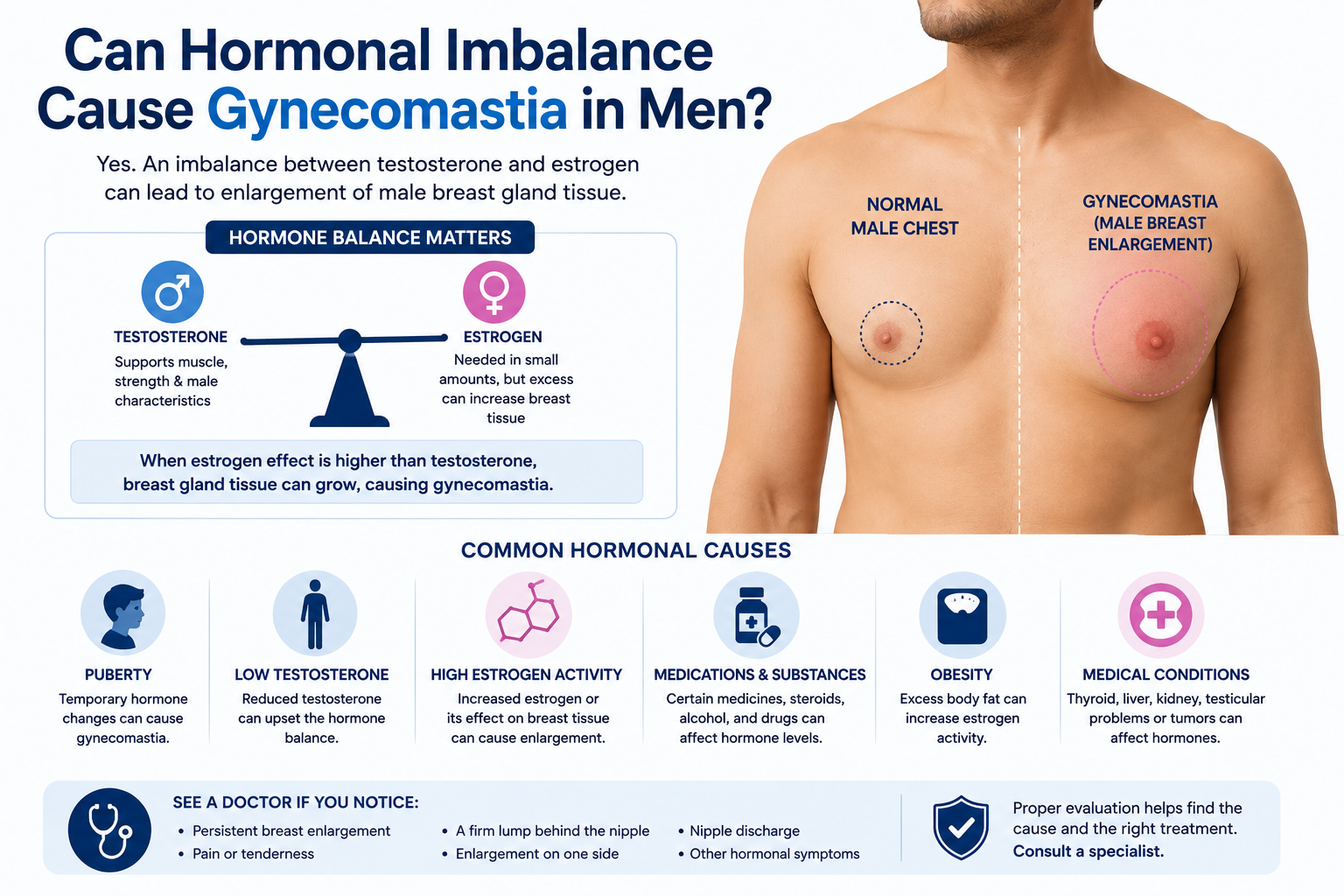
Yes, hormonal imbalance can cause gynecomastia in men. Gynecomastia is the enlargement of male breast glandular tissue, and it commonly develops when the balance between testosterone and estrogen changes.
Men naturally produce both testosterone and estrogen. Testosterone supports typically male characteristics and muscle development, while estrogen also has important functions in men. When estrogen has a stronger effect on breast tissue compared with testosterone, breast glandular tissue can grow, resulting in gynecomastia.
How Does Hormonal Imbalance Cause Gynecomastia?
The body normally maintains a balance between testosterone and estrogen. Gynecomastia can develop when this balance changes.
This may happen because of:
- Lower testosterone production
- Increased estrogen activity
- Hormonal changes during puberty
- Age-related hormone changes
- Certain medications
- Obesity and increased body fat
- Testicular or adrenal conditions
- Thyroid, liver, or kidney problems
- Certain tumors or other hormonal disorders
Therefore, gynecomastia does not always mean that a man has "high estrogen." A doctor needs to determine the underlying reason for the hormonal change.
Can Low Testosterone Cause Gynecomastia?
Yes. Low testosterone can contribute to gynecomastia because it can change the balance between testosterone and estrogen.
Men with low testosterone may also experience symptoms such as reduced sex drive, erectile problems, reduced muscle mass, low energy, infertility, or breast enlargement and tenderness.
However, having enlarged breasts does not automatically mean that testosterone is low. Hormone levels need proper evaluation before diagnosing testosterone deficiency.
Can High Estrogen Cause Male Breast Enlargement?
Yes. Increased estrogen activity can stimulate breast tissue in men and contribute to gynecomastia. However, estrogen is not normally absent in men. The problem is often a change in the relative hormonal balance or estrogen effect on breast tissue, rather than estrogen alone.
This is why simply trying to reduce estrogen without identifying the cause may not address the underlying problem.
What Causes Hormonal Imbalance in Men?
Several factors can affect male hormone levels. Common causes associated with gynecomastia include:
Puberty
Hormone levels change rapidly during puberty. Temporary gynecomastia is common during this period and often improves as hormone levels stabilize.
Ageing
Testosterone levels may gradually decrease with age, while changes in body composition and hormone metabolism can alter the testosterone-to-estrogen balance.
Obesity
Increased body fat can contribute to higher estrogen activity and may be associated with gynecomastia. It can also create additional chest fat, which is different from true glandular gynecomastia.
Medications and Substances
Certain medicines and substances can contribute to gynecomastia. These include some medications that affect testosterone, as well as anabolic steroids and other substances.
Underlying Health Conditions
Conditions affecting the testes, thyroid, liver, kidneys, or other hormone-producing organs can sometimes contribute to gynecomastia.
How Do Doctors Check for Hormonal Gynecomastia?
A doctor usually starts with your medical history and a physical examination. The evaluation may include questions about medications, supplements, puberty or age-related changes, and other symptoms.
Depending on your situation, your doctor may recommend blood tests to evaluate hormone levels and assess thyroid, liver, or kidney function. Further testing may be appropriate if the examination suggests an underlying condition.
If low testosterone is suspected, diagnosis should not rely on a single test. The Endocrine Society recommends confirming consistently low testosterone levels along with relevant symptoms and signs before diagnosing hypogonadism.
Can Hormone Treatment Cure Gynecomastia?
Treatment depends on why the gynecomastia developed and how long it has been present.
If a medication or underlying health condition is responsible, addressing that cause may help. In selected cases of recent-onset gynecomastia, a doctor may consider medication that affects estrogen activity. However, these medicines are not appropriate for everyone and should not be taken without medical supervision.
When gynecomastia has been present for a long time, the breast tissue may become more established and less responsive to medical treatment. In men with persistent or significant glandular enlargement, surgery may be considered to remove excess breast tissue.
Does Every Man With Gynecomastia Need Hormone Therapy?
No. Hormone therapy is not automatically necessary for every case of gynecomastia.
Some cases, particularly those related to puberty, may resolve naturally. Other cases may result from medications, body fat, or an underlying condition. Treatment should therefore focus on identifying the cause rather than treating hormone levels without proper testing.
When Should You See a Doctor?
Consider a medical evaluation if you notice:
- Persistent breast enlargement
- Breast tenderness or pain
- A firm lump behind the nipple
- Enlargement on only one side
- Nipple discharge
- Rapid changes in breast size
- Other symptoms suggesting a hormonal problem
Although gynecomastia is usually benign, unusual breast changes should be evaluated rather than self-diagnosed.
Hormonal Gynecomastia Treatment at Elegance Clinic
At Elegance Clinic, Dr. Ashutosh Shah can evaluate male breast enlargement and help determine whether hormonal factors, excess fat, glandular tissue, or another cause may be involved.
The appropriate treatment depends on the cause, duration, amount of glandular tissue, and individual goals. Hormonal evaluation may be useful when symptoms suggest an underlying endocrine problem, while persistent glandular gynecomastia may require a different treatment approach.