
When Does Gynecomastia Need Surgery Instead of Medicine?
Gynecomastia does not always require surgery. In many cases, especially when the condition is recent or linked to puberty, medications, an underlying medical condition, or another reversible cause, doctors may first recommend observation or medical management. However, surgery can become an appropriate option when breast enlargement persists, causes significant discomfort or distress, or does not improve with appropriate medical treatment.
What Is Gynecomastia?
Gynecomastia is an enlargement of male breast glandular tissue, usually related to an imbalance between estrogen and testosterone. It can affect one or both sides of the chest and may cause swelling, tenderness, nipple sensitivity, or a noticeable increase in breast size.
It is important to distinguish true gynecomastia from pseudogynecomastia, where excess chest fat creates a similar appearance without significant glandular enlargement. The treatment can be different for these two conditions.
When Can Medicine Be Considered?
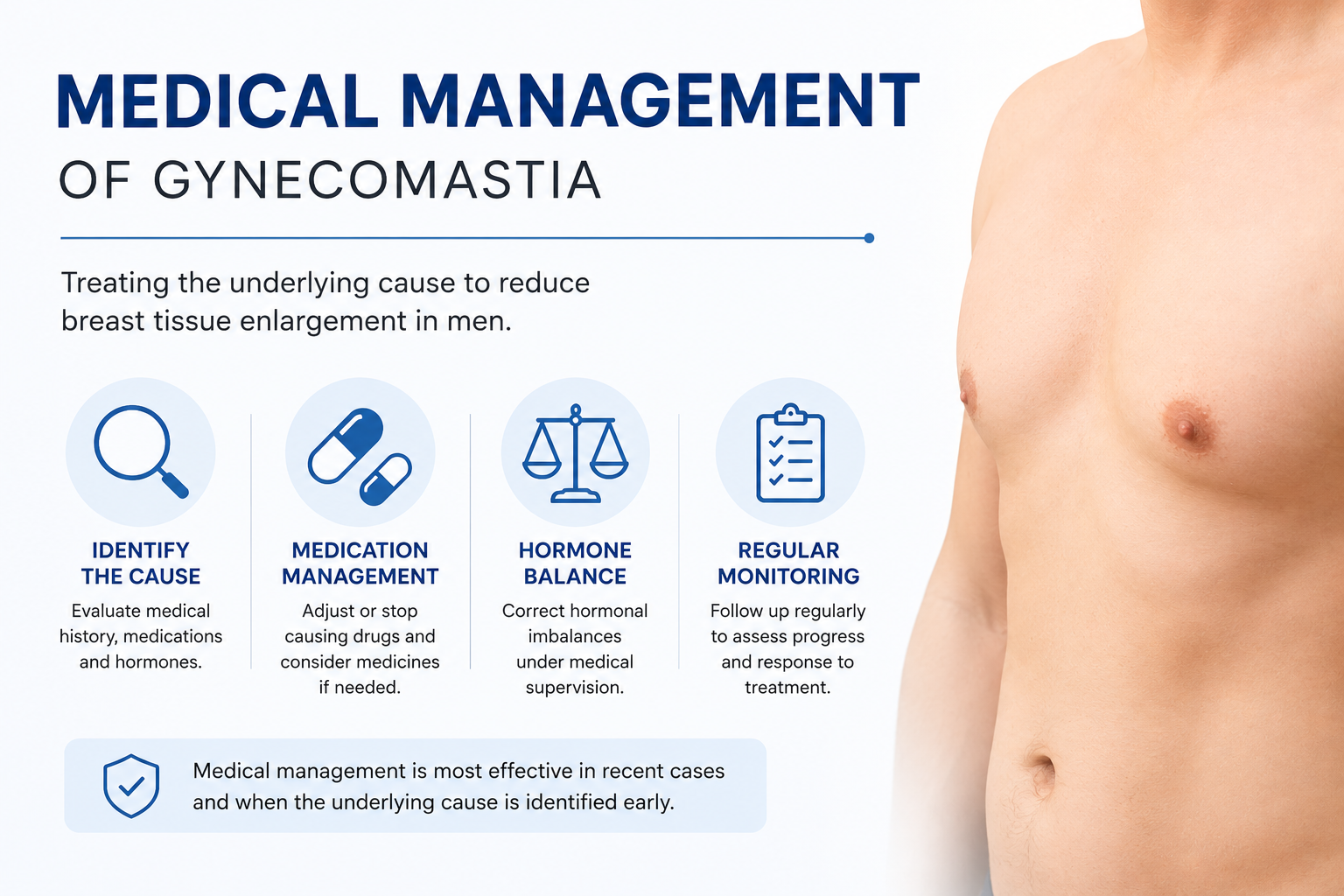
Medical management may be considered when gynecomastia is relatively recent or when doctors identify an underlying cause that can be addressed.
For example, your doctor may review:
- Current medications
- Hormonal levels
- Thyroid function
- Liver and kidney health
- Other medical conditions
- The duration of breast enlargement
- Whether the tissue is painful or tender
If a medication is contributing to gynecomastia, your doctor may consider changing or stopping it when medically appropriate. However, you should never stop a prescribed medication without discussing it with your doctor first.
When Does Gynecomastia Need Surgery?
Surgery may be considered when gynecomastia has remained for a long time and does not regress with observation or appropriate medical management. Current clinical guidance identifies long-lasting gynecomastia that fails to improve as an important indication for surgical treatment.
Surgery may also be considered when:
1. Breast Enlargement Persists
If enlarged glandular tissue remains despite addressing the underlying cause or trying appropriate medical treatment, surgery may provide a more definitive way to remove the excess tissue.
2. The Condition Causes Significant Distress
Gynecomastia can affect confidence, clothing choices, exercise, swimming, and social situations. If persistent enlargement causes substantial psychological or social distress, treatment may be considered after an appropriate evaluation.
3. There Is Significant Glandular Tissue
Medication may have limited benefit once established glandular tissue becomes long-standing and fibrotic. In these situations, surgical removal may be more appropriate.
4. Excess Fat Is Also Present
Some men have both glandular tissue and excess fat. In such cases, surgeons may use liposuction, glandular tissue removal, or a combination of techniques, depending on the chest composition.
Does Weight Loss Treat Gynecomastia?
Weight loss can help when excess body fat contributes to the enlarged appearance. However, losing weight does not necessarily remove true glandular gynecomastia.
If you reach a stable weight but firm tissue remains beneath the nipple, a medical evaluation can help determine whether you have persistent gynecomastia or mainly excess fat.
Why Is Timing Important?
The duration of gynecomastia can influence treatment. Recent cases may sometimes improve after the underlying cause is addressed. In contrast, long-standing cases can develop more established or fibrotic tissue, which may respond less well to medical treatment.
Therefore, treatment should not be based only on breast size. The cause, duration, tissue type, symptoms, and patient's goals all matter.
What Happens Before Deciding on Surgery?
A proper evaluation should come before choosing surgery. Your doctor may review your medical and medication history and perform a physical examination. Depending on the presentation, hormonal blood tests or imaging may also be appropriate.
The evaluation also helps distinguish gynecomastia from pseudogynecomastia and identify uncommon conditions that may require different treatment.
What Does Gynecomastia Surgery Involve?
The surgical approach depends on the type and amount of tissue present.
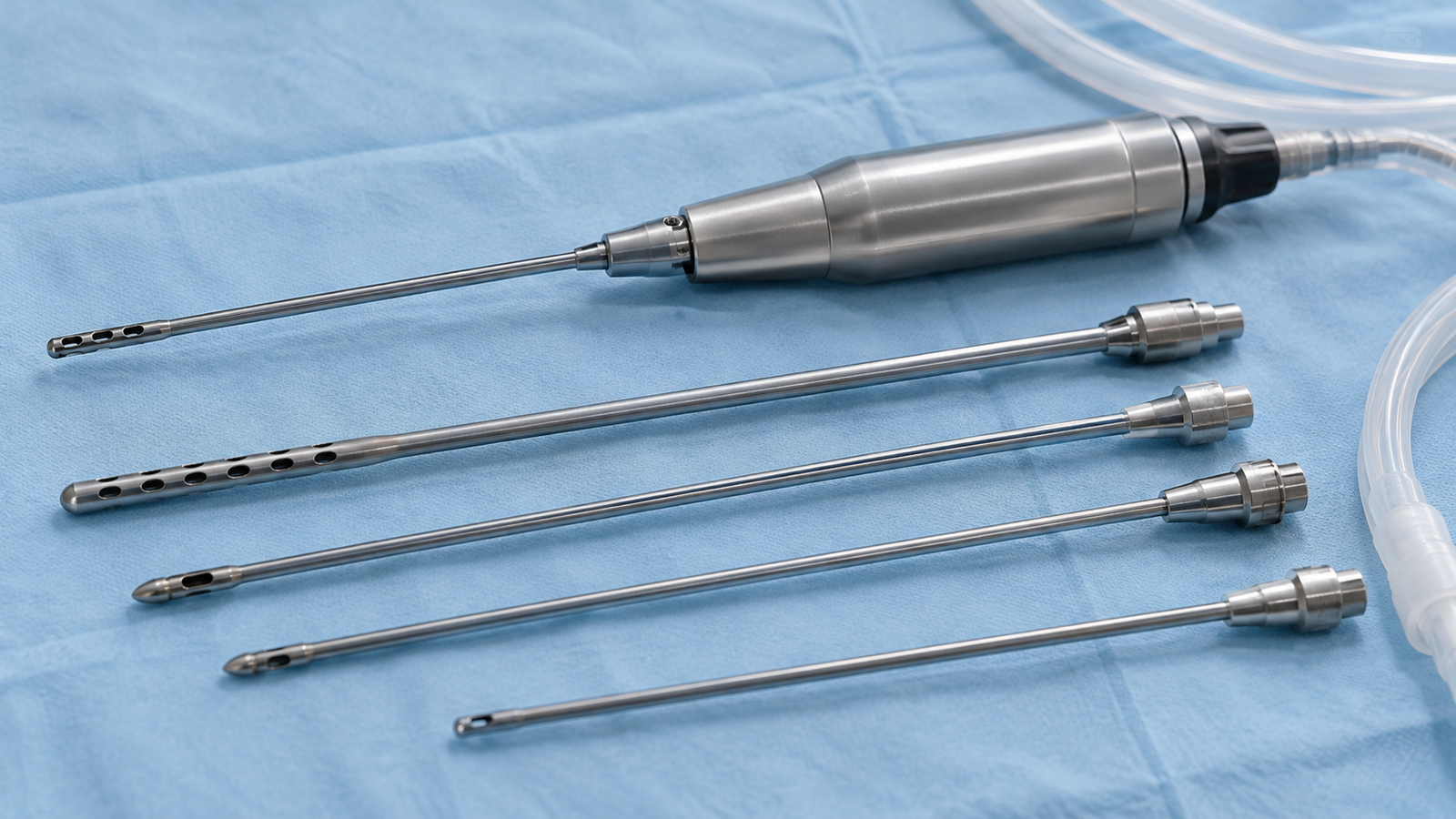
Liposuction can remove excess fatty tissue, while glandular tissue excision removes firm breast tissue. Some patients may benefit from combining both approaches.
The surgeon chooses the technique according to the individual's chest anatomy rather than using the same procedure for every patient.
Medical Management vs Surgery
| Medical Management | Surgery |
|---|---|
| May address an underlying cause | Removes persistent excess tissue |
| May be considered for recent cases | Often considered for long-standing cases |
| Depends on the cause of gynecomastia | Depends on tissue type and chest anatomy |
| Does not require surgical incisions | Requires a surgical procedure |
| May not resolve established fibrotic tissue | Can directly address persistent glandular tissue |
Neither option is automatically better for everyone. The appropriate treatment depends on the individual diagnosis.
Expert Gynecomastia Care at Elegance Clinic
At Elegance Clinic, Dr. Ashutosh Shah, a board-certified plastic surgeon with more than 22 years of experience, evaluates patients with male breast enlargement and develops treatment plans according to their individual condition.
During an assessment, factors such as the cause and duration of gynecomastia, the amount of glandular tissue and fat, chest shape, and the patient's treatment goals can be considered. This helps determine whether medical management, observation, weight management, or surgery may be appropriate.
Final Thoughts
Gynecomastia may need surgery instead of medicine when the enlargement is persistent, long-standing, causes significant distress, or does not improve after appropriate medical management. However, surgery should not be the first assumption for every patient.
A proper evaluation can identify the underlying cause and determine whether observation, medical treatment, or surgical correction is the most appropriate approach.