
Can Long-Standing Gynecomastia Be Treated With Medicine?
Having enlarged male breast tissue for several years can be frustrating, especially when exercise and weight loss have not changed the appearance of the chest. A common question is whether medication can still reduce gynecomastia after it has been present for a long time.
The answer depends on how long the condition has existed, what caused it, and whether the enlargement is mainly glandular tissue or excess fat. Medication may have a role in some situations, but established gynecomastia may require a different approach.
Does the Duration of Gynecomastia Matter?
Yes. The stage of gynecomastia can influence treatment.
When breast enlargement develops recently, the tissue may still be changing and can sometimes respond to treatment directed at the underlying cause. However, after the condition has remained for a long period, the tissue can become firmer and more established.
This does not mean that every long-standing case requires surgery. Instead, it means that treatment should begin with a proper assessment rather than assuming medication will work.
Why Might Medicine Not Work After Several Years?
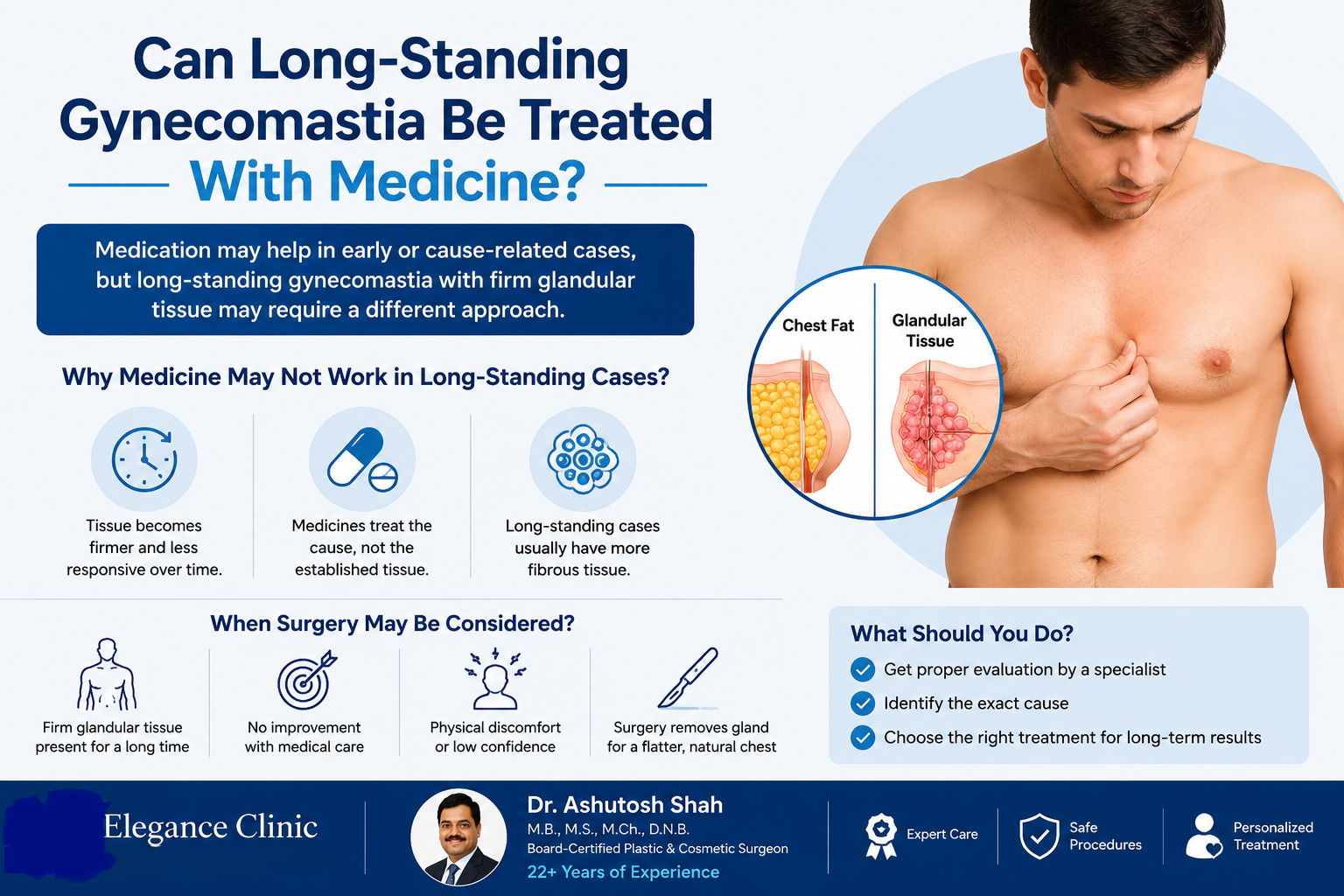
Gynecomastia involves the growth of glandular breast tissue. Once this tissue has been present for a long time, it may become less responsive to medicines that are intended to influence the hormonal factors involved in its development.
Medication also cannot simply dissolve established glandular tissue in the same way that weight loss can reduce body fat.
Therefore, someone who has had a firm lump beneath the nipple for several years may need a different treatment strategy from someone who has developed breast enlargement recently.
Could the Problem Actually Be Chest Fat?
This is an important distinction.
Some men have pseudogynecomastia, where the chest appears enlarged primarily because of excess fatty tissue. Others have true gynecomastia involving glandular tissue. Some have both.
If excess fat is the main issue, improving overall body composition may reduce the chest size.
If firm glandular tissue is responsible, losing weight may not completely flatten the chest.
A clinical examination can help determine which type of tissue is contributing to the enlargement.
When Can Medical Treatment Be Considered?
Medical treatment may be considered when a doctor identifies a potential underlying cause that can be addressed.
For example, the evaluation may look at:
- Hormonal changes
- Certain medications
- Weight-related factors
- Puberty-related changes
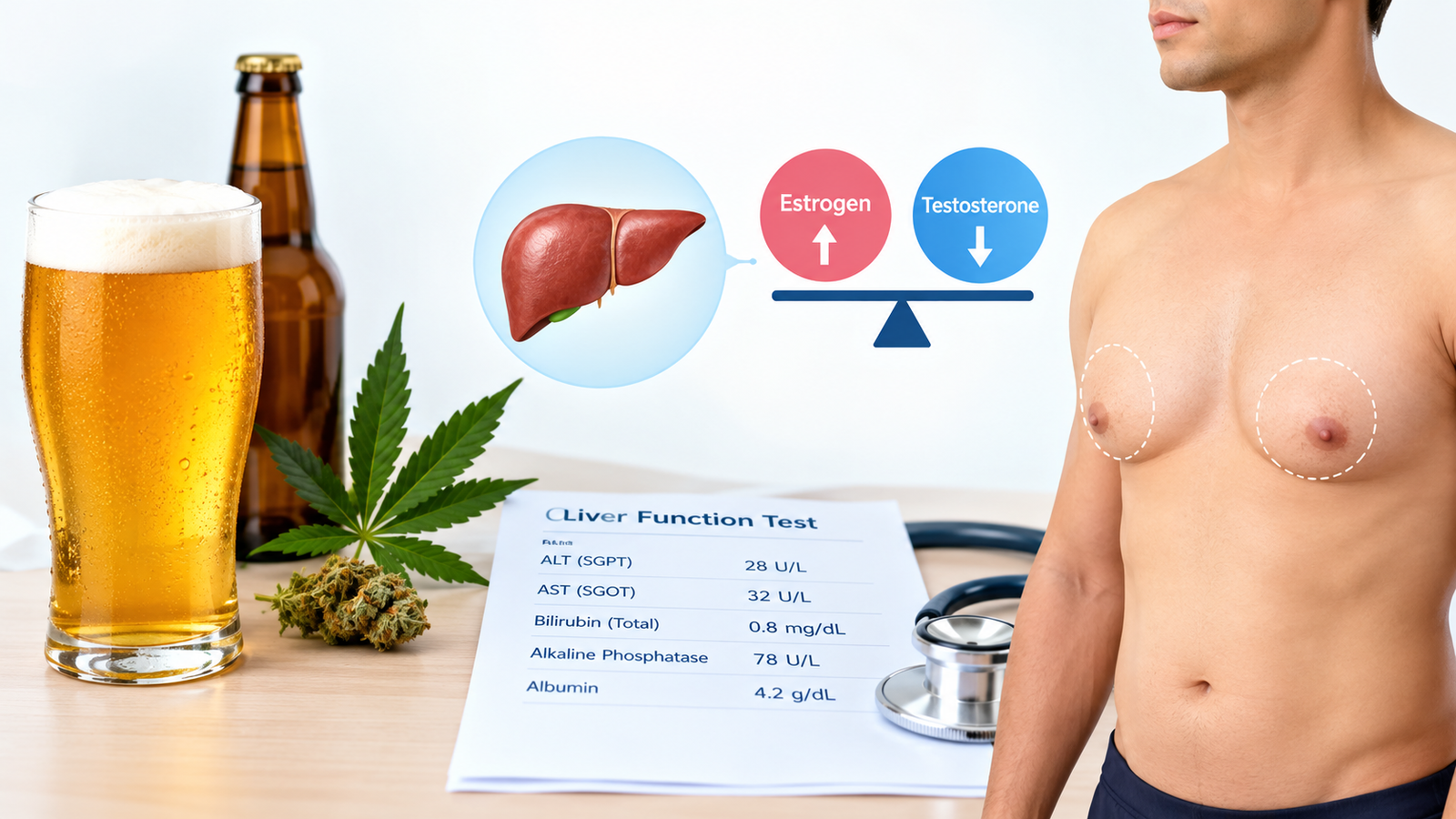
- Liver or kidney problems
- Thyroid-related conditions
- Other health issues that can influence hormone balance
The important point is that medication should be selected according to the cause, rather than taking a drug simply because it is marketed as a treatment for gynecomastia.
Should You Take Hormone Medicines on Your Own?
No. Gynecomastia is not simply a problem of having “too much estrogen.” Several hormones and other factors interact to influence breast tissue.
Taking hormone-related medicines without appropriate testing can potentially cause unwanted effects and may fail to address the actual cause.
A doctor may recommend examination and, when appropriate, blood tests before deciding whether medical treatment makes sense.
What If the Gynecomastia Has Been Present for Years?
If the enlargement has remained stable for years and consists mainly of firm glandular tissue, medication may have limited ability to reverse it.
In such cases, the discussion may shift toward whether the patient would benefit from a procedure to remove the unwanted tissue.
This does not mean every patient with long-standing gynecomastia automatically needs surgery. The decision should consider the amount of tissue, symptoms, body composition, skin quality, and the patient's expectations.
Can Surgery Help When Medicine Does Not?
Yes. Surgery can be considered for persistent gynecomastia when appropriate medical management has not produced satisfactory improvement.
Depending on the individual's chest composition, treatment may involve:
Gland removal:
Used when firm glandular tissue is the primary cause of enlargement.
Liposuction:
May be useful when excess fatty tissue contributes to the chest size.
Combined treatment:
Some patients have both glandular tissue and excess fat, so both techniques may be considered.
The exact approach should be determined after an examination.
Does Long-Standing Gynecomastia Mean It Cannot Be Treated?
No. Long-standing does not mean untreatable.
It mainly means that the treatment approach may be different from that used for newly developed gynecomastia.
A patient who has had enlarged breast tissue for several years can still be evaluated for appropriate treatment. The first step is determining exactly what is causing the chest enlargement.
When Should You See a Doctor?
Consider a professional evaluation if:
- Breast enlargement has persisted for a long time
- There is a firm lump beneath the nipple
- One side is noticeably larger than the other
- The area is painful or tender
- Weight loss has not improved the chest
- The enlargement is affecting your confidence
- You are unsure whether the problem is fat or glandular tissue
A proper assessment can prevent you from spending time or money on treatments that are unlikely to address the actual cause.
Treatment at Elegance Clinic
Dr. Ashutosh Shah, a Board-Certified Plastic & Cosmetic Surgeon with 22+ years of experience, evaluates gynecomastia based on the individual's chest appearance, tissue composition, medical history, and treatment goals.
Rather than assuming that medication or surgery is appropriate for everyone, the treatment plan can be tailored according to the underlying cause and how long the condition has been present.
Final Answer
Long-standing gynecomastia may be treated medically in selected situations, but medication is generally less likely to reverse established glandular tissue that has been present for years.
If the enlargement is caused by a reversible medical or medication-related factor, addressing that cause may help. When firm glandular tissue persists despite appropriate management, surgical correction may be considered.
The most useful first step is therefore a proper evaluation to determine whether your chest enlargement is caused by glandular tissue, excess fat, or both.