
Can Exercise and Weight Loss Remove Glandular Gynecomastia?
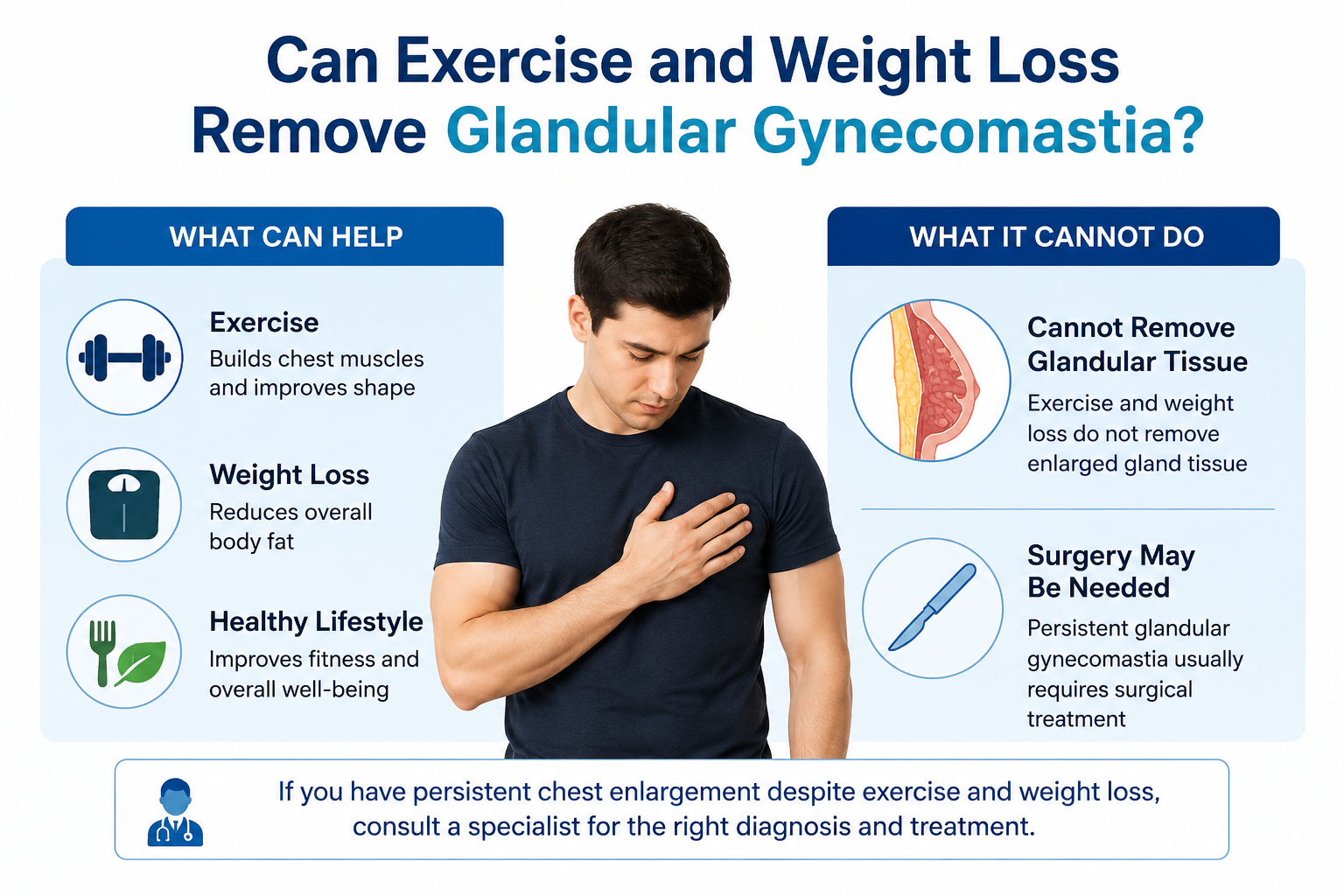
Many men with enlarged male breasts wonder whether exercise and weight loss can remove glandular gynecomastia. Diet and regular exercise can reduce excess body fat and improve chest definition. However, they usually cannot remove established glandular breast tissue.
This difference is important because gynecomastia and excess chest fat are not the same condition. Glandular gynecomastia involves the enlargement of breast gland tissue, while pseudogynecomastia is mainly caused by excess fat. Therefore, the right treatment depends on the type of tissue causing the chest enlargement.
What Is Glandular Gynecomastia?
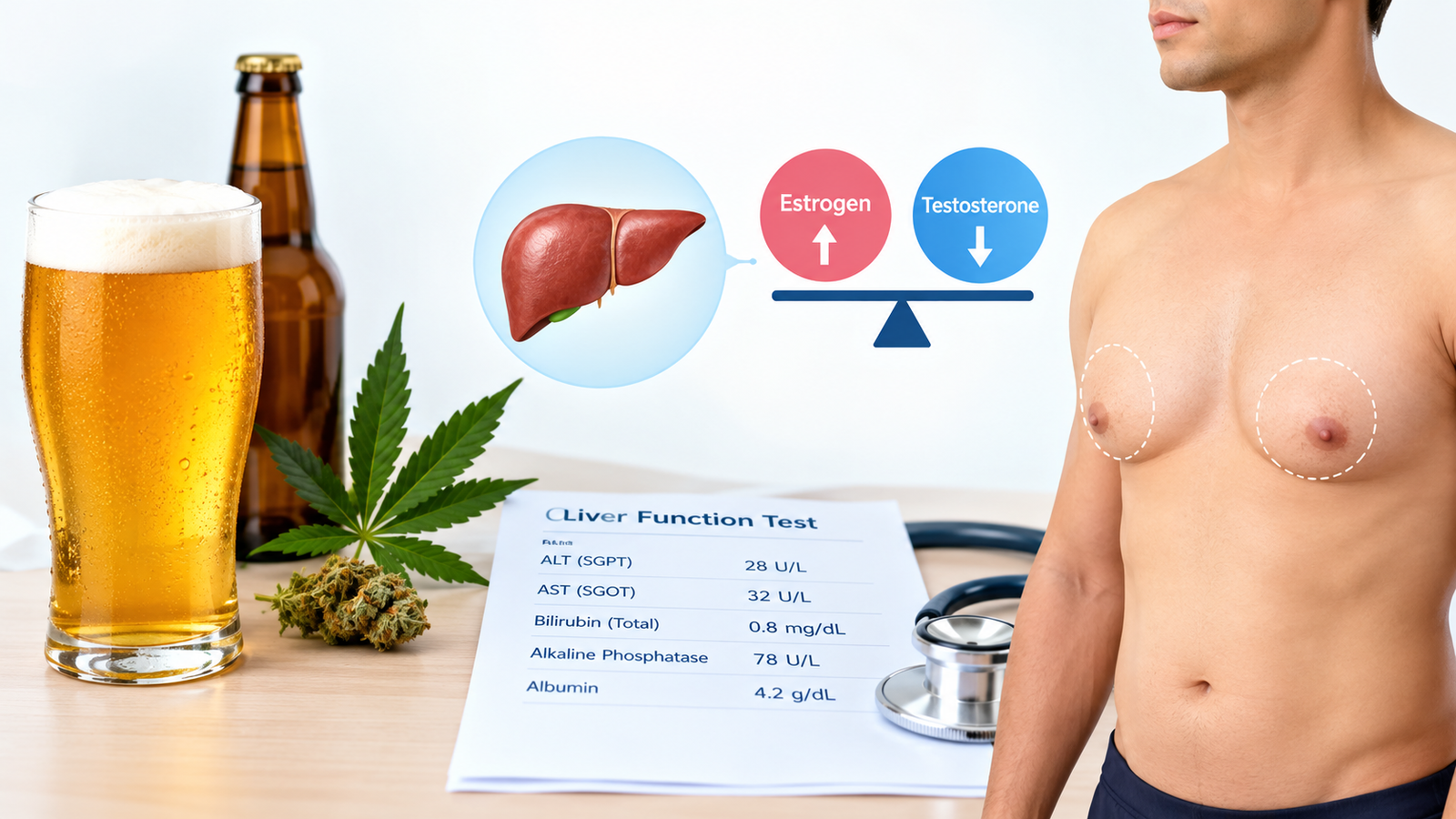
Glandular gynecomastia occurs when male breast gland tissue becomes enlarged. It can develop because of hormonal changes, certain medications, anabolic steroid use, medical conditions, puberty, or aging.
The tissue often feels firmer or rubbery compared with normal chest fat. It is commonly located beneath the nipple and may occur on one or both sides of the chest.
In contrast, chest enlargement caused mainly by fat tends to feel softer and more spread out. A medical examination can help determine whether the enlargement is primarily glandular tissue, fat, or a combination of both.
Can Exercise Remove Glandular Gynecomastia?
Exercise cannot directly remove glandular breast tissue. However, it can still play an important role in improving the overall appearance of the chest.
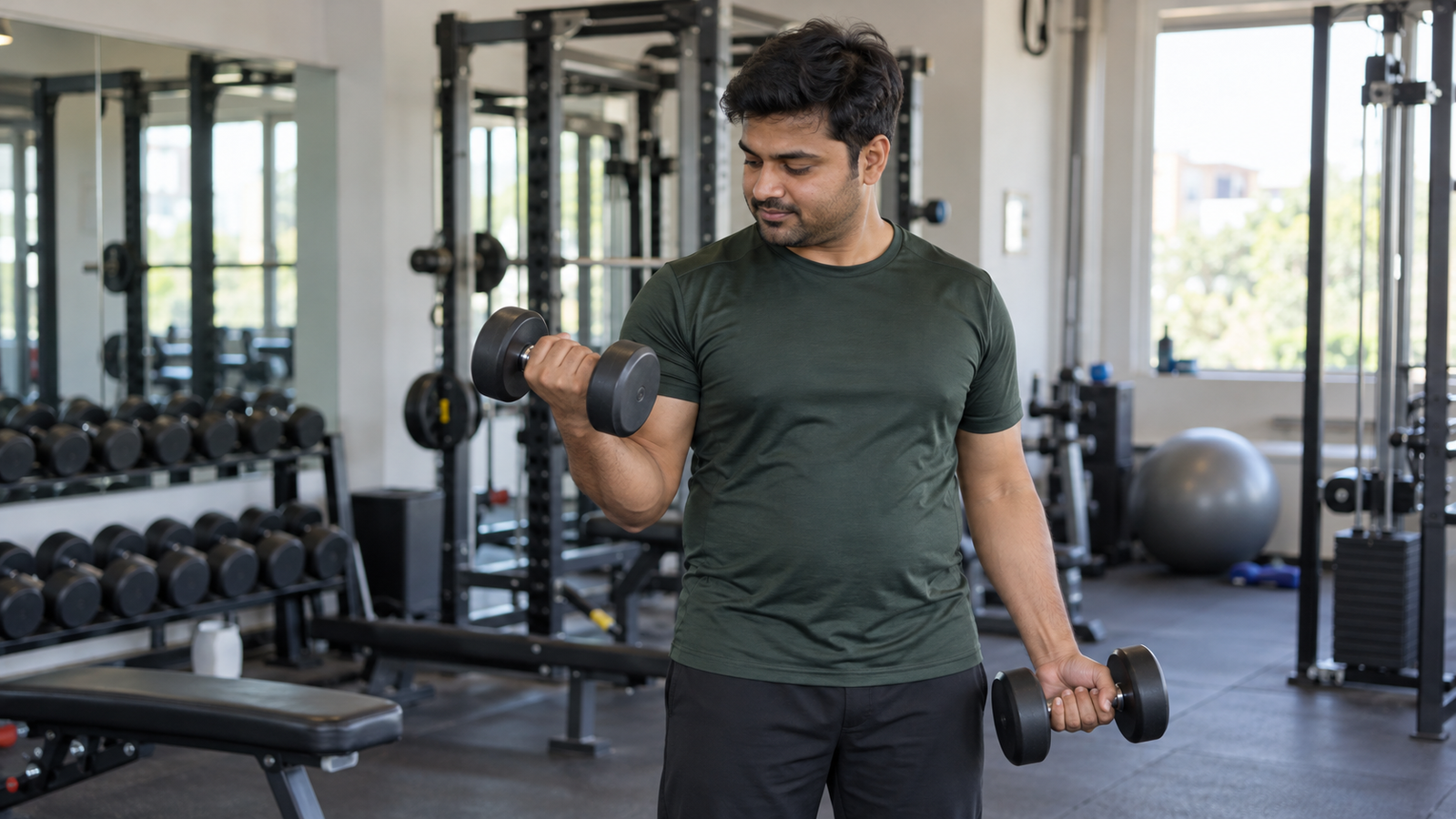
Exercises such as push-ups, bench presses, chest fly exercises, and other strength-training movements can build the pectoral muscles. Cardiovascular exercise can also help reduce overall body fat.
As a result, exercise may make the chest look more defined. However, if firm glandular tissue remains underneath the nipple, chest exercises cannot selectively burn or dissolve that tissue.
Therefore, exercise is beneficial for fitness and body composition, but it should not be considered a direct cure for established glandular gynecomastia.
Can Weight Loss Remove Glandular Gynecomastia?
Weight loss can reduce excess fat around the chest, but it generally does not eliminate glandular tissue.
For example, a man with both excess body fat and gynecomastia may notice significant improvement after losing weight. However, the firm tissue underneath the nipple may remain visible even after reaching a healthy weight.
This is one reason some men become frustrated after dieting and exercising. Their overall body becomes leaner, but the chest still appears enlarged.
In such cases, the remaining enlargement may be related to glandular tissue rather than simply excess fat.
How Can You Tell If It Is Fat or Glandular Tissue?
It is not always possible to identify the tissue type accurately without a professional examination. However, glandular gynecomastia commonly feels firmer and may form a noticeable area beneath the nipple.
Fat tends to feel softer and more diffuse across the chest.
If you have persistent chest enlargement despite maintaining a healthy weight, a consultation with an experienced surgeon can help determine the underlying cause. The doctor may also consider your medical history, medications, hormonal factors, and physical examination findings.
What If Glandular Tissue Remains After Weight Loss?
If you have achieved a healthy weight and still have persistent glandular tissue, continuing to lose weight may not provide the desired chest shape.
In selected patients, gynecomastia surgery may be considered. The surgical approach depends on the amount of glandular tissue, excess fat, skin quality, and overall chest shape.
Liposuction is mainly used to remove excess fatty tissue. When firm glandular tissue is present, direct removal of the gland may also be necessary. Some patients may require a combination of techniques.
Is Surgery Always Necessary?
No. Not every person with gynecomastia requires surgery.
Treatment depends on factors such as the duration of the condition, severity, symptoms, underlying cause, age, and personal concerns about chest appearance.
In some cases, particularly those related to temporary hormonal changes, symptoms may improve over time. However, long-standing glandular gynecomastia may persist and require further evaluation if it does not respond to conservative measures.
When Should You Consult a Doctor?
You should consider medical evaluation if the chest enlargement persists despite weight loss or if you notice a firm lump, significant pain, rapid enlargement, nipple discharge, or unusual changes in the breast or surrounding skin.
At Elegance Clinic, Dr. Ashutosh Shah evaluates patients with different types of male chest enlargement and helps determine whether the problem is primarily glandular tissue, excess fat, or a combination of both. Based on the assessment, he can discuss appropriate treatment options and whether surgery is suitable.
Final Answer
Exercise and weight loss can reduce excess chest fat, but they usually cannot remove established glandular gynecomastia. Exercise can strengthen the chest muscles and weight loss can improve overall body composition. However, persistent firm glandular tissue may remain even after reaching a healthy weight.
If your chest remains enlarged despite regular exercise and weight loss, a professional evaluation can help identify the cause and determine the most appropriate treatment.