
What is the best non-surgical treatment for gynecomastia?
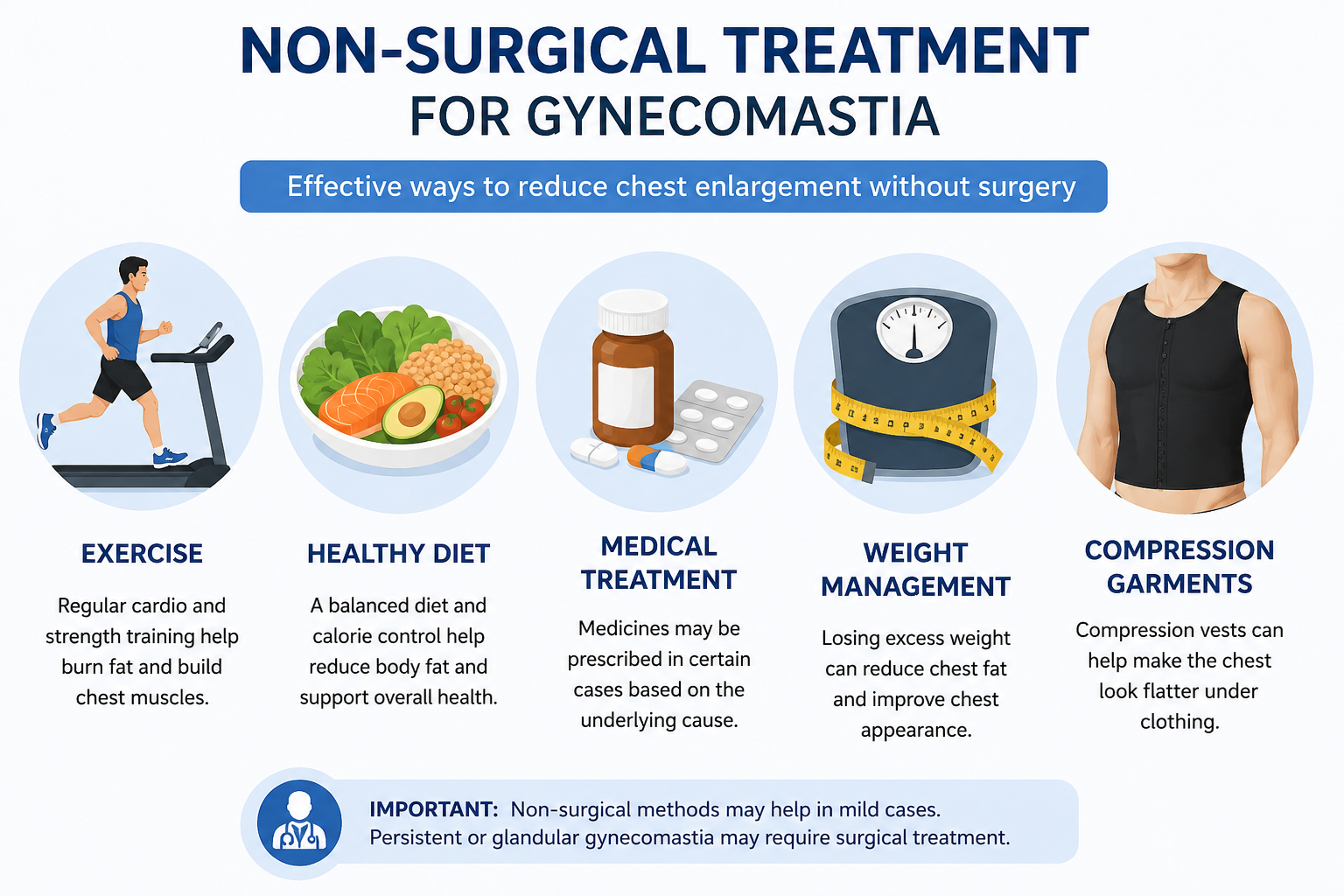
The best non-surgical treatment for gynecomastia depends on whether excess fat, glandular tissue, hormonal changes, or a combination of these factors cause the enlargement. In mild cases, lifestyle changes, weight management, exercise, and treatment of an underlying cause may help improve the appearance of the chest.
Weight Loss and Exercise
If excess body fat is contributing to enlarged male breasts, losing weight can reduce the amount of fat around the chest. Regular cardio and strength exercises can also help build the chest muscles and improve its overall appearance.
However, exercise cannot directly remove enlarged breast gland tissue. Therefore, men with true glandular gynecomastia may see limited improvement from exercise alone.
Healthy Diet
A balanced, calorie-controlled diet can support healthy weight loss and reduce excess body fat. Choosing adequate protein, vegetables, fruits, whole grains, and other nutrient-rich foods can help maintain a healthy body composition.
A healthy diet is particularly useful when male breast enlargement is associated with excess body fat or pseudogynecomastia.
Treating the Underlying Cause
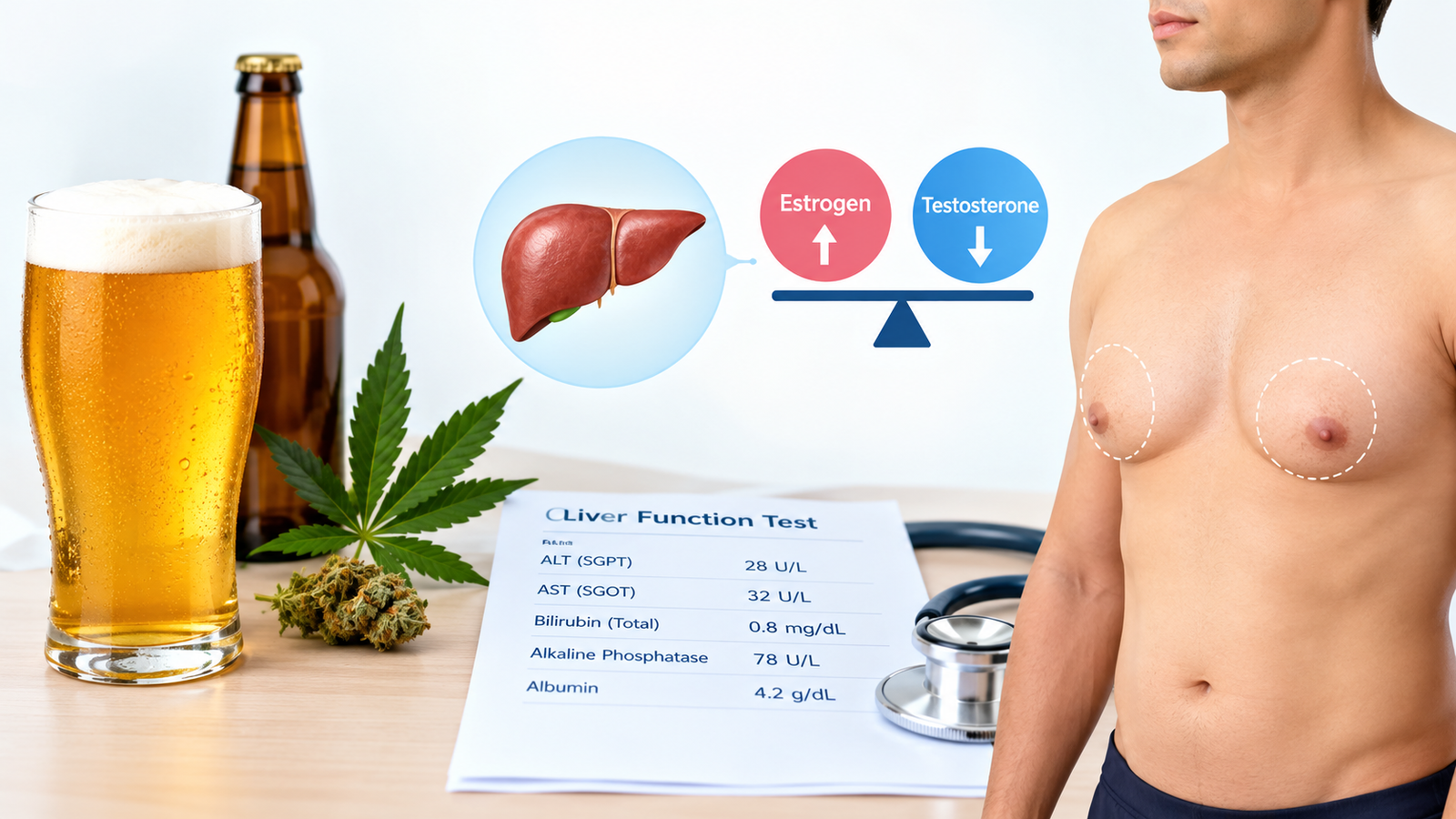
Gynecomastia can sometimes develop because of hormonal changes, certain medicines, or other health conditions. In such cases, identifying and managing the underlying cause may help prevent further breast enlargement.
Medicines should not be taken without medical advice. A doctor can determine whether medication is appropriate after evaluating the cause and duration of gynecomastia.
Compression Clothing
Compression vests can temporarily make the chest look flatter under clothing. However, they do not remove fat or glandular breast tissue and should be considered a cosmetic option rather than a permanent treatment.
Can Gynecomastia Be Treated Without Surgery?
Yes, some cases of gynecomastia can improve without surgery, particularly when excess fat, temporary hormonal changes, or an underlying cause is responsible. However, long-standing glandular gynecomastia may not respond completely to diet and exercise.
Therefore, the first step is to determine whether the chest enlargement is mainly fat tissue or glandular tissue.
When Is Surgery Considered?
If significant glandular tissue remains despite appropriate non-surgical measures, gynecomastia surgery may be considered. The treatment approach depends on the amount of glandular tissue, excess fat, skin, and the patient's individual condition.
For this reason, a consultation with an experienced gynecomastia surgeon can help determine the most suitable treatment rather than relying only on exercises, diets, or commercially available pills.
How to Choose the Right Doctor for Gynecomastia Treatment?
Choosing an experienced doctor is important when considering treatment for gynecomastia. Patients should look for a qualified plastic surgeon who has experience evaluating and treating male breast enlargement.
Before choosing a doctor, consider:
- Check the surgeon's qualifications and professional training.
- Look for experience in gynecomastia and male chest contouring.
- Ask whether the doctor can differentiate between excess fat and glandular breast tissue.
- Discuss both non-surgical and surgical treatment options.
- Review previous treatment results and understand realistic expectations.
- Choose a surgeon who clearly explains the procedure, risks, benefits, and recovery.
Suggestions: Dr. Ashutosh Shah has over 22 years of experience in cosmetic and plastic surgery, with expertise in procedures including gynecomastia treatment. His extensive experience can be an important consideration for patients looking for an experienced cosmetic surgeon at Elegance Clinic in Surat.
Ultimately, the right doctor should evaluate your individual condition and recommend treatment based on the cause, severity, and amount of excess fat or glandular tissue.