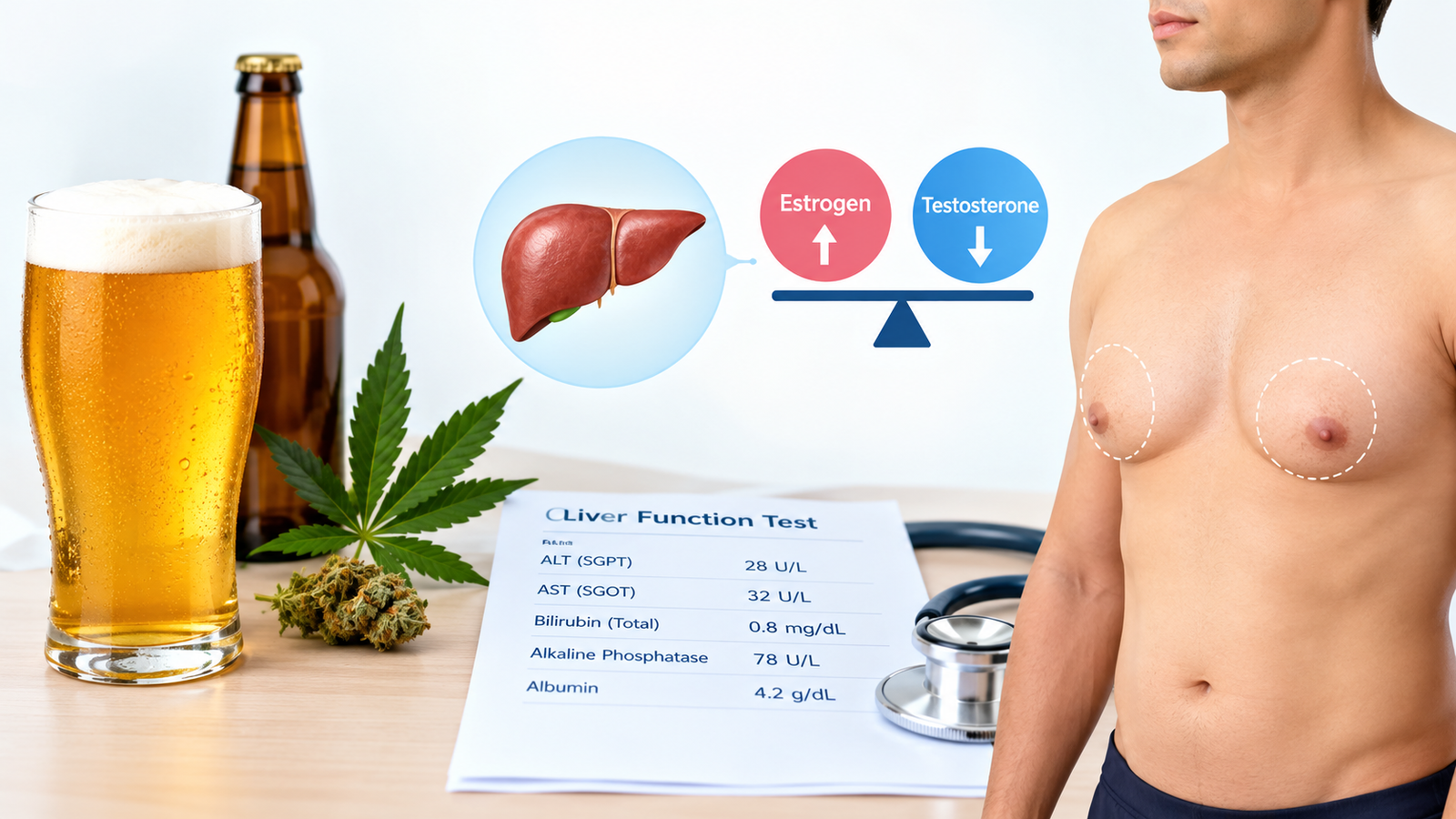


Gynecomastia Treatment Without Surgery: Do Medicines Work?
Gynecomastia treatment without surgery may involve observation, treating an underlying cause, or doctor-prescribed medicine in selected recent cases. Medicines do not reliably remove long-standing fibrous tissue. The right approach depends on the diagnosis, duration, symptoms, and your goals. Not everyone needs tablets, and not everyone needs surgery.
If you have enlarged breast tissue, it is understandable to look for a simpler option before considering an operation. You may have seen advertisements for “gyno tablets,” hormone blockers, or supplements promising a flat chest.
Some medicines have a role in carefully selected patients. However, there is no single tablet that reliably treats every cause or stage of gynecomastia.
The first step is to establish what is causing the enlargement.
What does gynecomastia treatment without surgery include?
Nonsurgical management can involve several different approaches:
- Observation when spontaneous improvement is likely.
- Reviewing medicines or substances that may contribute.
- Treating a diagnosed medical condition.
- Weight management when excess fat contributes.
- Selected prescription treatment after medical assessment.
“Without surgery” does not necessarily mean taking medicine. Sometimes the appropriate plan is monitoring, reassurance, and a scheduled review.
Is the enlargement gland, fat, or both?
Gynecomastia means increased male breast gland tissue. Enlargement caused by fat without increased gland is called pseudogynecomastia. Both can occur together.
This distinction affects treatment. Weight loss may reduce the fatty component, while established gland can remain.
A doctor examines the chest and considers symptoms, medicines, and other health factors. Blood tests or imaging may be needed depending on the findings.
Our guide to whether exercise and weight loss can remove glandular gynecomastia explains why fat reduction and gland treatment are different.
Myth vs fact: gynecomastia medicines
| Myth | Fact |
|---|---|
| Everyone with gynecomastia needs tablets | Some cases need observation or treatment of the underlying cause |
| Tamoxifen removes every gland | Response varies; complete reversal is not guaranteed |
| Hormone blockers are harmless | They have risks and require medical supervision |
| Testosterone treats all gynecomastia | It should be used only for an appropriately diagnosed deficiency |
| Weight loss always removes the enlargement | Fat may reduce while gland or loose skin remains |
| Failed medicine means immediate surgery | Reassessment and your preferences guide the next step |
| A supplement can replace an examination | Supplements cannot establish the cause of a chest lump |
When might medicines help?
Medicines are more likely to be considered for selected recent-onset, symptomatic cases, particularly when there is tenderness, and the tissue may still be responsive.
Tamoxifen, a selective oestrogen receptor modulator, is one option a specialist may discuss. Its use for gynecomastia is generally off-label, meaning it is used outside its licensed indication.
The 2026 Italian Society of Andrology and Sexual Medicine guideline suggests considering a short course in selected recent idiopathic cases, meaning cases without an identified cause. The recommendation is based on expert opinion, and the guideline highlights limitations in the evidence.
This is not a recommendation to buy tamoxifen yourself. A doctor must assess suitability, explain risks, and arrange follow-up.
Why do guidelines advise caution?
Evidence differs between patient groups. Results from puberty-related swelling or treatment associated with prostate cancer cannot automatically be applied to every adult with gynecomastia.
The European Academy of Andrology’s 2019 guideline does not recommend routine use of selective oestrogen receptor modulators, aromatase inhibitors or non-aromatisable androgens for gynecomastia in general.
The practical message is that gynecomastia medicine is a selective treatment, rather than a standard prescription for every enlarged chest.
Ask your doctor what benefit is realistic in your case: less pain, some reduction in size, or management of the underlying cause.
Can tablets shrink an old, firm gland?
Long-standing gynecomastia can develop fibrosis, making substantial regression less likely.
There is no exact date when every patient’s gland becomes unresponsive. Duration, examination findings and the cause all matter. A firm area that has been present for years has different treatment prospects from recent tender enlargement.
Reduced pain also does not necessarily mean that all the gland has disappeared.
Repeated courses of tablets without reassessment may offer little benefit. If improvement is limited, the doctor should review the diagnosis and the treatment goal rather than continue indefinitely.
Does testosterone treat gynecomastia?
Testosterone treatment may be appropriate when a doctor confirms androgen deficiency and identifies a reason to treat it.
It is not a general chest-reduction medicine. In men without deficiency, excess external testosterone can be converted to oestrogen and may worsen or trigger enlargement.
Do not start testosterone boosters, injections or a bodybuilding “post-cycle” plan to treat a lump. Disclose anything you have already used so the doctor can interpret symptoms and test results properly.
What if a prescribed medicine caused the enlargement?
The doctor may review whether a medicine contributes and whether a suitable alternative exists.
Do not stop prescribed treatment yourself. The medicine may be controlling an important health condition, and changing it requires a plan.
Bring a complete list of prescriptions, supplements, and nonmedical hormone products. Read Medicines that cause gynecomastia for further background.
Can diet, exercise or creams replace treatment?
Diet and exercise support overall health and may reduce chest fat. They do not reliably remove established gland.
There is also no dependable cream, massage oil, or herbal supplement that can be promised to dissolve breast gland.
Avoid products advertising guaranteed results without examining you. A new or changing lump needs assessment before any treatment.
When is observation reasonable?
Observation may be appropriate after assessment when the enlargement is likely to improve naturally, symptoms are manageable, and there are no concerning findings.
Puberty-related gynecomastia often settles without an operation. Monitoring should still include a clear plan for review if the swelling changes or causes significant distress.
Observation is an active decision based on a diagnosis. It should not mean ignoring unexplained or progressive symptoms.
When might surgery be considered?
Surgery may be discussed when enlargement persists, appropriate nonsurgical management has not helped, and symptoms or appearance remain troublesome.
It is not compulsory because a tablet has failed. Your health, preferences, and willingness to accept surgical risks matter.
The operation depends on the tissue. Liposuction addresses fat, a gland may require excision, and substantial loose skin may need additional treatment.
For background on medical options, see Hormonal therapy for gynecomastia.
What should you discuss at a consultation?
Bring the approximate onset date, previous reports, weight history, and a list of medicines and supplements.
Ask:
- What is causing the enlargement?
- Is observation appropriate?
- What could medicine realistically improve?
- What are the risks and monitoring requirements?
- When will we reassess the response?
- What happens if I choose no further treatment?
At Elegance Clinic, Dr. Ashutosh Shah can assess male chest enlargement and discuss appropriate options, including referral for endocrine evaluation when needed. His published profile lists more than 22 years of surgical experience.
You can book a consultation to discuss your concerns.
Which symptoms need prompt assessment?
Seek medical advice for a hard or rapidly growing lump, nipple discharge, bleeding, skin dimpling, nipple retraction or a lump in the armpit.
Do not assume these changes are ordinary gynecomastia or begin tablets before examination.
Key takeaways
- Nonsurgical treatment begins with finding the cause.
- Medicines may help selected recent cases but do not guarantee reversal.
- Long-standing fibrous gland responds less reliably.
- Hormone medicines require prescription and monitoring.
- Surgery remains an individual choice after assessment.