

‘Scarless’ Gynecomastia Surgery: Where the Cuts Actually Go and What Marketing Leaves Out
No gynecomastia surgery is truly scarless. Liposuction requires small entry cuts, while gland removal often uses an incision along the areola’s lower edge. Skin removal can require longer incisions. Scars may become discreet as they heal, but their visibility depends on placement, skin characteristics, wound tension, and your individual healing tendency.
Why Can No Clinic Honestly Promise Scarless Surgery?
An incision passes through the skin, and healing leaves a scar. Moving that incision into a crease or along a colour boundary can make it less noticeable, but it does not eliminate it.
The American Society of Plastic Surgeons states that gynecomastia surgery requires incisions and that the resulting scars are permanent, even when concealed within natural contours.
When a clinic advertises scarless gynecomastia surgery, ask what the term means:
- A smaller incision?
- An incision hidden near the areola or armpit?
- Liposuction without direct gland excision?
- A particular technique suitable only for selected patients?
“Small,” “concealed,” and “less noticeable” describe realistic goals. A guarantee of no scar does not.
Where Are the Incisions Made?
The gynecomastia surgery scar location depends on which tissues need treatment: fat, firm gland, excess skin, or a combination.
Liposuction entry points
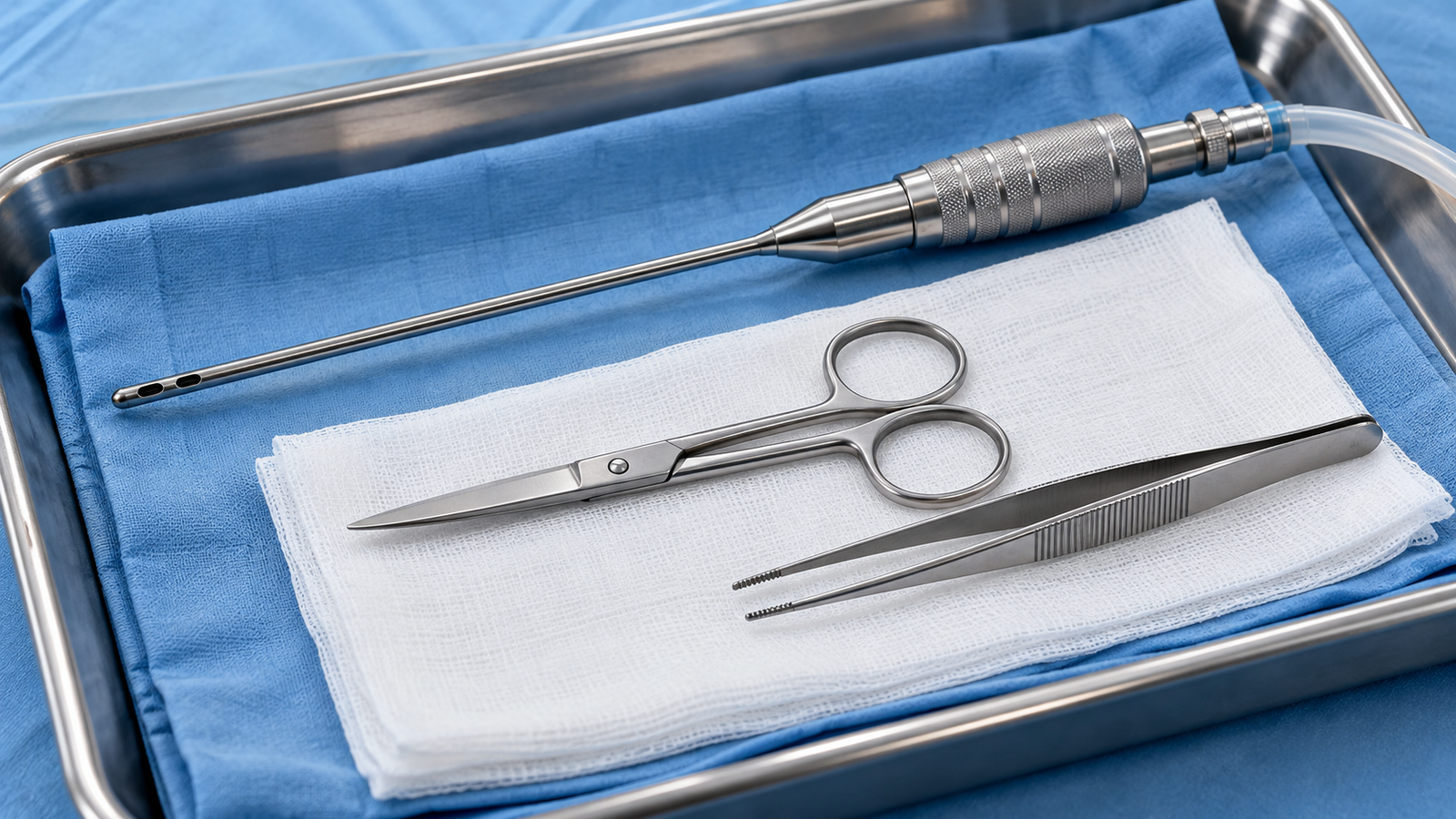
Liposuction uses a cannula inserted through small skin openings. These may sit near the areola, on the side of the chest or near a chest crease.
Entry incisions are often only a few millimetres long, but 3–5 mm is not a universal measurement. Published techniques use different openings; one report describes a 7 mm entry incision at the skin–areola junction.
Lower areola incision
Direct gland removal commonly uses a curved incision along part of the lower areola border. The transition between darker areola and surrounding skin can help camouflage the healed line.
ASPS describes this lower-border approach, while noting that more extensive skin reduction can require additional incisions.
Armpit or remote incision
Selected techniques approach the gland through the armpit, sometimes using endoscopic assistance or specialised instruments. This moves the scar away from the front of the chest.
It still leaves a scar and may involve different access, equipment and technical requirements.
Skin-removal incisions
If skin must be removed, the incision may extend around the areola, along the chest fold or into another pattern tailored to the excess skin. Nipple repositioning may also affect the plan.
Incision Comparison: What Should You Expect?
| Incision site | Used for | Typical length or extent | Visibility when healed | Who it may suit |
|---|---|---|---|---|
| Small chest entry points | Liposuction | A few millimetres; varies with technique | Small dots or short lines, sometimes darker or raised | Patients needing fat removal |
| Lower areola border | Direct gland removal, often with liposuction | Part of the areola’s lower circumference; no single standard length | May blend with the colour boundary | Patients requiring direct gland access |
| Armpit | Selected remote gland-removal techniques | Technique-dependent; ask for the planned measurement | Away from the front chest, but may show with raised arms | Selected patients after assessment |
| Around the areola | Areola reduction or selected skin reduction | A circular scar around the areola | Can remain visible or widen | Selected patients with suitable skin excess |
| Chest fold, sometimes with additional lines | More substantial skin removal | Longer, tailored to the amount removed | More noticeable, particularly early in healing | Patients with significant sagging |
Ask the surgeon to draw your proposed incisions and record their expected lengths. A generic incision diagram cannot replace an individual plan.
How Do Indian Skin Types Heal These Scars?
There is no single “Indian skin type.” Skin tone, previous scarring, genetics, and wound healing vary widely.
Three different changes are worth understanding:
Pigmentation: A scar may look darker or lighter than the surrounding skin.
Hypertrophic scarring: The scar becomes raised but stays within the original wound boundary.
Keloid scarring: Raised scar tissue extends beyond the original injury.
People with darker skin tones have a higher risk of keloids, but darker skin does not mean a keloid will definitely develop. A personal or family history is also relevant.
Tell your surgeon about raised scars after piercings, vaccinations, acne, injuries, or earlier operations. Bring photographs if the scars are difficult to show during the consultation.
Skin colour alone cannot predict your result, and a small incision can still form a noticeable scar.
Is an Armpit Incision Better Than an Areola Incision?
It depends on the operation you need and the trade-offs you accept.
An armpit approach may appeal to someone who wants to avoid a front-chest incision. However, the surgeon must still remove the required tissue and achieve a suitable contour through that access.
Published studies describe transaxillary techniques, including endoscopic approaches. These demonstrate options for selected patients rather than proving that an armpit incision is best for every chest.
Ask:
- Can this approach adequately treat my gland and fat?
- Will loose skin remain?
- Could an additional incision become necessary?
- What scar will show when I lift my arm?
- What experience do you have with this technique?
The incision should support the treatment plan as well as your scar preferences.
What Should You Ask About scarless gynecomastia surgery Pune?
Ask for a clear explanation of where every incision will go, including liposuction entry points and any possible skin-removal lines.
During a consultation with Dr. Ashutosh Shah at Elegance Clinic, discuss your previous scars, the amount of tissue to be removed, and the expected scar pattern. Request healed photographs of comparable procedures, with appropriate patient consent, rather than judging results only from pictures taken soon after surgery.
Also ask whether the quoted plan could change if the surgeon finds more gland or skin excess than expected.
What Can You Do to Keep Scars Less Visible?
Follow wound-care instructions first.
Early care focuses on the incision healing properly. Follow the prescribed dressing routine, avoid picking scabs, and report wound opening or discharge.
Use the clinic’s Post-operative guidelines alongside your individual discharge instructions.
Start silicone only after the wound has healed.
Silicone gel or sheets are commonly recommended options for preventing or managing raised scars. International scar-management guidance supports silicone-based treatment as a first-line option, with care tailored to the individual wound.
Do not apply silicone to an open wound or scab. Ask your surgeon to confirm that the skin is fully closed and ready; there is no single start date suitable for everyone.
Protect healing scars from sunlight.
Ultraviolet exposure can darken scars. Keep the area covered and ask about sunscreen once the wound has healed sufficiently.
Avoid unnecessary tension
Follow restrictions on lifting, chest exercises and stretching. Do not start forceful scar massage or tighten a compression garment beyond the prescribed fit.
Attend follow-up
Report a scar that becomes progressively raised, itchy, painful, or wider. Early assessment helps distinguish ordinary healing from a scar that may benefit from treatment.
Can Laser or Scar Revision Remove the Mark?
Treatment can improve selected scar features, but it cannot promise complete erasure.
Depending on the scar, a specialist may discuss silicone, injections, laser treatment, or revision. Published international recommendations include laser among scar-management options, with selection depending on scar characteristics.
Ask about pigment-change risks when considering treatment, especially if your skin has previously developed dark or light marks.
For further reading, see Chest scar revision, Scar revision in gynecomastia and Can scar revision improve results?.
Key Takeaways
- Gynecomastia surgery leaves scars, even when incisions are small or concealed.
- Fat removal, gland excision, and skin removal may require different access.
- Previous scarring helps inform risk assessment.
- Silicone, sun protection, and appropriate follow-up may improve scar outcomes.