
Can Gynecomastia Be Treated Without Surgery? How to Decide in Your Own Case
How do I decide whether my gynecomastia can be treated without surgery? Start by determining whether the chest enlargement is mainly glandular tissue, fat, or a combination of both, then consider how long it has been present and its severity. Recent hormone-related gland enlargement may sometimes respond to medical management, while established firm gland tissue usually cannot be removed by exercise, weight loss, machines, or fat-reduction treatments.
The key is not to begin with the question, “Which non-surgical treatment should I buy?” Instead, establish what is causing the enlarged chest. Once the tissue type and cause are understood, it becomes much easier to decide whether observation, weight management, medical treatment, a non-surgical fat-reduction approach, or surgery is realistic.
How Do You Tell Gland From Fat Before Choosing Anything?
One of the most important distinctions in male chest enlargement is fat versus gland.
Chest Fat
Fat-related chest enlargement, sometimes called pseudogynecomastia, is usually associated with excess fatty tissue rather than substantial enlargement of the breast gland.
It may:
- Feel relatively soft
- Blend into surrounding chest fat
- Occur alongside excess body fat
- Change noticeably with weight gain or weight loss
- Lack a distinct firm central component beneath the nipple
If the problem is predominantly fatty, overall weight reduction can improve the chest. Selected patients may also discuss localized body-contouring treatments.
For a comparison of these options, see non-surgical chest fat reduction compared.
Glandular Gynecomastia
True gynecomastia involves enlargement of glandular breast tissue.
Patients sometimes describe a:
- Firm or rubbery area
- Disc-like structure beneath the nipple
- Puffy or projected nipple
- Central fullness that remains despite becoming leaner
A gland or fat self-test may make someone suspect one type or the other, but self-examination cannot reliably diagnose every case.
Mixed gynecomastia is also common, meaning both gland and fat contribute to the appearance.
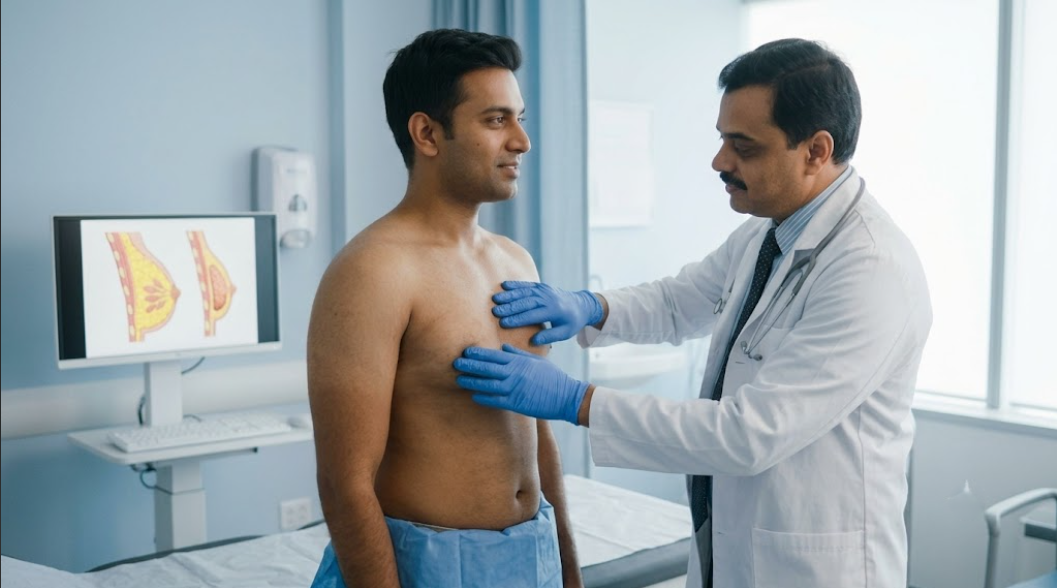
A clinical assessment is therefore more useful than choosing treatment solely according to how the chest feels at home.
Read more about telling fat from gland tissue.
Why Does the Gland-versus-Fat Distinction Matter?
Because different treatments affect different tissues.
Exercise can help reduce overall body fat and develop the pectoral muscles, but it does not physically remove established glandular breast tissue.
Likewise, a body-contouring machine designed to affect fat cannot simply make a firm gland disappear.
This is one of the main reasons patients can spend considerable time and money on treatments without achieving the chest contour they expected.
The treatment may be aimed at fat while the actual problem is the gland.
On the other hand, someone whose chest enlargement is predominantly associated with excess body fat may not necessarily need gland-removal surgery.
Diagnosis should come before treatment.
How Does Symptom Duration Change What Is Possible?
Duration matters because recently developing gynecomastia and long-standing established gynecomastia are not necessarily the same clinical situation.
Recently Developed Gynecomastia
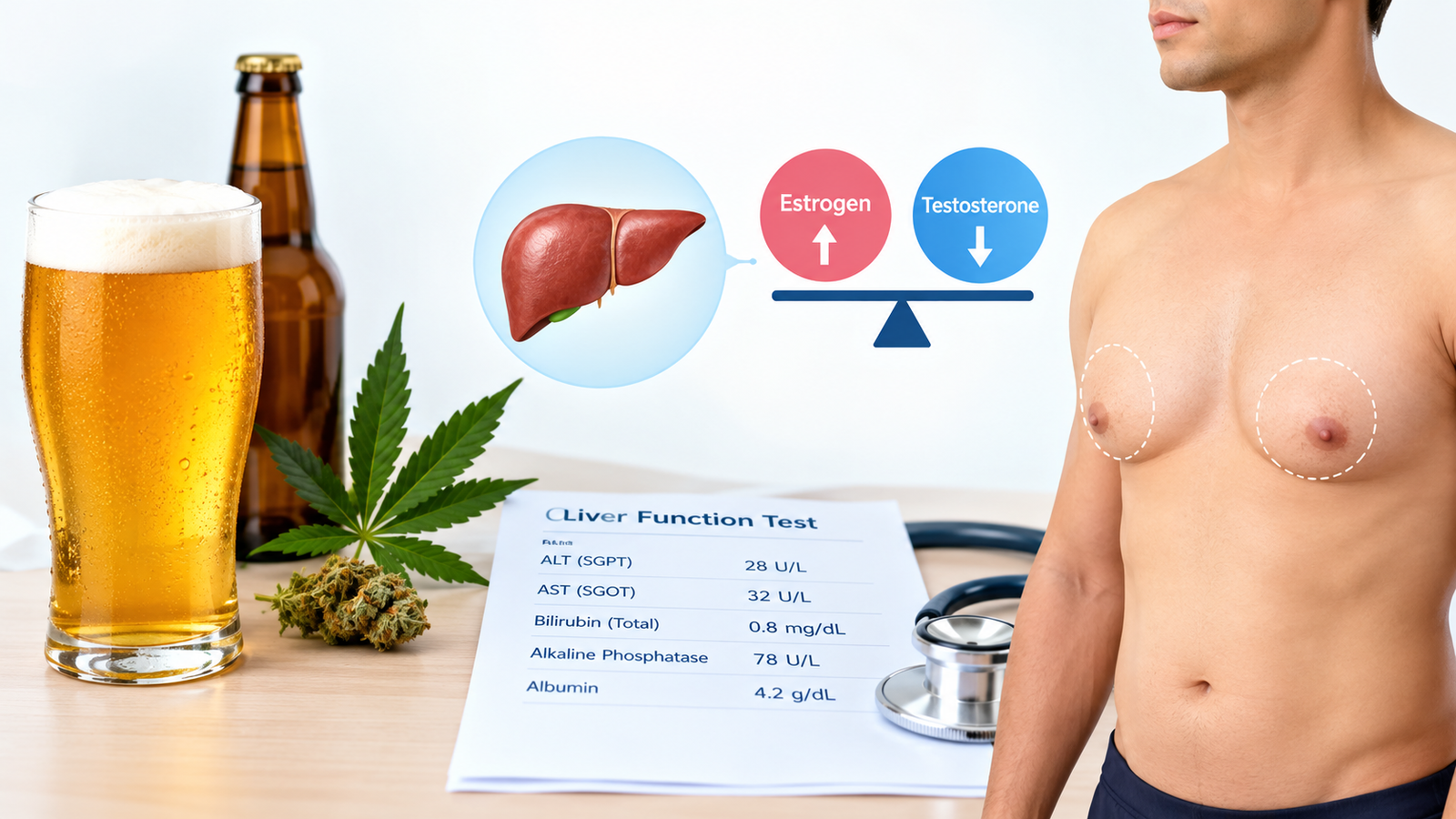
When breast enlargement has developed relatively recently, particularly when accompanied by tenderness or occurring during hormonal changes, the underlying cause deserves evaluation.
Depending on the patient's age and circumstances, assessment may consider:
- Pubertal hormonal changes
- Medicines
- Anabolic steroid use
- Hormonal disorders
- Other medical conditions
- Recreational substances
- Supplements
When a reversible trigger exists, addressing that cause may be an important part of treatment.
Selected patients with recent, symptomatic gynecomastia may also be considered for medical management after appropriate clinical assessment.
Medication should not be started simply because someone feels a lump beneath the nipple.
Long-Standing Gynecomastia
When firm glandular tissue has remained for a long period, expectations from non-surgical treatment need to be more conservative.
Established gland tissue does not behave like ordinary body fat.
A long-standing firm disc beneath the nipple is therefore unlikely to disappear simply because a patient performs more chest exercises or undergoes fat-reduction sessions.
This is where how to decide between medicine and surgery for gynecomastia becomes particularly important.
Duration is considered alongside tissue type, severity, symptoms, age and cause—not as an isolated rule.
Which Grades Can Respond to Non-Surgical Treatment?
Gynecomastia can be classified according to the amount of enlargement and associated skin excess.
You can review the different gynecomastia grades explained.
However, grade alone does not determine whether surgery is necessary.
A mild-looking chest can still contain a persistent glandular component. Conversely, some fatty enlargement may improve substantially when overall body fat decreases.
Mild Enlargement
If enlargement is mild and predominantly fatty, lifestyle measures may provide worthwhile improvement.
If there is recent glandular enlargement associated with a potentially reversible cause, medical assessment may identify an appropriate non-surgical route.
Moderate Enlargement
Moderate cases need careful evaluation of how much of the volume is fat and how much is gland.
Weight reduction can improve the fatty component but may leave glandular projection behind.
More Significant Enlargement
When there is substantial gland, major chest enlargement, or loose skin, the ability of non-surgical treatment to create a significant contour change becomes increasingly limited.
Skin excess is particularly important because simply reducing fat does not necessarily tighten a substantially stretched chest envelope.
Decision Table: Which Route Fits the Finding?
| Examination finding | Duration | Likely route | What will not work |
|---|---|---|---|
| Predominantly soft fatty chest | Variable | Weight management; selected fat-reduction options may be discussed | Expecting gland-removal results from exercise alone |
| Recent tender glandular enlargement | Relatively recent | Identify cause; medical assessment; selected cases may have non-surgical management.t | Self-prescribing medication |
| Firm gland beneath nipple | Long-standing | Surgical assessment may be appropriate | Fat freezing or exercise cannot physically remove established gland |
| Mixed fat and gland | Variable | Treatment depends on the contribution of each component | Treating the entire problem as fat |
| Significant gland with skin excess | Usually established | Surgical assessment | Machines cannot remove substantial gland or reliably correct major excess skin |
| Enlargement associated with weight gain | Variable | Weight management and reassessment | Assuming every enlarged male chest requires surgery |
This is a decision framework rather than a diagnostic tool. Examination findings need to be interpreted alongside medical history and individual anatomy.
Which Findings Mean Non-Surgical Routes Will Not Work?
The phrase “non-surgical treatment will not work” needs context.
Weight loss may still improve general body composition. Exercise can still improve fitness and muscular definition. Treating an underlying medical cause may still be important.
But these measures should not be expected to physically remove established glandular tissue.
Non-surgical approaches become less likely to produce the desired chest correction when there is:
- A persistent firm gland beneath the nipple
- Long-standing glandular enlargement
- Significant nipple projection caused by gland
- Substantial breast enlargement
- Significant excess skin
- Persistent contour problems despite appropriate weight reduction
- A mixed problem where reducing fat would leave substantial gland behind
In these situations, a surgical assessment may provide a more realistic understanding of what can and cannot be corrected.
See when surgery is needed instead of medicine.
Can a Firm Disc Under the Nipple Be Treated Without Surgery?
A firm or rubbery disc beneath the nipple may represent glandular breast tissue, although examination is needed to confirm what the patient is feeling.
If it is established glandular tissue, exercise and fat-reduction treatments cannot physically remove it.
This distinction is especially important when a patient is otherwise lean but continues to have a puffy nipple or localized central projection.
Repeatedly trying to lose more weight may make the rest of the body leaner without eliminating the gland responsible for the nipple prominence.
Can Medicines Be Tried First at Any Age?
No treatment should be selected simply because it avoids surgery.
Medication may have a role in selected circumstances, particularly when gynecomastia is relatively recent and clinically appropriate for medical management.
The patient's age, duration of symptoms, possible cause, medications, health history, and examination findings all matter.
Long-standing established glandular tissue is generally a different situation from newly developing, tender gynecomastia.
Patients should not purchase hormonal medicines or other drugs online and attempt treatment without medical supervision.
Potential benefits must be weighed against limitations and possible adverse effects.
Does Losing Weight Cure Gynecomastia?
Weight loss can make a major difference when the chest enlargement is predominantly fatty.
It can also improve the fatty component of mixed gynecomastia.
However, weight loss does not selectively remove breast gland tissue.
A man may lose substantial body fat and still notice:
- Puffy nipples
- A firm disc behind the nipple
- Central chest projection
- Persistent asymmetry
In fact, glandular tissue may become more noticeable as surrounding fat decreases.
This does not mean weight loss was unsuccessful. It means that more than one type of tissue may have been contributing to the original chest enlargement.
What About Exercise?
Exercise should be encouraged for general health, weight management and muscle development when medically appropriate.
Chest exercises such as presses and push-ups can develop the pectoral muscles.
They cannot selectively burn chest fat, however, and they cannot dissolve glandular tissue.
This is an important expectation to establish because some men spend months performing increasingly intense chest workouts while the central nipple projection remains unchanged.
Exercise can change the muscle underneath the problem, but that does not necessarily remove the tissue causing gynecomastia.
Are Device Packages Worth Paying For?
This depends entirely on what is being treated.
A device designed for localized fat reduction may be reasonable to discuss when the problem is genuinely a suitable fatty deposit.
It becomes much harder to justify when the dominant problem is firm glandular tissue.
Before paying for multiple sessions, ask:
- What tissue is causing my chest enlargement?
- Is this treatment targeting fat or gland?
- What degree of improvement is realistic?
- How many sessions may be needed?
- What happens if the gland remains?
- Are the results gradual or immediate?
- What evidence supports this treatment for my particular problem?
- What are the possible risks?
- What happens if I do not achieve the expected result?
A package price should never replace diagnosis.
What Should You Ask Before Paying for a Package?
The most useful question is:
“What exactly are you treating?”
If the answer is unclear, reconsider committing to a long treatment package.
Ask the clinician to explain whether your enlargement appears to be:
Fat → gland → mixed tissue → skin excess, or a combination.
Then ask what the proposed treatment can physically change.
For example, if a machine primarily affects fatty tissue, ask what will happen to an existing firm gland beneath the nipple.
If medication is suggested, ask why it is appropriate given the duration and cause of your gynecomastia.
If surgery is recommended, ask which component requires surgical correction and why a less-invasive alternative is unlikely to achieve the same goal.
At Elegance Clinic, Surat, assessment of male chest enlargement can help distinguish the contribution of gland, fat, and skin before treatment options are discussed.
How Long Should a Non-Surgical Attempt Be Given?
There is no universal period because different approaches work in different ways.
Weight management requires enough time to produce meaningful changes in overall body composition.
Treating an underlying cause may also require observation and reassessment.
A prescribed medical treatment has its own follow-up schedule.
Body-contouring treatments may produce gradual rather than immediate changes.
The important principle is to establish a defined treatment goal and review point.
Do not continue paying for treatment indefinitely when there is no objective improvement.
Before starting, ask:
- What result should we reasonably expect?
- When should the result become visible?
- How will progress be assessed?
- At what point should treatment be considered unsuccessful?
- What is the next option if the chest does not improve?
This prevents a temporary treatment trial from turning into months of ineffective therapy.
When Should Surgery Be Considered Instead?
Surgery becomes relevant when the anatomy requires something that non-surgical treatment cannot physically achieve.
That may include removal of established glandular tissue, correction of substantial enlargement, or management of significant skin excess.
Depending on the patient's anatomy, gynecomastia surgery may involve:
- Liposuction
- Gland excision
- A combination of liposuction and gland excision
- Skin removal in selected larger cases
The operation should be matched to the actual anatomy rather than applying the same technique to every patient.
Dr. Ashutosh Shah, with 22+ years of experience in plastic and cosmetic surgery, assesses whether male chest enlargement is predominantly glandular, fatty, or mixed before discussing whether conservative management or surgery is likely to provide a meaningful correction.
Conclusion
So, can gynecomastia be treated without surgery? Sometimes—but the answer depends on what is actually causing the enlarged chest.
The most useful decision sequence is:
Is it mainly gland or fat? → How long has it been present? → How severe is it? → Is there excess skin? → What can the proposed treatment physically change?
Predominantly fatty enlargement may improve with weight reduction and, in selected situations, non-surgical fat-reduction approaches. Recent gynecomastia may warrant evaluation of the underlying cause and may have medical management options in selected patients.
Long-standing firm glandular tissue is different. Exercise, weight loss and fat-targeting machines cannot physically remove established gland.
Rather than choosing the treatment that sounds easiest, choose the treatment that actually matches the tissue responsible for the problem.