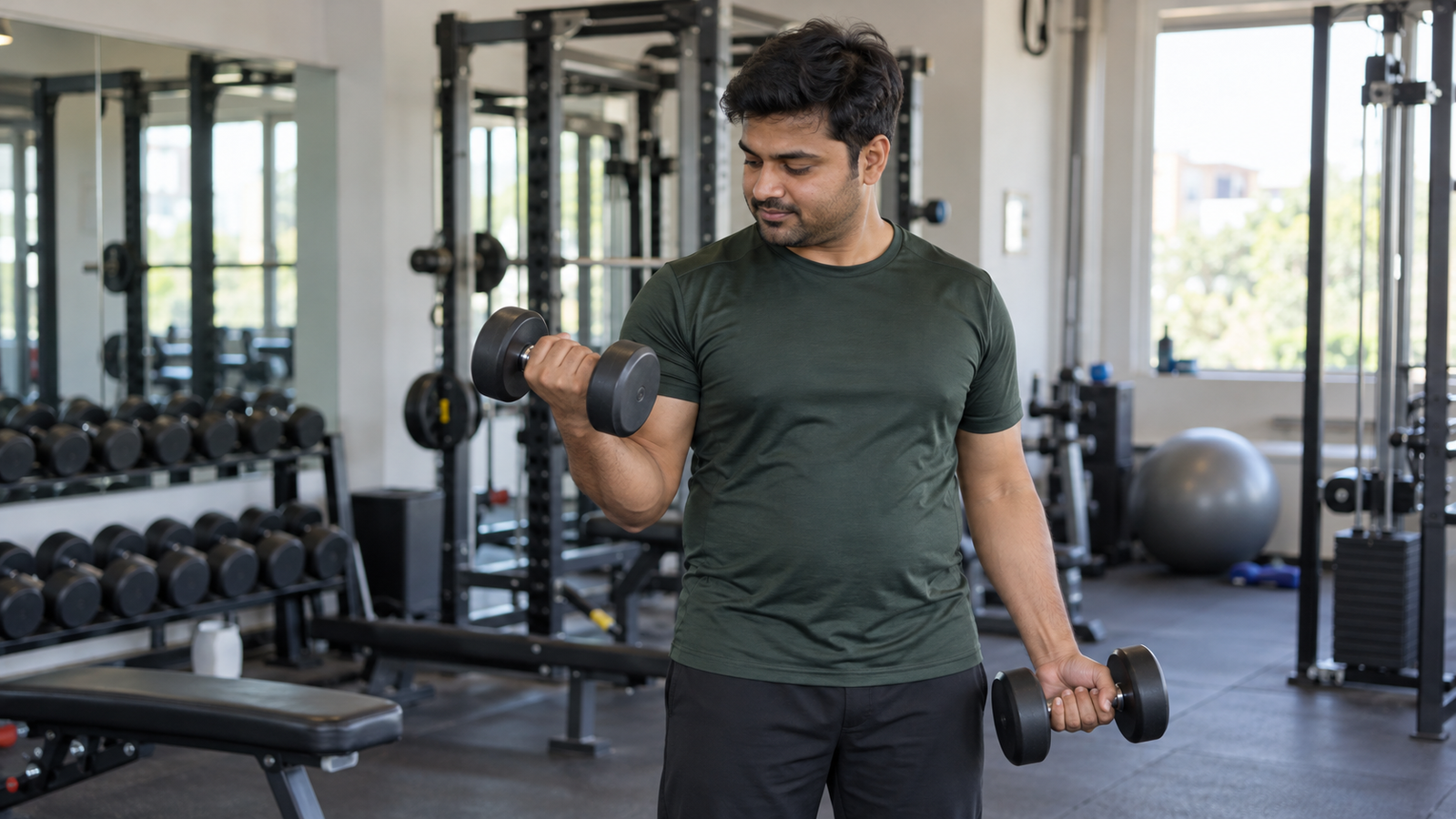

Returning to the Gym After Gynecomastia Surgery: A Week-by-Week Lifting Plan
When can I start weight training after gynecomastia surgery? Most patients need to avoid weight training during the early healing period and return gradually rather than restarting their previous routine immediately. Walking is usually introduced first, followed by progressively more demanding cardio and resistance exercises. Chest presses, dips, heavy shoulder work, and other movements that load the operated area generally return later, after the surgeon confirms that healing is progressing appropriately.
Recovery varies depending on whether surgery involved liposuction, gland excision, skin removal, or a combination of procedures. Your surgeon's individual postoperative instructions should therefore take priority over any general timeline.
Why Are Chest and Shoulder Movements Restricted First?
Gynecomastia surgery operates directly on tissues of the chest. Liposuction may be used to remove excess fatty tissue, while glandular tissue may need to be excised through an incision. Some patients require both.
Immediately after surgery, these tissues are swollen and healing. Incisions are also developing strength, and the operated area needs time to stabilize.
Upper-body exercises can place substantial tension on the chest. Bench presses, push-ups, dips, overhead presses, and certain pulling exercises involve the pectoral muscles, shoulders, and surrounding tissues.
Returning to them too early may increase discomfort and swelling and can place unnecessary stress on healing tissues.
Heavy exercise can also temporarily increase blood pressure and blood flow. This is another reason surgeons commonly restrict strenuous activity during early recovery.
The objective is not to keep patients inactive. It is to maintain safe movement while protecting the operated chest until it can tolerate progressively greater loads.
For a broader recovery overview, see recovery after male breast reduction.
What Is Allowed in Weeks One to Four?
The first month should generally be viewed as a recovery phase rather than a training phase.
Week 1: Focus on Recovery and Walking
During the first week, strenuous exercise and weight training are generally avoided.
Short, gentle walks may be encouraged when medically appropriate. Walking supports normal mobility without placing the same mechanical load on the chest as gym exercises.
Patients should avoid:
- Weight lifting
- Push-ups
- Bench presses
- Running
- High-intensity cardio
- Dips
- Pull-ups
- Heavy overhead movements
- Activities involving forceful chest stretching
The priority is healing, prescribed wound care, appropriate compression garment use, medication as directed, hydration, and gentle daily movement.
Week 2: Gradually Increase Normal Movement
By the second week, many patients feel considerably more mobile. This improvement can make it tempting to return to the gym.
Feeling better, however, does not mean that internal healing is complete.
Walking can usually be increased gradually when comfortable and permitted. Normal daily activities may also become easier.
Resistance training should still be approached cautiously and according to the treating surgeon's instructions.
Weeks 3–4: Light Activity May Progress
Some patients may be cleared for more cardiovascular activity during this stage if recovery is uncomplicated.
The emphasis should remain on gradual progression.
Activities that heavily engage the chest or require forceful pushing, pulling, or overhead movement may still need to be restricted.
The exact timing depends on healing, swelling, discomfort, and the extent of the operation.
Twelve-Week Return-to-Training Guide
This table provides a general educational framework, not an individual exercise prescription. Your surgeon's instructions should override this schedule.
| Week | Permitted Movements | Prohibited / Restricted Movements | Red Flags |
|---|---|---|---|
| Week 1 | Gentle walking and routine light movement as permitted | Gym training, running, weights, push-ups, bench press, dips | Rapid swelling, bleeding, severe pain, shortness of breath |
| Week 2 | Gradually longer walks and light daily activity | Heavy resistance and chest training | Increasing pain, new asymmetry, wound problems |
| Week 3 | Light cardio may be considered if cleared | Heavy upper-body lifting and direct chest loading | Increased swelling after activity |
| Week 4 | Progressive cardio and selected light exercise if cleared | Heavy presses, dips and maximal lifting | Persistent pain or chest tightness |
| Week 5 | Light resistance may gradually return in suitable patients | Heavy chest and shoulder loading unless cleared | New swelling or tenderness |
| Week 6 | Progressive resistance exercise may be considered | Maximal or explosive training without clearance | Persistent asymmetry or swelling |
| Weeks 7–8 | Gradual increase in resistance and range of motion | Sudden return to pre-surgery maximum loads | Pain or swelling during/after training |
| Weeks 9–10 | More normal training may progressively return | Uncontrolled heavy lifting | Recurring swelling or discomfort |
| Weeks 11–12 | Gradual progression toward regular training if recovery is satisfactory | Maximum loads if not yet medically cleared | Persistent pain, swelling, or contour changes |
There is no requirement that every patient reaches each stage at the same week.
When Can Upper-Body Training Be Reintroduced?
Upper-body training should be reintroduced progressively rather than restarting an entire workout at once.
When the surgeon permits resistance training, patients may begin with substantially lighter loads than they used before surgery.
The objective of the first few sessions is to determine how the recovering tissues respond.
Avoid immediately testing:
- One-repetition maximums
- Heavy bench presses
- Weighted dips
- Heavy overhead presses
- Explosive push-ups
- High-volume chest sessions
Increasing resistance, repetitions, range of motion, and training volume simultaneously makes it difficult to identify which factor caused discomfort or swelling.
A more controlled approach is to change one variable at a time.
For example, start with a lighter resistance and comfortable range of motion. If there is no unusual pain or swelling afterward, progression can occur gradually after medical clearance.
When Do Bench, Dips and Overhead Work Return?
These exercises deserve particular attention because they can significantly load or stretch the chest and shoulder region.
Bench Press
The bench press directly loads the pectoral muscles. Returning to heavy bench pressing before the operated tissues have adequately healed can place unnecessary stress on the chest.
When your surgeon allows pressing exercises, start considerably below your previous training load.
Do not use the first workout to test how strong you still are.
Dips
Dips can create substantial tension across the chest, particularly at the bottom of the movement.
They should therefore not be among the first exercises resumed after surgery.
Wait for appropriate clearance and return gradually.
Overhead Pressing
Overhead movements involve the shoulders and can stretch surrounding chest tissues.
Comfortable everyday overhead movement may return before heavy overhead lifting. The ability to raise your arms does not automatically mean you are ready to press heavy weights above your head.
Which Signs Mean You Have Gone Too Fast?
Some mild awareness of the recovering area can occur as activity increases, but exercise should not produce a significant deterioration in your recovery.
Stop the activity and contact your surgical team if you develop concerning symptoms such as:
- Sudden increase in chest swelling
- New or worsening asymmetry
- Significant pain
- Bleeding or wound discharge
- Increasing redness
- Wound separation
- Persistent tightness after exercise
- A new fluid-like swelling
- Significant bruising appearing after activity
- Fever or other signs of illness
If one side of the chest suddenly becomes substantially larger after a workout, do not simply assume it is normal muscle swelling.
It should be assessed.
Patients experiencing unexplained swelling can also read about chest swelling after the gym.
Can I Do Cardio in the First Week?
Strenuous cardio is generally avoided during the first week unless specifically cleared.
Gentle walking is different from a gym cardio session.
Walking can provide light activity while minimizing stress on the recovering chest. Running, intense cycling, rowing, HIIT, and similar workouts can substantially increase cardiovascular demand and body movement.
The progression from walking to structured cardio should therefore be gradual.
The appropriate timing depends on the operation and individual recovery.
Does Early Gym Work Cause Fluid Collection?
Fluid accumulation after surgery can have several causes, and it is not accurate to say that every early workout will cause a seroma or another fluid collection.
However, excessive activity during the early postoperative period can increase movement and stress within healing tissues.
That is one reason postoperative activity restrictions exist.
If you notice a new fluid-like swelling, rapidly increasing fullness, asymmetry, or unusual movement beneath the skin, contact your surgical team rather than attempting to manage it by exercising more or tightening your compression garment excessively.
Will Chest Workouts Change the Surgical Result?
Exercise can strengthen and enlarge the pectoral muscles, potentially improving overall chest definition once recovery is complete.
However, workouts cannot replace the surgical removal of glandular tissue.
Training too aggressively during early healing is also not a shortcut to a better surgical result.
A successful return to exercise requires allowing the tissues to heal first and then rebuilding strength progressively.
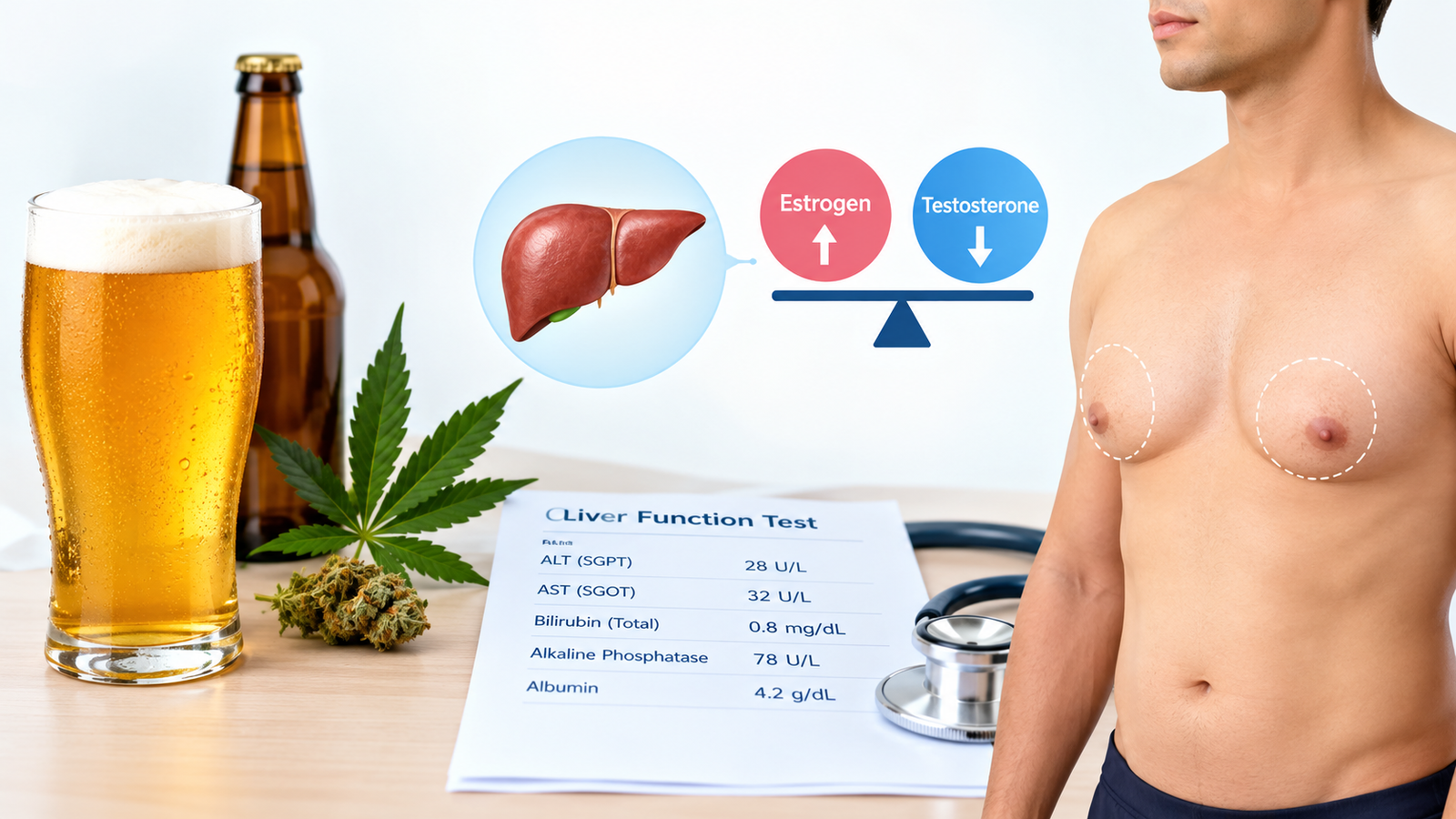
Patients who previously used anabolic steroids should discuss their history accurately with their clinician because hormonal factors can be relevant to male breast enlargement. See chest problems after steroid use.
What About Leg Training?
Patients sometimes assume that leg workouts are safe immediately because they do not directly train the chest.
That is not necessarily true.
Heavy squats, deadlifts, and leg presses can require forceful bracing and considerable whole-body effort. Handling heavy plates or dumbbells can also load the upper body even if the exercise itself targets the legs.
Therefore, "leg day" should not automatically be treated as permission for heavy training during early recovery.
When resistance exercise is allowed, lower-body training can be reintroduced progressively according to the surgeon's guidance.
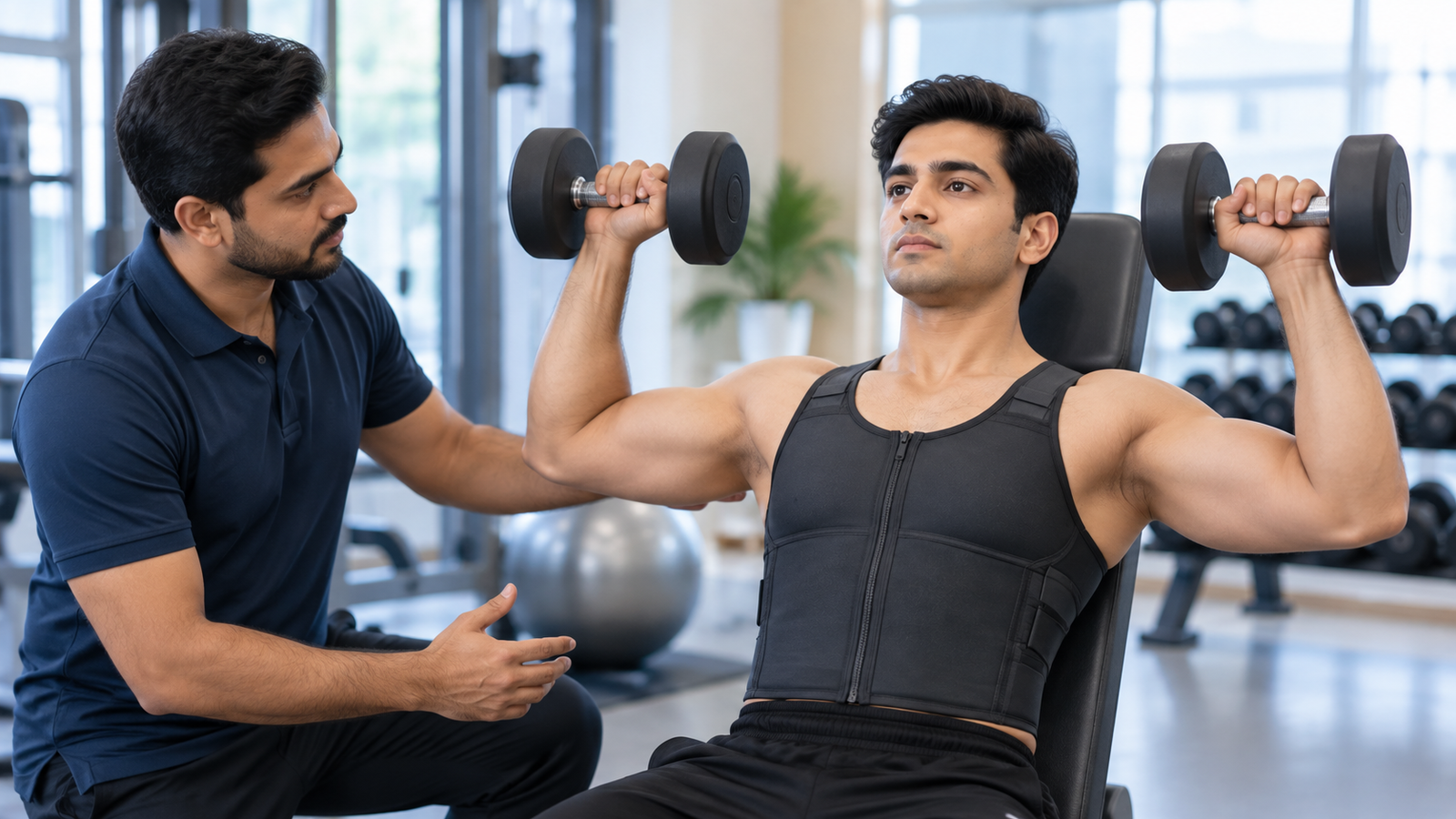
Should I Wear the Compression Vest at the Gym?
If you are still within the period during which your surgeon has prescribed a compression garment, follow those instructions.
A compression vest may provide support, but it does not make an otherwise restricted exercise safe.
Do not use the garment as protection that allows you to lift heavier weights earlier.
Sweating can also make the garment damp. Keep it clean and follow your postoperative instructions regarding washing, skin care and garment use.
How Should Training Intensity Be Increased?
Once resistance training is permitted, think in terms of progression rather than returning instantly to your old programme.
A sensible return may involve:
- Starting with lighter resistance.
- Using controlled repetitions.
- Avoiding maximal effort.
- Monitoring the chest during and after exercise.
- Increasing training volume gradually.
- Reintroducing demanding chest exercises later.
- Stopping if new pain or swelling develops.
Do not compare your recovery timeline with another patient's social-media post or gym experience.
Two people can undergo gynecomastia surgery and still require different return-to-training schedules because the amount of liposuction, gland excision, skin removal, and individual healing can differ.
Is Protein Supplementation Safe After Surgery?
Protein is important for normal nutrition and tissue repair, but a supplement is not automatically necessary simply because someone has undergone surgery.
Patients who normally use protein powders should tell their surgical team about all supplements they take.
This is particularly important for multi-ingredient gym supplements, pre-workout formulas, herbal products, hormones or performance-enhancing substances.
Do not restart supplements automatically after surgery without checking whether there is a reason they should temporarily be avoided.
A balanced diet with adequate protein, fluids, and overall nutrition is generally more important than attempting to accelerate healing with large amounts of supplements.
What If One Side Swells After a Workout?
Stop exercising and assess the change.
A small difference between the two sides can occur during recovery, but new or rapidly increasing one-sided swelling after physical activity should not simply be ignored.
Contact the surgical team, particularly if swelling is accompanied by increasing pain, firmness, bruising, redness, wound changes, or other symptoms.
Do not massage the area aggressively or repeatedly perform chest exercises in an attempt to "work the swelling out."
Gym Recovery After Gynecomastia Surgery
Returning to exercise is best treated as a progression through recovery milestones rather than a race back to the gym.
Dr. Ashutosh Shah, with 22+ years of experience in plastic and cosmetic surgery, advises patients to base their return to training on their individual healing and postoperative assessment rather than a fixed gym schedule.
Patients who feel physically fit before surgery may find rest particularly frustrating. Nevertheless, fitness does not eliminate the biological time required for operated tissues and incisions to heal.
Follow-Up Before Heavy Training
Before returning to demanding chest workouts, it is useful to confirm that recovery is progressing as expected.
At Elegance Clinic, Surat, postoperative follow-up can assess healing, swelling, chest contour, and other recovery factors before patients progressively return to heavier exercise.
You should also continue following the post-operative guidelines provided for your recovery.
Conclusion
So, when can I lift weights after gynecomastia surgery? The safest answer is not a single day or week for everyone.
Early recovery generally focuses on walking and normal light movement. Cardio and resistance training can then return progressively when healing permits. Direct chest loading, heavy bench presses, dips, overhead exercises, and maximal lifting usually require greater caution.
The key principle is to progress according to healing rather than according to how strong you feel. Feeling energetic does not mean the operated tissues have completed their recovery.
Start lighter than your previous training level, increase activity gradually, monitor the chest for unusual swelling or pain, and obtain medical clearance before returning to demanding upper-body training.