
Fluid Collection (Seroma) After Gynecomastia Surgery: Causes and Treatment
What causes fluid collection after gynecomastia surgery and how is it treated? A seroma is a collection of clear fluid that can develop in the space created beneath the skin after gynecomastia surgery. Small collections may settle with observation and compression, while larger or persistent seromas may require needle aspiration. Recurrent or complicated collections sometimes need further treatment.
Some swelling is expected after male breast reduction, so seeing a fuller chest during recovery does not automatically mean a seroma has formed. The important issue is recognizing when postoperative swelling behaves differently from normal healing and needs examination.
What Is a Seroma and How Does It Differ From Normal Swelling?
A seroma after gynecomastia surgery is a localized collection of fluid beneath the skin in the operated area.
During gynecomastia surgery, liposuction, gland excision, or both can create a potential space between tissue layers. As the body heals, fluid can sometimes accumulate in this space instead of being absorbed immediately.
Normal postoperative swelling is different. It generally represents diffuse tissue inflammation and fluid within the tissues rather than a defined pocket of free fluid.
A seroma may sometimes feel:
- Soft or fluctuant
- More localized than general swelling
- Uneven compared with the opposite side
- Like fluid is moving beneath the skin
- More noticeable when changing position or pressing gently around the area
However, patients should not attempt to diagnose a fluid collection by repeatedly pressing or squeezing the chest.
A clinical examination and sometimes ultrasound are more reliable.
For a broader understanding of the normal healing timeline, see recovery after male breast reduction.
Swelling vs Seroma After Gynecomastia Surgery
| Feature | Normal postoperative swelling | Possible seroma |
|---|---|---|
| Timing | Common immediately after surgery and gradually improves | May become more apparent after the initial postoperative period |
| Feel | Often diffuse, firm, or generally puffy | May feel softer, fluctuant or like a localized fluid pocket |
| Change with position | Usually less obviously mobile | A fluid-like sensation may sometimes shift |
| Action needed | Usually monitored according to postoperative instructions | Examination may be needed; ultrasound or aspiration may be considered |
This comparison is only a guide. A hematoma, infection, residual tissue,e and other postoperative problems can also cause swelling.
Do not assume that every soft swelling is a seroma.
Why Does It Usually Appear in Weeks Two to Four?
A fluid collection may become noticeable after the immediate postoperative swelling has begun to settle.
Surgery can leave a temporary space beneath the skin where gland or fat was removed. The body naturally produces inflammatory fluid during healing.
Normally, this fluid is gradually absorbed.
If fluid production exceeds absorption or the tissue layers have not yet adhered adequately, a collection can develop.
Movement between tissue layers can also make it more difficult for the space to close.
This helps explain why surgeons may recommend a compression garment and temporary restrictions on strenuous activity during early recovery.
A patient may initially believe recovery is progressing well and then notice that one area feels unusually soft or appears fuller during the following weeks.
That change deserves assessment rather than self-treatment.
Who Is at Higher Risk?
Not every patient develops a seroma, and its occurrence does not automatically mean something was done incorrectly.
Several factors can influence postoperative fluid accumulation.
These may include:
- Larger surgical treatment areas
- Extensive tissue removal
- Significant liposuction
- A larger space beneath the skin after gland removal
- Excessive early physical activity
- Individual healing response
- Failure of tissue layers to adhere quickly
- Certain postoperative complications
The relationship between compression and seroma formation is also more complicated than simply saying that stopping a vest will always cause fluid accumulation.
Compression is one component of postoperative management, but seromas can occur even when a patient follows instructions carefully.
How Is a Seroma Confirmed on Examination and Ultrasound?
The first step is usually clinical examination.
The surgeon may assess:
- Location of swelling
- Whether it is one-sided or bilateral
- Skin appearance
- Tenderness
- Firmness
- Fluctuation
- Incision healing
- Changes compared with previous follow-up visits
The history is also important.
For example, the doctor may ask when the swelling appeared, whether it is increasing, whether there was recent strenuous activity, ty and whether the patient has fever, redness, increasing pain, or wound discharge.
Role of Ultrasound
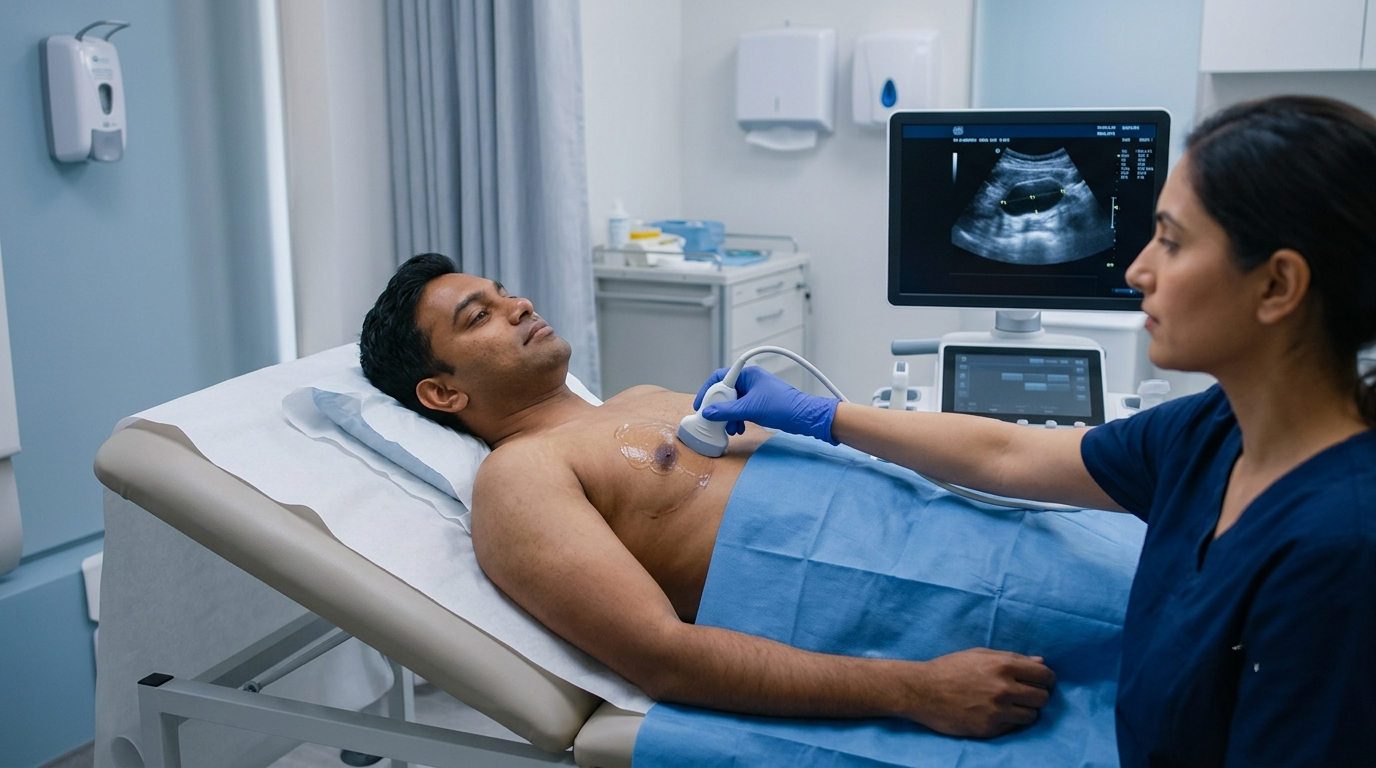
Ultrasound can be useful when examination alone cannot clearly determine what is causing the swelling.
It can help identify whether there is a localized fluid collection and may help distinguish fluid from solid tissue.
Ultrasound can also help estimate the size and location of a collection.
Not every patient with postoperative swelling requires an ultrasound. The decision depends on clinical findings.
When Is Aspiration Repeated and When Is a Drain Needed?
If a seroma is small and not causing significant problems, the treating surgeon may decide to monitor it.
Larger, uncomfortable, persistent, or clinically significant collections may require aspiration.
What Is Seroma Aspiration?
Aspiration involves using a sterile needle and syringe to remove accumulated fluid.
The skin is cleaned carefully, and the fluid pocket is accessed using an appropriate sterile technique. Depending on the circumstances, ultrasound guidance may sometimes be useful.
After aspiration, compression or other postoperative measures may be advised.
The patient is then monitored to determine whether the fluid returns.
Why Can Aspiration Need to Be Repeated?
Removing fluid does not necessarily make the potential space disappear immediately.
If the tissue layers have not yet adhered, additional fluid may accumulate.
As a result, some patients need more than one aspiration.
The number cannot be predicted for every patient.
Repeated aspiration should be performed by an appropriately trained clinician because introducing a needle into a postoperative area carries risks, including infection.
Never attempt to drain a suspected seroma yourself.
When Might a Drain Be Required?
Most postoperative fluid collections do not automatically require a surgical drain.
However, a drain or another intervention may be considered when a collection is recurrent, substantial, difficult to control, or associated with another postoperative issue.
The decision should be individualized after examination.
Is Aspiration Painful?
Patients often worry that aspiration will be very painful.
The experience varies depending on the location, size of the collection, postoperative sensation,n and technique used.
Some patients experience pressure or brief discomfort rather than severe pain. Parts of the operated chest may also have altered sensation during early recovery.
Pain should not be the reason to ignore a growing fluid collection.
If aspiration is recommended, ask the treating team what to expect and whether any local anaesthesia or other comfort measures are appropriate.
Can a Seroma Come Back After Aspiration?
Yes.
A seroma can recur because aspiration removes the accumulated fluid but does not instantly eliminate the space where the fluid collected.
The body may continue producing fluid during healing.
A recurrent seroma does not necessarily mean that the aspiration was unsuccessful.
Depending on the situation, management may include:
- Observation
- Continued appropriate compression
- Activity modification
- Repeat aspiration
- Ultrasound assessment
- Further intervention when clinically necessary
Regular follow-up allows the surgeon to see whether the amount of fluid is decreasing over time.
Does Stopping the Vest Cause a Seroma?
It is too simplistic to say that removing a compression vest automatically causes a seroma.
Seroma formation can involve several factors.
However, if your surgeon has prescribed postoperative compression, stopping it earlier than advised removes one element of the recovery plan intended to support healing tissues.
Similarly, making the vest excessively tight is not an appropriate way to treat suspected fluid accumulation.
Patients should follow the prescribed garment schedule and ask the surgical team before substantially changing it.
For additional recovery precautions, review the post-operative guidelines.
Does Early Exercise Increase the Risk?
Strenuous activity during early recovery can create additional movement and stress within the operated area.
For this reason, patients are commonly advised to avoid heavy lifting, chest exercises, es and strenuous workouts until medically cleared.
Exercise should not be used to try to "push out" or disperse fluid.
If swelling increases after physical activity, stop the activity and contact your surgical team.
How Do I Know If It Is a Seroma and Not Swelling?
You cannot always determine this reliably at home.
Normal swelling tends to be more diffuse and is expected during early recovery. A seroma may produce a more localized, soft, or fluctuant area.
However, postoperative chest enlargement can have several causes, including:
- Normal swelling
- Seroma
- Hematoma
- Infection
- Residual fat or gland
- Scar tissue
- Contour irregularity
That is why examination is preferable to self-diagnosis.
If the chest does not appear to be healing as expected, information about when chest fat removal goes wrong may also help patients understand why proper assessment matters.
When Does Swelling Need Urgent Medical Attention?
A gradually improving degree of swelling can be part of normal postoperative recovery.
Some changes, however, require prompt medical attention.
Contact your surgical team if you notice:
- Rapidly increasing swelling
- Sudden major difference between the two sides
- Severe or worsening pain
- Significant redness or warmth
- Fever
- Pus or unusual wound discharge
- Active bleeding
- Wound separation
- Significant skin colour change
- A rapidly enlarging, tense chest
Seek urgent medical care for severe symptoms such as difficulty breathing, chest pain, fainting,g or other signs of a medical emergency.
Can Seroma Affect the Final Chest Shape?
Many appropriately treated seromas resolve without causing a major permanent contour problem.
However, a persistent or complicated fluid collection can interfere with smooth postoperative recovery.
This is why follow-up matters.
Patients should avoid repeatedly squeezing, massaging, ng or manipulating an unexplained swelling unless specifically instructed to do so.
Once the fluid problem and initial healing have settled, remaining contour or scar concerns can be assessed separately.
Patients concerned about scars after recovery can review the chest scar revision guide.
Postoperative Assessment Matters
Because swelling, seroma, hematoma, and other postoperative changes can look similar to a patient, examination is often more useful than trying to diagnose the problem from photographs or symptoms alone.
Dr. Ashutosh Shah, with 22+ years of experience in plastic and cosmetic surgery, evaluates postoperative chest changes according to the timing, examination findings, and individual surgical history before recommending further management.
Patients should also attend scheduled follow-up visits even when their recovery initially appears straightforward.
Seroma Care at Elegance Clinic
At Elegance Clinic, Surat, postoperative assessment can include examination of chest swelling and, when clinically appropriate, further evaluation to determine whether a suspected collection requires observation, aspiration,n or another approach.
Early communication with the treating surgical team is particularly important when swelling changes suddenly rather than gradually improving.
Conclusion
A seroma after gynecomastia surgery is a collection of fluid that develops beneath the skin within the operated area. It is different from ordinary diffuse postoperative swelling, although the two can sometimes be difficult for patients to distinguish.
Small collections may settle with appropriate monitoring, while larger or persistent seromas can require aspiration. Some may refill and need repeat treatment, and selected recurrent or complicated cases may require additional intervention.
The key is not to diagnose or drain a suspected seroma yourself.
If swelling becomes localized, fluid-like, increasingly asymmetric, or unexpectedly worsens after initially improving, contact your surgical team. Clinical examination and, when appropriate, ultrasound can establish whether fluid is actually present and what treatment is needed.