
Failed Chest Fat Removal Treatment in Surat
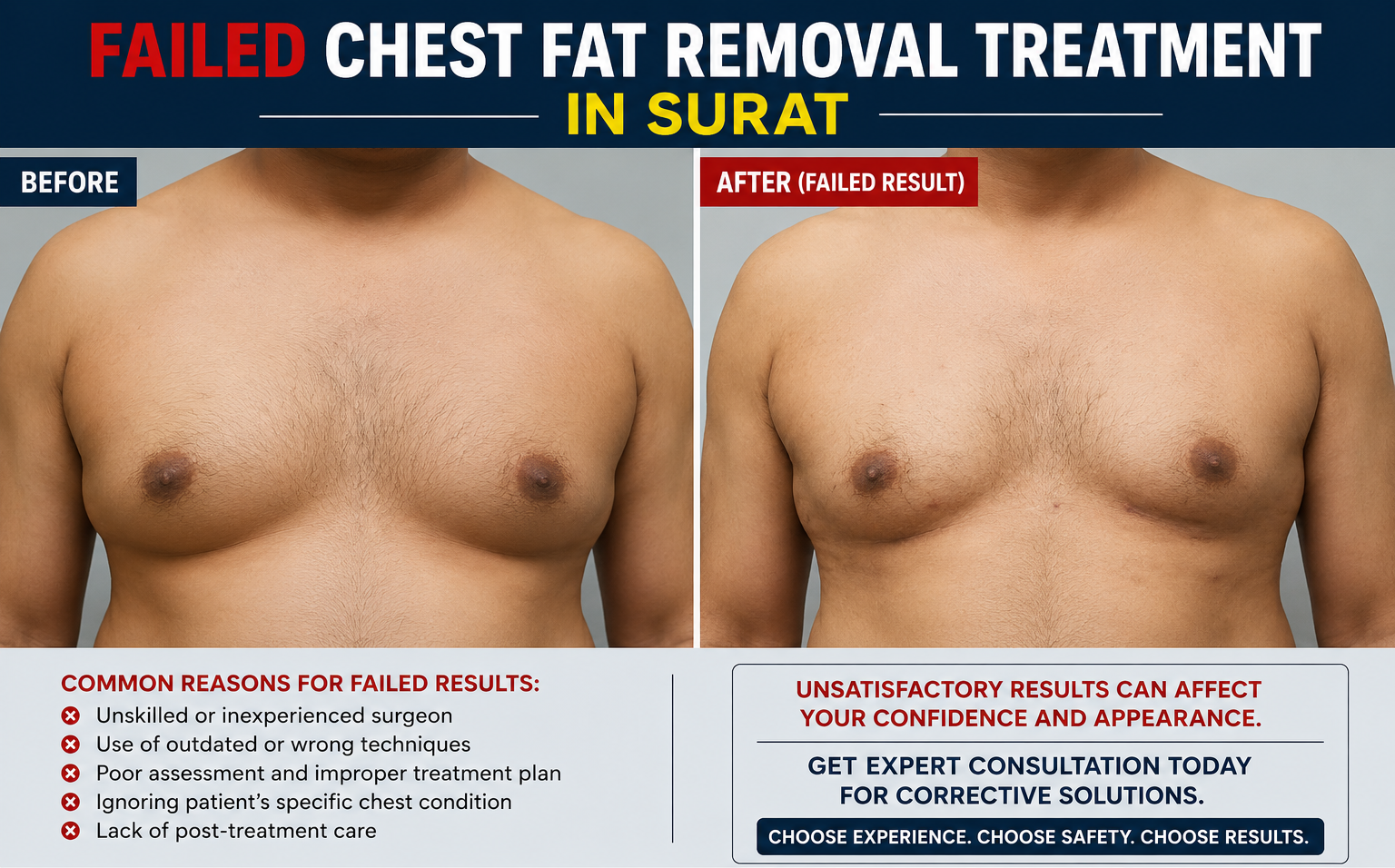
If you are dealing with failed chest fat removal, it usually means the previous chest contouring or gynecomastia surgery did not deliver smooth, balanced, or natural-looking results. Dr Ashutosh Shah at Elegance Clinic specializes in correcting failed chest fat removal cases through advanced revision gynecomastia surgery, helping patients achieve a more defined and confident chest appearance.
Many patients experience uneven chest shape, leftover gland tissue, loose skin, dents, or asymmetry after surgery. Fortunately, with proper diagnosis and corrective treatment, these concerns can often be improved significantly.
What Is Failed Chest Fat Removal?
Failed chest fat removal refers to unsatisfactory results after a previous procedure performed to remove excess fat or gland tissue from the male chest.
Although chest contouring procedures are generally effective, some patients may notice irregular or incomplete results after surgery.
Common problems include:
- Uneven chest appearance
- Residual chest fat
- Remaining gland tissue
- Puffy nipples after surgery
- Visible scars
- Skin sagging or loose chest skin
- Chest depression or dents
As a result, patients may feel disappointed and begin searching for corrective treatment options.
Why Does Chest Fat Removal Surgery Fail?
There are several reasons why failed chest fat removal can happen.
Incomplete Fat Removal
Sometimes the surgeon removes only part of the fat, leaving excess tissue behind. Consequently, the chest may still appear enlarged.
Remaining Gland Tissue
In gynecomastia treatment, gland tissue must often be removed along with fat. If gland tissue remains, chest fullness may continue.
Poor Surgical Technique
Incorrect liposuction technique can cause uneven fat removal. Therefore, contour irregularities may become visible.
Lack of Skin Tightening
If a large amount of tissue is removed without proper skin management, loose skin may develop afterward.
Post-Surgery Healing Issues
In some cases, improper healing causes scar tissue formation or abnormal chest contour changes.
Symptoms of Failed Chest Fat Removal
Patients usually notice visible changes after healing is complete.
Common symptoms include:
- Chest still looks enlarged
- Uneven chest contour
- One side appears different from the other
- Persistent puffy nipples
- Hard lumps under the skin
- Skin folds or sagging skin
- Visible scarring
- Chest indentations or depressions
Because of these issues, many patients seek corrective revision surgery.
How Is Failed Chest Fat Removal Diagnosed?
Proper diagnosis helps determine the best correction method.
Physical Examination
The surgeon carefully evaluates chest shape, skin quality, scar tissue, and asymmetry.
Tissue Assessment
It is important to identify whether the remaining tissue is fat, gland tissue, scar tissue, or skin excess.
Medical History Review
The previous surgery details help determine why the procedure failed.
Surgical Planning
After identifying the exact cause, a customized revision surgery plan is prepared.
Therefore, accurate diagnosis is essential before proceeding with correction.
Treatment Options for Failed Chest Fat Removal
Treatment depends on the specific problem causing poor results.
Revision Gynecomastia Surgery
This is the most effective treatment when previous surgery did not remove enough tissue or caused contour irregularities.
The procedure corrects:
- Residual fat deposits
- Remaining gland tissue
- Chest asymmetry
- Uneven contour
- Puffy nipple correction
As a result, the chest can regain a smoother and more natural appearance.
Liposuction Correction
If excess fat remains, advanced liposuction may help improve chest contour.
However, this works best when gland tissue is not present.
Scar Tissue Removal
Some patients develop internal scar tissue after surgery.
In such cases, surgical scar tissue removal may improve appearance.
Skin Tightening Procedures
If loose skin develops, additional skin tightening or excision may become necessary.
Revision Gynecomastia Surgery for Failed Chest Fat Removal
Revision gynecomastia surgery is commonly recommended when chest fat removal results are unsatisfactory.
Unlike primary surgery, revision procedures require more advanced surgical planning.
The goal is to restore chest symmetry while improving overall contour.
This surgery may involve:
- Liposuction
- Gland removal
- Scar tissue correction
- Skin tightening
- Nipple contour correction
Because revision cases are more complex, surgical expertise plays an important role.
How the Surgical Procedure Works
The revision surgery process usually follows several steps.
Step 1: Evaluation and Planning
The surgeon identifies the exact cause of failed chest fat removal.
Step 2: Anesthesia
The procedure is generally performed under local anesthesia with sedation or general anesthesia.
Step 3: Fat Removal
Excess remaining fat is removed using liposuction.
Step 4: Gland Tissue Removal
If gland tissue remains, surgical excision removes it carefully.
Step 5: Chest Reshaping
The chest contour is corrected to improve balance and symmetry.
Step 6: Skin Adjustment
Loose skin may be tightened if necessary.
Step 7: Compression Garment
A compression garment helps reduce swelling and supports healing.
Recovery After Revision Surgery
Recovery after revision surgery usually depends on the extent of correction required.
Most patients experience:
- Mild swelling
- Temporary discomfort
- Bruising for several days
- Limited physical activity initially
Recovery guidelines include:
Wear a compression garment
This helps control swelling and supports chest shaping.
Avoid Heavy Exercise
Patients should avoid gym workouts for several weeks.
Attend Follow-Up Visits
Regular checkups help monitor healing progress.
Follow Medication Instructions
Pain management and antibiotics may be prescribed when necessary.
Most patients resume their normal routine within a short period, although complete healing takes longer.
Risks of Failed Chest Fat Removal Correction Surgery
Like any surgery, revision procedures may involve certain risks.
Possible risks include:
- Swelling
- Bruising
- Temporary numbness
- Infection
- Scar formation
- Minor asymmetry
- Delayed healing
However, proper surgical planning helps reduce complications significantly.
Benefits of Revision Gynecomastia Surgery
Corrective surgery offers several important benefits.
Improved Chest Shape
The chest appears flatter and more balanced.
Better Symmetry
An uneven chest contour can be corrected.
Removal of Residual Tissue
Remaining fat or gland tissue gets removed properly.
Better Confidence
Patients often feel more comfortable with their appearance.
Natural Looking Results
Advanced contour correction improves overall chest aesthetics.
Therefore, revision surgery often restores both physical appearance and confidence.
When Should You Consider Treatment?
You should consult a specialist if you notice:
- Persistent chest fullness after surgery
- Uneven chest shape
- Puffy nipples after treatment
- Loose skin after fat removal
- Visible contour irregularities
- Dissatisfaction months after surgery
Early evaluation helps determine the best corrective option.
Conclusion
Experiencing failed chest fat removal can feel frustrating, especially when surgery does not produce the expected chest contour. However, corrective treatment is often possible with properly planned revision surgery for gynecomastia.
Since revision procedures are more complex than first-time surgery, choosing an experienced surgeon is extremely important. With advanced techniques, the chest contour can often be significantly improved.