
Flying and Travelling After Gynecomastia Surgery: When It Is Safe
Travelling after gynecomastia surgery requires some planning, especially during the first few days of recovery. In general, patients should avoid unnecessary travel during the first 72 hours after gynecomastia surgery, as this is an important period for monitoring swelling, discomfort, bleeding, fluid collection, and other early postoperative concerns. The right time to fly or take a long journey varies depending on the extent of surgery, individual recovery, and the advice of the treating surgeon.
At Elegance Clinic, Surat, Dr. Ashutosh Shah, a board-certified plastic surgeon with 22+ years of experience in plastic and cosmetic surgery, provides patients with individualized postoperative instructions, including guidance about travel, compression garments, physical activity, and follow-up after gynecomastia surgery.
Patients travelling to Surat from another city or state should discuss their return journey with their surgeon before booking flights, trains, or long road journeys.
Why Do the First 72 Hours Matter Most?
The first 72 hours after male breast reduction are an important part of the initial recovery period. The chest has recently undergone surgery, and swelling, bruising, tightness, and mild-to-moderate discomfort can occur.
During this period, the surgical team may need to monitor the patient for early postoperative concerns.
Travelling too soon can also make recovery less comfortable. Long periods of sitting, carrying bags, walking through large airports or railway stations, and getting in and out of vehicles can place unnecessary physical demands on a patient who has just undergone surgery.
Ideally, the first few days should focus on:
- Taking prescribed medicines correctly
- Getting adequate rest
- Wearing the compression garment as instructed
- Taking gentle walks as advised
- Keeping the surgical area protected
- Monitoring swelling and discomfort
- Attending early follow-up when required
- Avoiding strenuous upper-body movements
Patients should not choose a travel date based only on how comfortable they feel. A surgeon's assessment is important because some postoperative issues may require evaluation even when symptoms initially appear minor.
How Do Short Flights Differ From Long-Haul Journeys?
The answer to “When can I fly after gynecomastia surgery?” depends partly on the duration and complexity of the journey.
A short domestic flight and a long international flight are not equivalent.
Short Flights
A short flight involves less time sitting continuously, but the complete journey can still involve walking through the airport, security queues, carrying luggage, reaching overhead compartments, and travelling to and from the airport.
If the surgeon has cleared the patient to fly, planning assistance with luggage can make the journey easier.
Long-Haul Flights
Long flights require more caution because patients remain seated for extended periods. Prolonged immobility can increase the risk of blood clots, particularly following surgery.
The treating surgeon may recommend delaying long-distance air travel for longer than a short flight based on the patient's recovery and individual risk factors.
When cleared to travel, patients may be advised to:
- Walk periodically during the journey
- Move their ankles and legs while seated
- Stay appropriately hydrated
- Avoid lifting heavy cabin baggage
- Continue wearing the prescribed compression vest
- Keep required medicines accessible
- Follow any additional precautions given by their surgeon
Patients should not start aspirin, blood thinners, or other medicines solely for a flight unless specifically instructed by their doctor.
How Do Road and Train Journeys Affect the Chest?
Flying is not the only concern after surgery. A long journey after chest surgery by car, bus, or train can also be uncomfortable.
Travelling by Car
Short car journeys may be possible relatively early when the surgeon considers them appropriate.
The patient should normally travel as a passenger rather than drive immediately after surgery. Pain medication, limited upper-body movement, discomfort, and the effects of anaesthesia can make driving unsafe during the early recovery period.
A seat belt should still be worn for safety. If pressure across the operated area is uncomfortable, ask the surgeon about safe ways to improve comfort without compromising seat-belt protection.
Travelling by Train
Train travel can reduce some of the airport-related walking and security requirements, but long journeys still involve prolonged sitting and luggage handling.
Choose a comfortable seat or berth when possible and avoid lifting heavy suitcases.
Travelling by Bus
Long bus journeys may be less comfortable during early recovery because movement can be restricted and frequent breaks may not be possible.
Before planning a long bus journey in the first postoperative week, discuss it with the surgeon.
Travel-Clearance Guide After Gynecomastia Surgery
The following table is a general planning guide, not an individual medical clearance schedule.
| Day after surgery | Car | Train | Short flight | Long flight | Conditions |
|---|---|---|---|---|---|
| First 24 hours | Short essential journey with assistance only | Generally avoid | Generally avoid | Avoid | Initial recovery and monitoring are priorities |
| 24–72 hours | Short passenger trips if cleared | Usually best postponed | Usually best postponed | Avoid | Early swelling and postoperative monitoring continue |
| Days 4–7 | May be possible | May be possible | May be considered after surgeon clearance | Usually requires more caution | Depends on recovery, procedure, and surgeon assessment |
| Week 2 onward | Often easier | Often easier | May be possible when medically cleared | Discuss individually | Avoid heavy luggage and continue postoperative precautions |
| Later recovery | Gradual return | Gradual return | Usually easier | May be considered when cleared | Follow individual activity and lifting restrictions |
There is no universal travel-clearance day applicable to every gynecomastia patient. The procedure performed, anaesthesia, postoperative condition, other health conditions, and individual risk factors all influence the decision.
Should You Wear a Compression Vest During a Flight?
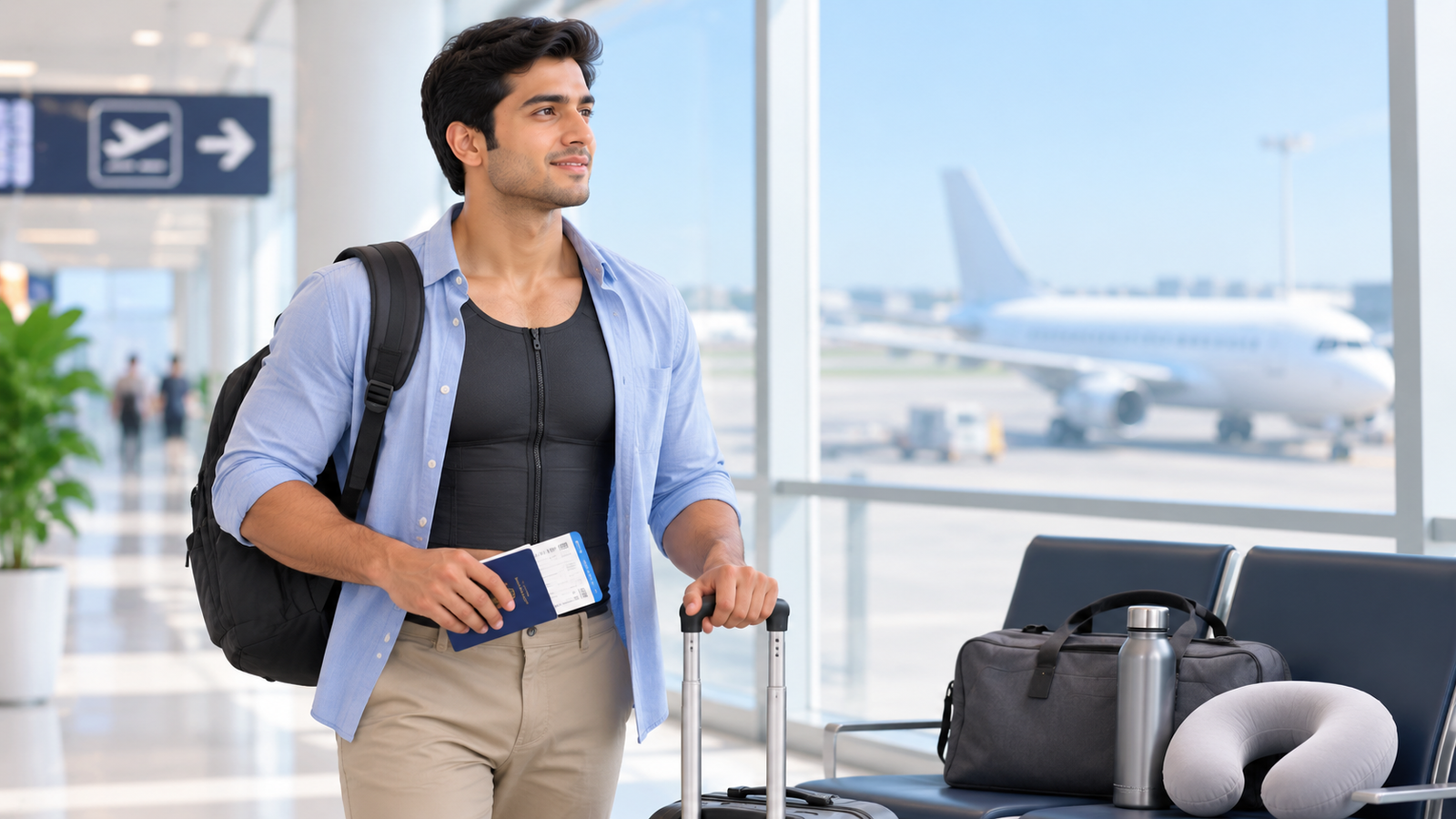
A compression vest during flight should generally be used according to the same postoperative schedule prescribed by the surgeon.
Compression garments are commonly recommended following gynecomastia surgery to support the operated chest during recovery and help manage postoperative swelling.
However, the type of garment and duration of use may vary.
Do not make the garment excessively tight because you are travelling. It should be worn exactly as instructed by the surgical team.
At Elegance Clinic, Dr. Ashutosh Shah provides postoperative instructions based on the patient's procedure and recovery. Patients travelling back to another city should understand how and when to use their compression garment before leaving Surat.
What Should Be Carried in Hand Baggage?
Patients travelling after surgery should keep important medical items with them rather than placing everything in checked luggage.
Useful items may include:
- Prescribed medicines in their original packaging
- Prescription or medication information
- Discharge summary
- Relevant medical documents
- Treating clinic's contact details
- Dressing supplies if specifically advised
- Comfortable clothing
- Any surgeon-recommended postoperative items
For air travel, patients should also check the airline's current rules regarding medicines, liquids, medical supplies and documentation.
Keep essential medicines accessible throughout the journey.
Can I Lift My Own Luggage After Two Weeks?
Do not assume that reaching a particular number of days automatically makes heavy lifting safe.
Suitcases can require significant chest, shoulder and arm effort, particularly when lifting them from the floor, placing them on a conveyor belt or raising them into an overhead cabin compartment.
During early recovery after male breast reduction, excessive upper-body activity may put unnecessary strain on healing tissues.
Arrange for someone else to handle heavy luggage until your surgeon clears you for the required level of lifting.
If you are travelling alone, consider airport, railway, or hotel luggage assistance.
Planning Travel for Out-of-Station Gynecomastia Patients
Patients sometimes travel to Surat specifically for gynecomastia surgery. In these situations, the return journey should be part of the treatment planning rather than something arranged at the last minute.
Before travelling for surgery, discuss:
- How long you should remain in Surat
- When your first postoperative review will occur
- Whether another review is required before departure
- Whether your planned flight or train journey is appropriate
- How postoperative follow-ups will be managed after returning home
- Who to contact if a problem occurs
- Whether you need assistance during your journey
- Restrictions on lifting luggage
At Elegance Clinic in Surat, patients travelling from outside the city can discuss these considerations with Dr. Ashutosh Shah and the clinical team when planning their procedure.
Which Signs During Travel Mean Seeing a Doctor?
Some swelling and discomfort can occur during normal recovery. However, patients should understand which symptoms require prompt medical attention.
Contact your treating surgeon or seek appropriate medical care if you develop concerning symptoms such as:
- Sudden or rapidly increasing chest swelling
- Significant bleeding
- Severe or worsening pain
- Increasing redness or warmth around the surgical area
- Pus or concerning wound discharge
- Fever or feeling significantly unwell
- Wound opening
- New significant swelling or pain in a leg
Chest pain, sudden shortness of breath, fainting, coughing up blood, or other severe symptoms require urgent medical assessment.
Do not continue a journey simply because tickets or accommodation have already been booked if significant symptoms develop.
Tips for Comfortable Travel After Male Breast Reduction
Once your surgeon has cleared you to travel, a few practical arrangements can make the journey more manageable.
Choose loose, comfortable clothing that does not create unnecessary pressure over the chest. Continue using the compression garment according to your postoperative instructions.
Avoid carrying heavy backpacks or shoulder bags. A wheeled suitcase may reduce some effort, but someone else should still lift it when lifting restrictions remain in place.
For longer journeys, take appropriate opportunities to stand and walk if medically permitted. Keep medicines and medical documents easily accessible.
Most importantly, plan enough time. Rushing through an airport or railway station shortly after an operation can create unnecessary physical strain.
Gynecomastia Surgery Cost, Travel and Payment Planning
Out-station patients should consider travel and accommodation expenses in addition to the gynecomastia surgery cost.
Depending on the patient's circumstances, the overall budget may include:
- Consultation and investigations
- Surgical treatment
- Medicines
- Compression garments
- Accommodation in Surat
- Travel expenses
- A companion's expenses
- Follow-up requirements
Patients can ask Elegance Clinic about the available payment methods and any EMI or financing options that may be available for eligible patients. Availability, tenure, interest, and other financing conditions can vary according to the relevant payment or finance provider.
Consult Dr. Ashutosh Shah for Gynecomastia Surgery in Surat
Patients considering gynecomastia treatment in Surat can consult Dr. Ashutosh Shah at Elegance Clinic. Dr. Shah is a board-certified plastic surgeon with 22+ years of experience in plastic and cosmetic surgery.
For out-of-station patients, planning should include not only the operation but also the appropriate duration of stay in Surat, postoperative reviews, compression garment use, return travel, and activity restrictions.
Each patient's recovery is different, so travel clearance should always be individualized rather than based solely on a fixed number of days.
Conclusion
So, when can I fly after gynecomastia surgery? There is no single timeline that is safe for every patient.
The first 72 hours are particularly important for early recovery and monitoring, and unnecessary travel is generally best avoided during this period. Short journeys may become possible as recovery progresses, while long-haul flights and extended road or train journeys require additional consideration.
Before booking your return journey, speak with your surgeon about the duration of travel, your recovery, compression vest, medicines, luggage restrictions, and follow-up schedule.
If you are travelling to Surat for treatment at Elegance Clinic, discuss your travel plans with Dr. Ashutosh Shah before surgery so that your return journey can be coordinated with your postoperative recovery.