
What Causes a Baby Chest Lump and When Does It Need Treatment?
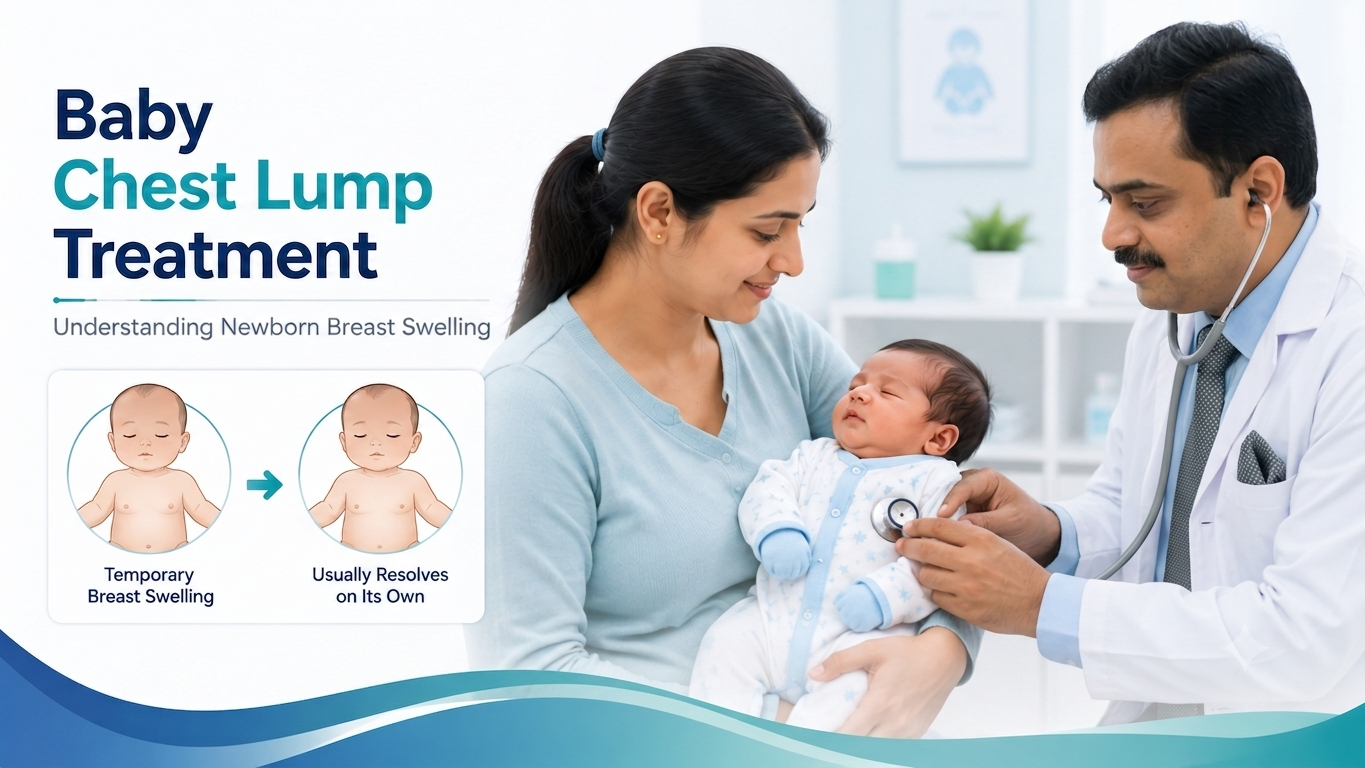
A small lump under a baby’s nipple can make parents worried. However, breast tissue swelling is common in newborn babies. It can happen because of hormonal changes during pregnancy and after birth. Both baby boys and girls can develop this swelling. In most cases, it is temporary and does not require surgery.
Understanding the cause can help parents stay calm and know when medical advice is needed.
What Causes a Baby Chest Lump?
The most common cause is exposure to maternal hormones. During pregnancy, hormones such as estrogen can pass from the mother to the baby through the placenta. These hormones can temporarily stimulate the baby’s breast tissue.
After birth, the baby’s hormone levels gradually change. As a result, the breast tissue usually becomes smaller over time.
This condition is often called neonatal gynecomastia or newborn breast enlargement. The swelling may affect one side or both sides. Therefore, parents may notice that one breast looks slightly larger than the other.
Is a Baby Chest Lump Normal?
In many newborns, a small lump beneath the nipple is normal. It may feel firm or slightly rubbery. Mild swelling can also occur around the nipple.
The lump may become more noticeable during the first few weeks. However, it generally reduces naturally as the baby grows.
Parents should avoid repeatedly touching the area. Frequent pressure can irritate the tissue and may increase the risk of inflammation or infection.
Does a Baby Chest Lump Need Treatment?
Usually, no specific treatment is required. Doctors often recommend observation when the baby is healthy and the lump has typical features of newborn breast enlargement.
The body usually manages the condition naturally. Therefore, medicines or surgery are rarely needed.
Parents should not give medicines or apply creams without medical advice. They should also avoid home remedies that involve pressure or massage.
How Long Does Newborn Breast Swelling Last?
The duration can vary between babies. In many cases, the swelling gradually decreases during the first few months.
Some babies may have a small amount of breast tissue for longer. This does not automatically mean that the condition is serious.
Regular pediatric checkups can help monitor the swelling. If the doctor notices anything unusual, they can recommend further evaluation.
Can Parents Squeeze the Lump?
No. Parents should never squeeze, massage, or press a baby’s chest lump.
Squeezing can damage the delicate tissue around the nipple. It can also introduce bacteria and increase the risk of infection.
Instead, leave the area alone and keep the baby’s skin clean. Follow the pediatrician’s instructions if the swelling changes.
When Should Parents See a Doctor?
Most newborn breast lumps are harmless. Still, certain symptoms require medical attention.
Parents should contact a pediatrician if they notice:
- Redness around the nipple
- Significant swelling
- Increasing pain or tenderness
- Warmth around the area
- Pus or unusual discharge
- Fever
- Rapidly increasing swelling
- Skin changes around the lump
- A lump that feels unusual or continues to grow
These symptoms can indicate an infection or another condition that needs assessment.
Can Neonatal Gynecomastia Affect One Side?
Yes. Newborn breast enlargement can affect only one side. It can also affect both sides but with different levels of swelling.
Mild differences between the two sides are not unusual. However, parents should seek medical advice if the difference becomes more noticeable or develops with pain, redness, discharge, or other symptoms.
What Is Baby Chest Lump Treatment?
Baby chest lump treatment usually involves observation when the swelling is related to normal hormonal changes. The breast tissue often becomes smaller without medical intervention.
If an infection or another medical condition is suspected, the pediatrician may recommend appropriate tests or treatment. The treatment should always depend on the underlying cause.
Surgery is rarely required for typical newborn breast enlargement. Parents should therefore avoid assuming that a lump requires surgical treatment.
How Is Neonatal Gynecomastia Diagnosed?
A doctor usually starts with a physical examination. They may ask about the baby’s age, symptoms, feeding, general health, and how long the swelling has been present.
If the lump appears typical and the baby has no concerning symptoms, observation may be enough. Additional tests may be considered when the swelling has unusual characteristics or other symptoms are present.
Expert Care at Elegance Clinic, Surat
Parents naturally want an experienced medical professional to assess any unusual swelling in their baby.
Dr. Ashutosh Shah, a cosmetic and hair transplant surgeon with over 22 years of experience, provides personalized consultation at Elegance Clinic, Surat. His experience in evaluating male breast conditions and cosmetic concerns supports an individualized approach to treatment planning.
For newborn or infant chest swelling, parents should first seek appropriate pediatric evaluation. Further specialist guidance can be considered when required.
Conclusion
A small chest lump in a newborn is often caused by temporary hormonal changes. In most cases, the swelling gradually reduces without medicines or surgery.
Parents should not squeeze or massage the lump. Instead, they should monitor the area and watch for redness, fever, pain, discharge, or rapid growth.