
One-Sided or Revision Gynecomastia Surgery Explained
Gynecomastia can affect one side, and surgery may treat that side alone after assessment. Revision surgery can also address selected concerns after a previous operation, including remaining tissue, dents, or loose skin. Both situations need a fresh examination: a new lump should be investigated, and early postoperative swelling should not be mistaken for a finished result.
What Is Unilateral Gynecomastia?
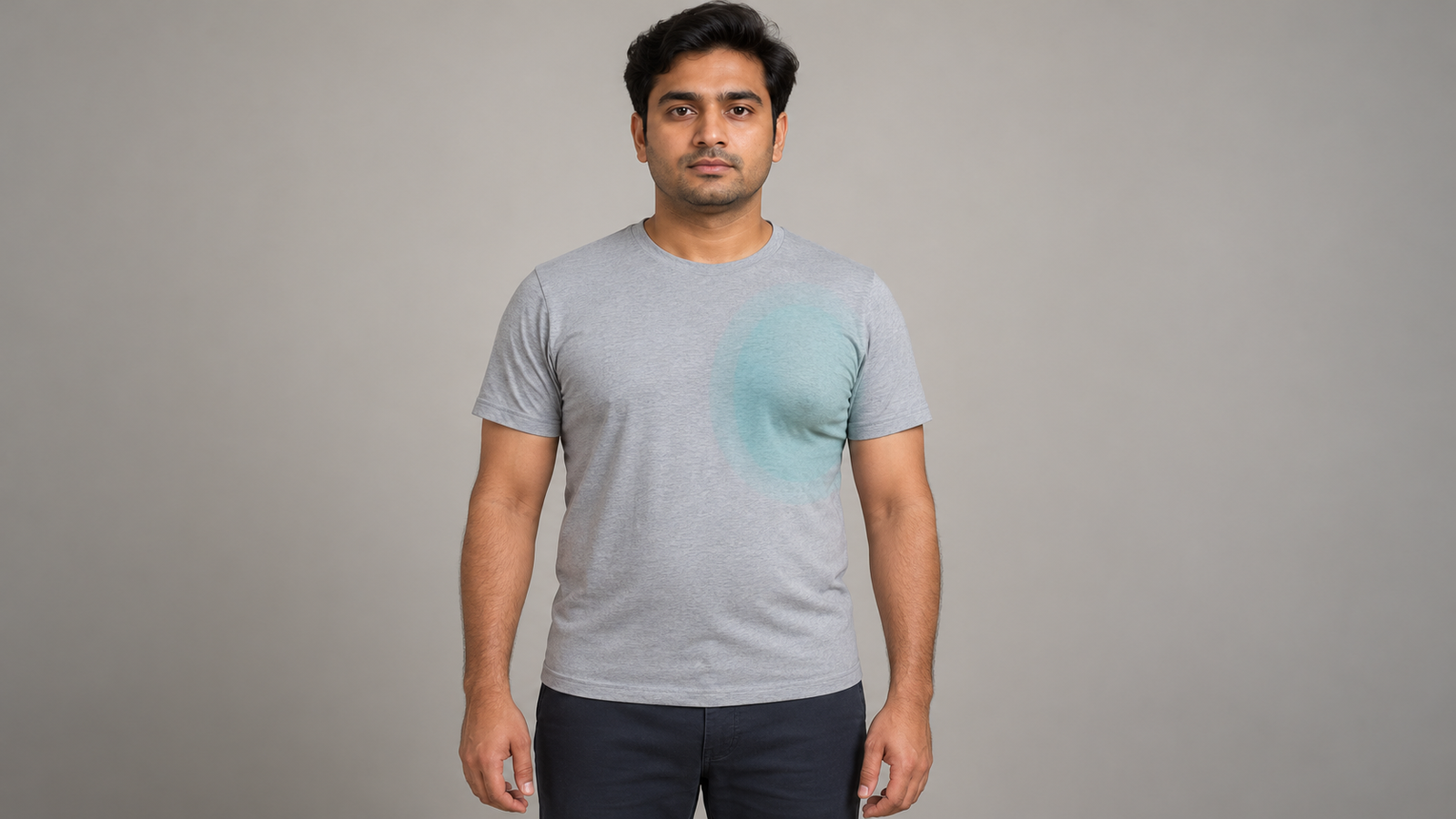
Unilateral gynecomastia means enlargement of glandular breast tissue on one side of the chest. The other side may appear unaffected or have a smaller amount of enlargement.
Gynecomastia can occur on both sides unevenly or on one side alone. ASPS recognises these patterns and emphasises the importance of a physical examination before treatment.
However, an uneven chest does not automatically mean unilateral gynecomastia. Fat distribution, loose skin, muscle development, and chest-wall shape can also contribute.
The first step is identifying what creates the difference. The fat-versus-gland guide explains why appearance alone cannot settle the diagnosis.
Does Gynecomastia on One Side Need Investigation?
Yes. One-sided enlargement should be assessed rather than assumed to be a cosmetic problem.
The clinician asks when it started, whether it is growing, and whether you have tenderness, discharge, or other changes. They also review medicines, supplements, steroid use and relevant medical conditions.
Tell the doctor about a distinct lump, nipple discharge or bleeding, skin dimpling, or a new change in nipple position. NHS guidance recommends medical assessment for breast lumps and nipple or skin changes.
These symptoms do not necessarily indicate cancer, but they should not be dismissed as ordinary gynecomastia.
Tests or imaging may be recommended according to the examination. Read Tests before gynecomastia surgery for the different purposes of hormone testing and ultrasound.
Can the Surgeon Operate on Just One Side?
Sometimes. If the enlargement is confined to one side and the opposite side provides a suitable reference, treatment may focus on the affected side.
Both sides still need examination. The surgeon should explain whether the smaller side has glandular tissue, a different nipple position, or another feature that affects the plan.
Possible approaches include:
- Gland removal when firm breast tissue causes the fullness.
- Liposuction when fat contributes to the contour.
- A combination of gland removal and liposuction.
- Skin removal when excess skin or drooping requires correction.
Treating both sides is not automatically necessary. Equally, removing tissue from one side cannot guarantee that it will exactly match the other.
Ask: “What difference can this operation improve, and what difference is likely to remain?”
What Is Revision Gynecomastia Surgery?
Revision gynecomastia surgery is a further operation intended to improve a concern after previous chest surgery.
It may address persistent fullness, a contour depression, loose skin, troublesome scarring or asymmetry. A revision assessment should establish the cause before choosing another procedure.
ASPS lists asymmetry, contour irregularities, unfavourable scarring and the possibility of revision among the risks of gynecomastia surgery.
Needing a review does not automatically mean another operation is necessary. Some concerns relate to healing, while others may benefit from treatment once the tissues have settled.
What Problems Can Revision Surgery Address?
| Concern | What the surgeon needs to assess | Possible approach |
|---|---|---|
| Persistent nipple puffiness | Residual gland, fat, skin and healing changes | Selected tissue removal or continued observation |
| A dent beneath the nipple | Tissue deficiency, scarring or tethering | Selected scar release and volume restoration |
| Uneven chest contour | Remaining tissue, depressions and baseline anatomy | Tailored contour correction |
| Loose or hanging skin | Skin excess and nipple position | Skin removal, sometimes with nipple repositioning |
| A noticeable scar | Scar type, maturity and symptoms | Scar treatment or selected revision |
| New enlargement after an initially stable result | Possible recurrence or another new cause | Investigation before deciding treatment |
This table describes possibilities, not a diagnosis. The same visible concern can have different explanations.
Why Is More Tissue Removal Not Always the Answer?
A fuller area and a hollow area require different planning.
If excess tissue remains, carefully targeted removal may help. If too much tissue was removed previously, taking more away could deepen the depression.
Selected contour defects may be treated with fat grafting or other reconstructive techniques. Fat grafting transfers your own fat to restore volume; it does not guarantee complete correction or that every transferred fat cell will survive.
Published research describes fat grafting for gynecomastia contour irregularities, but a recent small retrospective study cautions that its findings are preliminary. It should not be presented as proof that every revision defect can be corrected in one session.
Ask the surgeon to explain whether the proposed revision removes tissue, adds support or volume, releases scarring, or combines these steps.
How Long Should You Wait Before Considering Revision?
You can raise a concern at any time. The timing of another operation depends on what is causing it.
ASPS states that the final appearance after gynecomastia surgery may take approximately three to six months to develop. This is a general recovery range, not an automatic date for revision.
A surgeon may recommend further observation if swelling, skin adjustment, or scar maturation is still changing the result. A complication may require earlier treatment.
For a fuller explanation, see the gynecomastia surgery results timeline.
Do not wait for a routine revision appointment if swelling increases rapidly or you develop worsening pain, redness, discharge or skin-colour changes. Contact your surgical team promptly.
Is Persistent Fullness the Same as Recurrence?
No. Fullness that never fully resolved and enlargement that develops again after a stable result are different situations.
The assessment may identify remaining gland, fat, healing changes, or renewed glandular enlargement. If an underlying cause is active, it needs attention before another elective operation.
Gynecomastia guidance emphasises evaluating causes and choosing treatment according to the clinical situation. Surgery is an option for persistent enlargement, rather than a replacement for that assessment.
Read Can gynecomastia come back after surgery? For more on this distinction.
What Should You Bring to a Revision Consultation?
Previous records help the surgeon understand what was done and how the appearance changed.
Bring the following if available:
| Item | Why it helps |
|---|---|
| Original operation notes | Identifies the techniques and areas treated |
| Before-and-after photographs | Shows baseline asymmetry and changes over time |
| Histopathology report | Records findings from tissue examined after removal |
| Records of complications or treatment | Helps explain healing problems |
| Current medicine and supplement list | Supports assessment of causes and surgical risk |
| A short description of your main concern | Keeps the discussion focused on your goals |
You can still attend if some records are unavailable.
During an assessment with Dr. Ashutosh Shah at Elegance Clinic, explain what bothers you most and what improvement you hope to achieve. Ask which parts of the concern are realistically correctable and whether more than one stage may be needed.
Will Recovery Be Easier Because It Is Only One Side?
Not necessarily. Recovery depends on the extent of treatment and the condition of the tissues.
A limited correction differs from revision involving scar release, grafting or skin removal. Even after one-sided surgery, you may need restrictions on lifting, exercise and driving.
Ask for instructions covering dressings, compression, work, activity and follow-up. Do not assume that your previous recovery plan applies unchanged to a revision.
Key Takeaways
- One-sided gynecomastia can be treated after the diagnosis is established.
- Examine both sides even when only one bothers you.
- Revision planning depends on whether tissue remains, is deficient, or has scarred.
- Early postoperative appearance may continue to change.
- Assess new lumps and concerning symptoms before cosmetic correction.
Book a consultation to discuss an individual assessment and treatment plan.