
Chest Roll and Back Roll Together: One Surgery or Two, and in What Order?
Chest gland removal and liposuction of the sides and upper back can sometimes be combined in one operation. The decision depends on total treatment volume, skin removal, operating time, and health. Extensive treatment may be staged months apart. Diabetes or a high BMI requires individual assessment rather than automatically deciding the plan.
What Makes Type 6 Different From Other Gynecomastia Types?
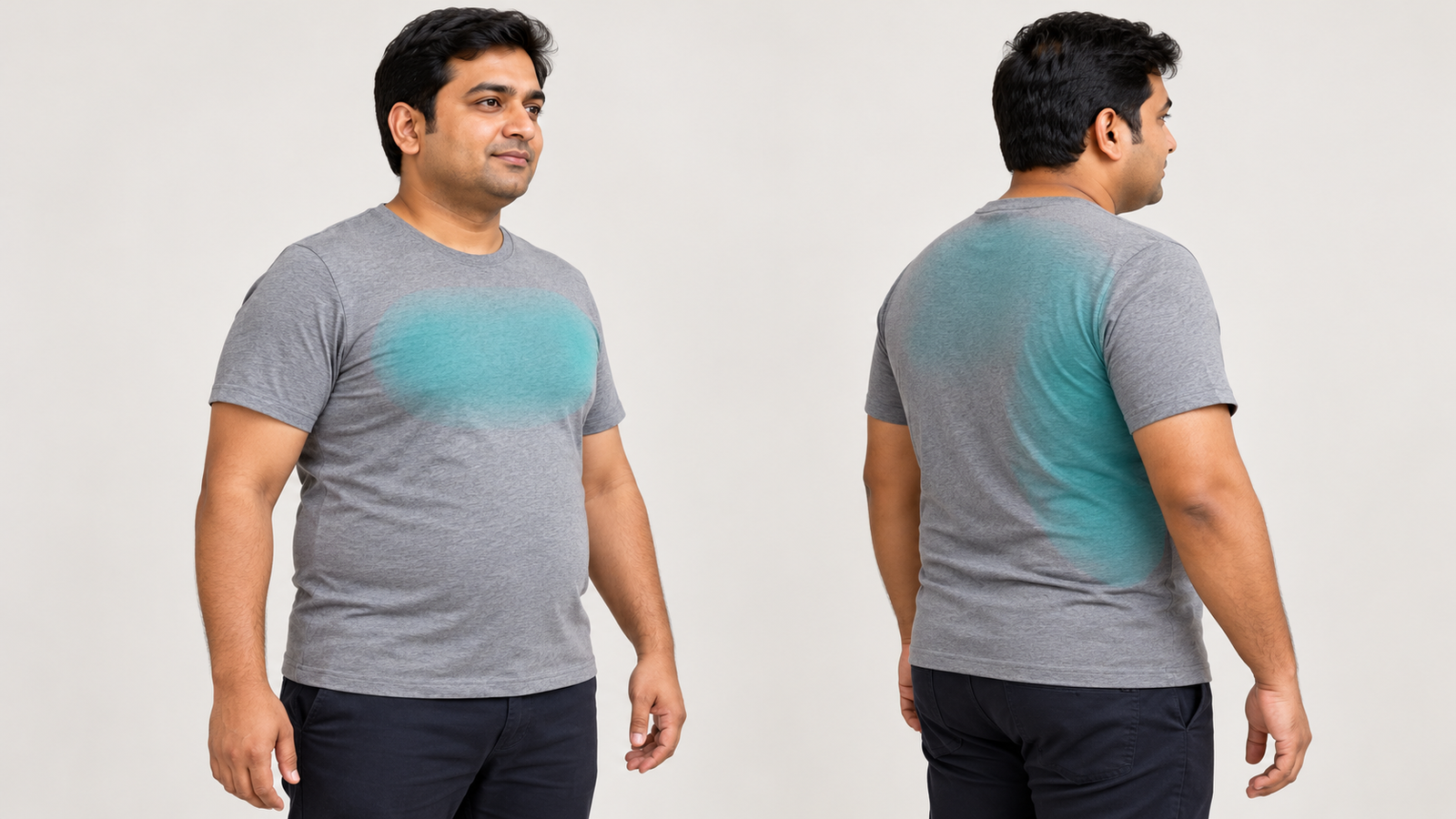
The website’s type 6 classification describes a large chest with substantial skin excess and a breast roll extending around to the back. It is a descriptive system used on the site, rather than a universal grading scale followed by every surgeon.
The term “grade 6 gynecomastia treatment” can therefore mean different things between clinics. Ask the surgeon to describe your actual findings:
- How much firm gland lies behind the nipple?
- How much fullness comes from fat?
- Does the side roll continue onto the upper back?
- Is the skin likely to retract?
- Does the nipple need repositioning?
The back roll is not necessarily breast gland spreading backwards. Fat distribution and loose skin can create a continuous fold around the torso.
Read Type 6: breast roll with back roll and Why chest fat extends to the back for background.
Can Chest and Back Fat Removal Be Done Together?
Yes, in selected patients. A combined operation may address chest fat, gland, and the side or upper-back deposits contributing to the overall contour.
However, treating several areas increases the scope of surgery. The surgeon must consider the combined procedure, including any gland excision, skin removal and repositioning during the operation.
A joint BAAPS/BAPRAS safety guideline identifies general health, BMI, estimated aspirate volume and additional procedures as relevant planning factors. No single liposuction technique suits every patient.
Combining treatment is most reasonable when the team can complete the planned correction within an acceptable surgical and anaesthetic burden, with suitable monitoring afterwards.
What Limits How Much Can Be Done in One Sitting?
Total aspirate volume
Total aspirate means the material collected during liposuction, including fat and fluid. It is not the same as pure fat, and it cannot be translated directly into kilograms of weight loss.
All treated areas contribute to the total. A plan should consider the chest, both sides, and upper back together.
Operating time and additional procedures
Liposuction alone differs from liposuction combined with extensive gland removal, skin excision, or nipple repositioning.
ASPS guidance cautions that large-volume liposuction combined with certain other procedures has resulted in serious complications. This supports assessing the complete operation rather than approving it from the liposuction volume alone.
Health and recovery needs
Diabetes control, sleep apnoea, heart or lung disease, smoking, previous clotting problems and mobility can influence planning.
A high BMI may increase concerns but does not, by itself, establish which operation is appropriate. Similarly, uncontrolled diabetes may require postponement and medical treatment before either a combined or staged procedure.
Is 5,000 mL a Safe Liposuction Limit?
It is a commonly cited large-volume threshold, not a guaranteed safe allowance.
ASPS’s published safety advisory describes more than 5,000 mL of total aspirate as large-volume liposuction. It recommends an appropriately licensed or accredited facility or acute-care hospital, with overnight monitoring of vital signs and urine output by qualified staff.
This does not mean that 4,900 mL is automatically safe for everyone, or that a higher volume becomes suitable simply because a bed is available.
Body size, additional surgery, fluid management, anaesthesia and medical conditions all matter. Facility rules and applicable local requirements may also differ.
Ask for an estimate of total aspirate, the reasons for that estimate, and the plan if the intended correction would exceed it.
One Sitting or Two Stages: What Guides the Decision?
| Factor | One sitting may fit when… | Two stages may fit when… | Reason |
|---|---|---|---|
| Treatment volume | The combined volume is manageable for the patient and setting | The combined treatment would be extensive | Limits the burden of each operation |
| Skin excess | Little or limited skin removal is needed | Substantial skin removal is needed across several areas | Reduces the extent of surgery at one time |
| Operating time | The complete plan is reasonably contained | Several lengthy procedures would be combined | Avoids an unnecessarily prolonged operation |
| Medical health | Conditions are assessed and adequately controlled | A shorter operation is preferable after optimisation | Allows planning around individual risk |
| Skin retraction | The expected response is reasonably predictable | The team wants to assess retraction before further correction | Avoids committing too early to additional treatment |
| Recovery support | Help is available for care around both treated areas | Recovery from both areas together would be difficult | Makes dressing care and daily activities more manageable |
Staging has trade-offs: a second anaesthetic, another recovery period and additional costs. Its value depends on whether it improves the individual treatment plan.
How Far Apart Are Staged Operations?
There is no universal interval for surgery for chest and back fat.
The next operation should follow adequate recovery, reassessment, and confirmation that health and weight remain suitable. The team may wait several months, especially when skin adjustment will influence the second procedure.
Clarify what “two stages” means in your plan. It could mean:
- Chest treatment first, followed by back treatment.
- Back or side treatment first, followed by chest correction.
- Initial tissue reduction, followed later by removal of persistent excess skin.
The surgeon should explain what must happen before the next stage proceeds, rather than promising a fixed date regardless of healing.
Which Area Is Treated First, and Why?
There is no rule that the chest or back must always come first.
For separate operations, the decision may reflect the main concern, the most extensive part of treatment, skin management, and how the first result will guide the second.
Within a combined operation, treatment order may instead reflect access and positioning. The patient may need repositioning to allow safe treatment of the back and chest.
Ask whether the proposed sequence is intended to improve contour planning, limit surgical extent or make positioning practical. These are different reasons, and the explanation should relate to your anatomy.
For related options, see Treatment for chest and back fat.
What Anaesthesia and Monitoring Are Needed?
Extensive combined treatment commonly involves general anaesthesia, with care led by an anaesthesiologist. The final choice follows assessment of the procedure and patient.
Confirm who will give and monitor the anaesthesia. A clinician’s name should be confirmed by the clinic rather than assumed from the surgeon’s identity.
Discuss:
- The operating facility and its emergency arrangements.
- Monitoring during surgery and recovery.
- Fluid management.
- Clot-risk assessment and prevention.
- Criteria for overnight observation.
- Who provides care after discharge.
Published liposuction safety literature supports overnight monitoring for large-volume procedures and additional consideration for patients with significant risk factors.
How Does Recovery Change When the Back Is Included?
You may have soreness and dressings across a wider area, making dressing, washing and getting comfortable more difficult. Help at home can be particularly useful.
The garment must fit the areas treated without digging into incisions or forming tight bands. Drains may be used, depending on the operation. ASPS advises that patients with drainage tubes may need to monitor and record the output.
Ask for a sleeping plan before surgery. Avoid assuming that lying on your back is suitable when that area has also been treated. Your team should advise positioning based on incisions, skin procedures and pressure points.
Read How to sleep after surgery alongside your discharge instructions.
Promptly report rapidly increasing swelling, worsening pain, fever, discharge or skin-colour changes. Breathing difficulty or chest pain requires emergency assessment.
What Should You Ask About chest and back liposuction vadodara?
Request a written plan identifying the areas, tissue types, and any proposed skin removal. It should explain why one sitting or staging is recommended, the estimated total aspirate, and the observation arrangements.
During a consultation with Dr. Ashutosh Shah at Elegance Clinic, discuss your medical conditions, work demands, sleeping arrangements, and available support. Ask the surgeon to record the reasoning behind the sequence and the conditions for proceeding to a second stage.