
Permanent Solution for Big Chest: Fat, Gland or Loose Skin?
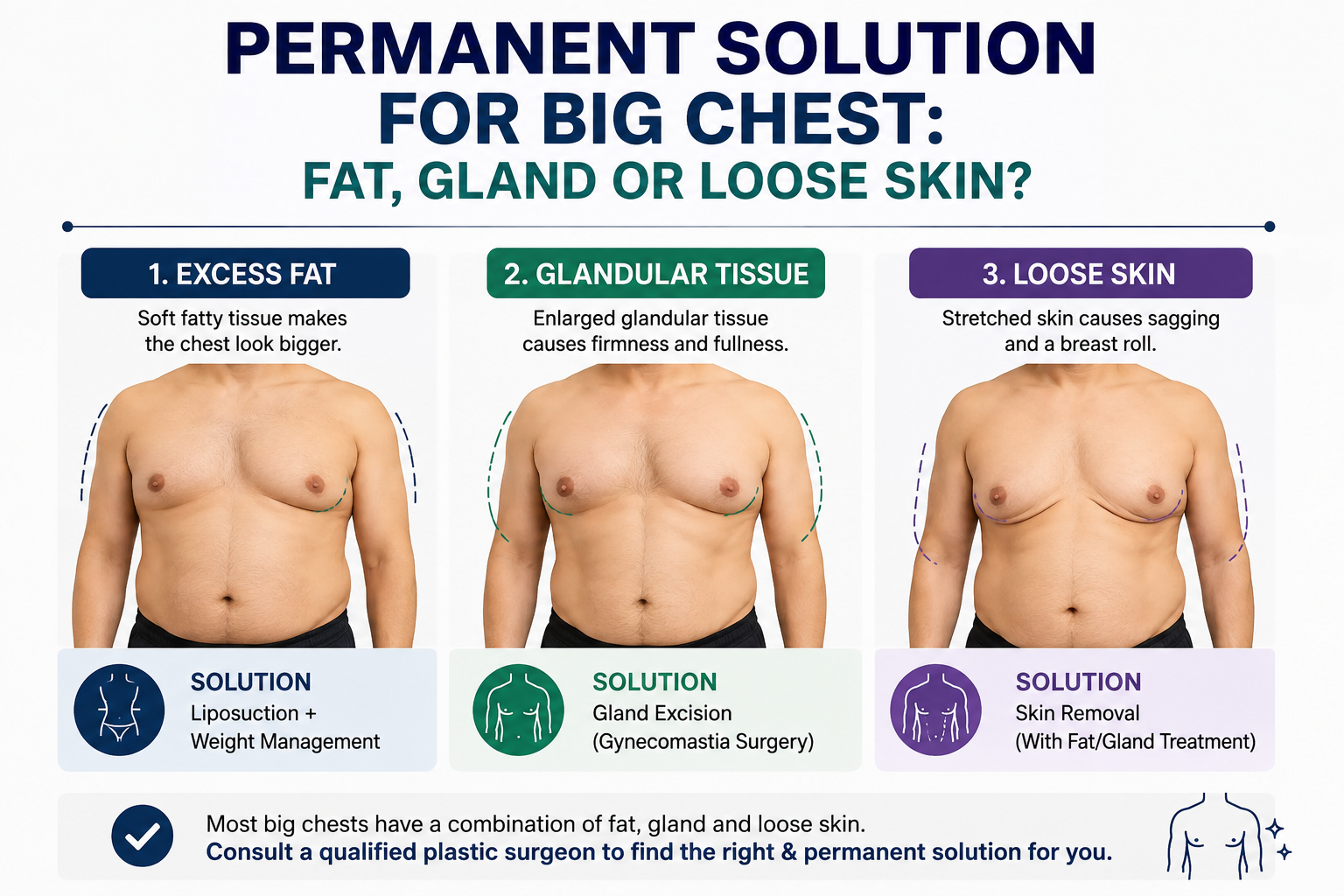
A large male chest can develop because of excess fat, enlarged glandular tissue, loose skin, or a combination of all three. Therefore, finding a permanent solution for a big chest starts with identifying what is actually causing the enlargement.
Weight loss and exercise may improve a fatty chest, but persistent glandular tissue or substantial loose skin often requires a different approach. For men with advanced gynecomastia and a significant breast roll, surgery may be considered after evaluation by a qualified plastic surgeon.
Why Does a Man Develop a Big Chest?
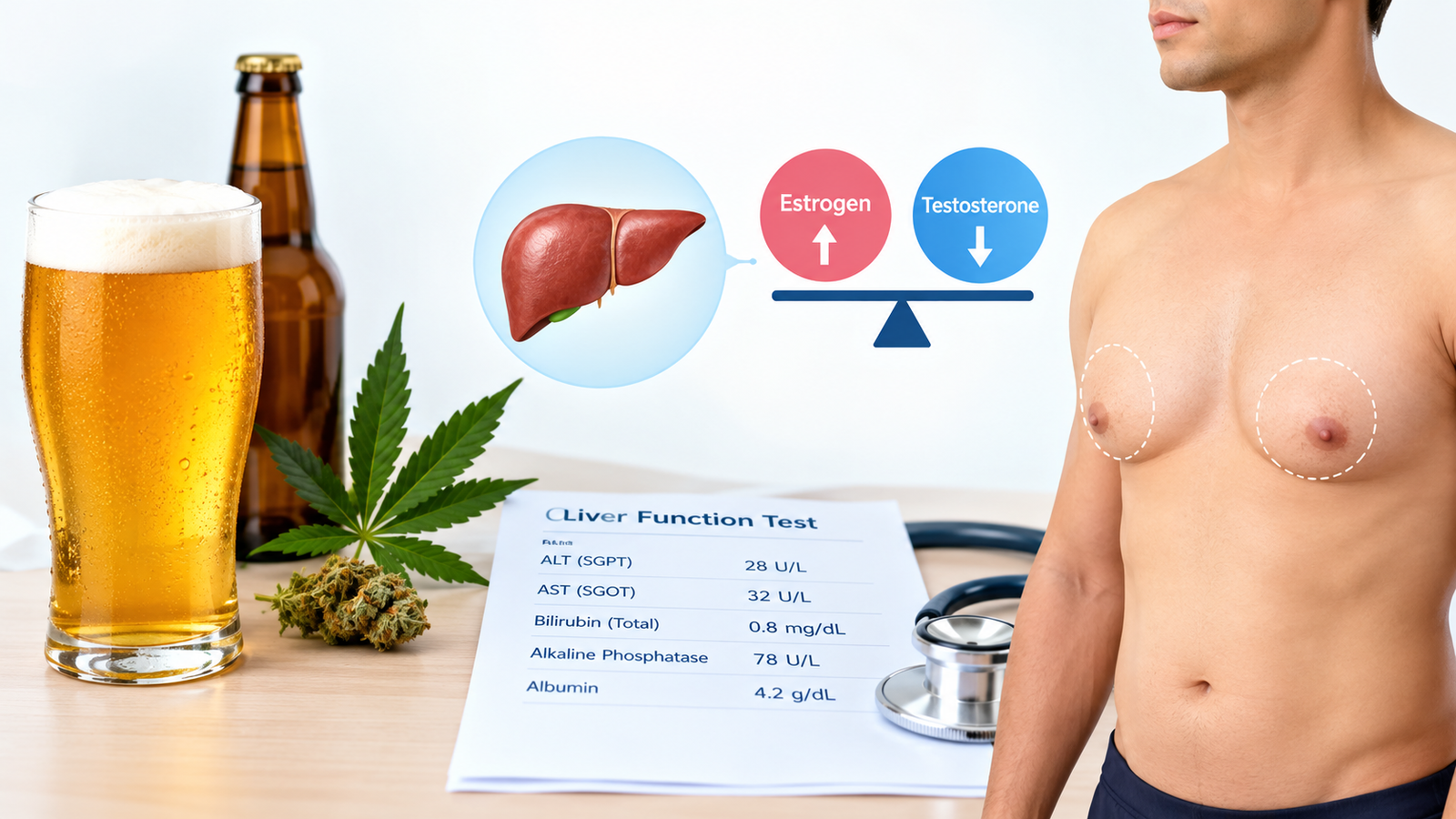
Not every enlarged male chest is the same. Common contributing factors include weight gain, gynecomastia, ageing, major weight loss, hormonal changes, certain medications, and genetics.
A plastic surgeon evaluates the chest to determine how much of the enlargement comes from fat, gland, and skin. This distinction matters because each component responds differently to treatment.
Is It Chest Fat?
When excess fat is mainly responsible, the condition is sometimes described as pseudogynecomastia. The chest usually becomes larger as overall body fat increases.
Weight reduction through appropriate nutrition and regular physical activity can reduce this fat. Strength training can also build the pectoral muscles and improve chest definition.
However, losing weight cannot specifically target chest fat, and some localized fullness may remain even after reaching a stable weight.
For suitable patients with persistent localized fat and reasonably elastic skin, liposuction may help create a flatter and more defined chest contour.
Is Glandular Tissue Causing the Big Chest?
Gynecomastia involves enlargement of male breast glandular tissue. It may produce firmness beneath the nipple, puffy areolas, chest projection, or a breast-like contour.
Unlike ordinary fat, glandular tissue usually does not disappear simply through exercise or weight loss.
When persistent glandular tissue is responsible for the enlarged chest, surgical gland excision may be considered. If excess fat is also present, the surgeon may combine gland removal with liposuction.
What If Loose Skin Is the Main Problem?
Loose skin becomes particularly important after major weight loss or when a larger chest has stretched the skin for a long period.
Exercise can strengthen the underlying muscles but cannot remove substantial excess skin.
In these situations, skin excision or chest-lifting techniques may be required. The surgeon must balance improved chest contour against the scars created by removing excess skin.
What Is Type 5 Gynecomastia?
Type 5 Gynecomastia - Significant Breast Roll describes a more advanced chest contour where excess tissue and skin can create a noticeable breast roll.
Treatment may need to address multiple components rather than relying on liposuction alone. The surgeon assesses fat volume, glandular tissue, excess skin, nipple position, skin elasticity, and chest proportions before planning surgery.
What Is the Permanent Solution for a Big Chest?
There is no single treatment that permanently corrects every enlarged male chest.
When fat is the primary cause, maintaining a healthy and stable weight is important. Persistent localized fat may be treated with liposuction in appropriate patients.
When glandular tissue causes the enlargement, surgical excision may provide a more definitive correction. Significant loose skin may require skin removal.
For patients who have Type 5 Gynecomastia - Significant Breast Roll, a combination of fat removal, gland excision, and skin correction may be considered depending on individual anatomy.
Can Exercise Permanently Fix a Big Chest?
Exercise is valuable for overall health, fat reduction, and developing the pectoral muscles. However, it has limitations.
Exercise cannot selectively burn chest fat, remove established glandular breast tissue, or eliminate significant loose skin.
If your overall body weight is healthy but your chest remains disproportionately enlarged, a clinical assessment can help identify why.
Can Gynecomastia Come Back After Surgery?
Surgery can provide long-lasting results when the responsible tissue is appropriately treated, but describing any treatment as a guaranteed permanent cure would be misleading.
Future weight gain can increase chest fat. Hormonal changes, certain medications, anabolic steroids, or other underlying factors may also affect the chest after treatment.
Maintaining a stable weight and addressing relevant underlying causes can help preserve the surgical result.
How Does a Plastic Surgeon Choose the Treatment?
The surgeon examines the amount and distribution of fat, firmness of glandular tissue, degree of skin excess, nipple and areola position, chest symmetry, and overall body proportions.
Medical history is also important. Depending on the circumstances, the doctor may consider medications, supplements, hormonal factors, or other medical conditions before recommending cosmetic surgery.
The aim is to treat the cause of the enlarged chest, not simply make it smaller.
Consult Dr. Ashutosh Shah at Elegance Clinic
Men looking for a permanent solution for a big chest can consult Dr. Ashutosh Shah, a Board-Certified Plastic, Cosmetic & Reconstructive Surgeon and Director of Elegance Clinic, Surat.
With 22+ years of surgical experience and qualifications including MBBS, MS, M.Ch. and DNB, Dr. Ashutosh Shah can assess whether chest enlargement comes primarily from fat, glandular tissue, loose skin, or a combination and discuss an appropriate treatment plan.
Final Takeaway
Finding a permanent solution for a big chest requires identifying whether the problem is fat, gland, loose skin, or all three. Exercise and weight management are valuable when excess fat contributes to the appearance, but they cannot reliably remove glandular tissue or substantial loose skin.
For persistent or advanced enlargement, a plastic surgeon can assess the underlying anatomy and determine whether liposuction, gland removal, skin correction, or a combination approach offers the most appropriate long-term solution.