
What Causes Chest Enlargement on Both Sides in Men?
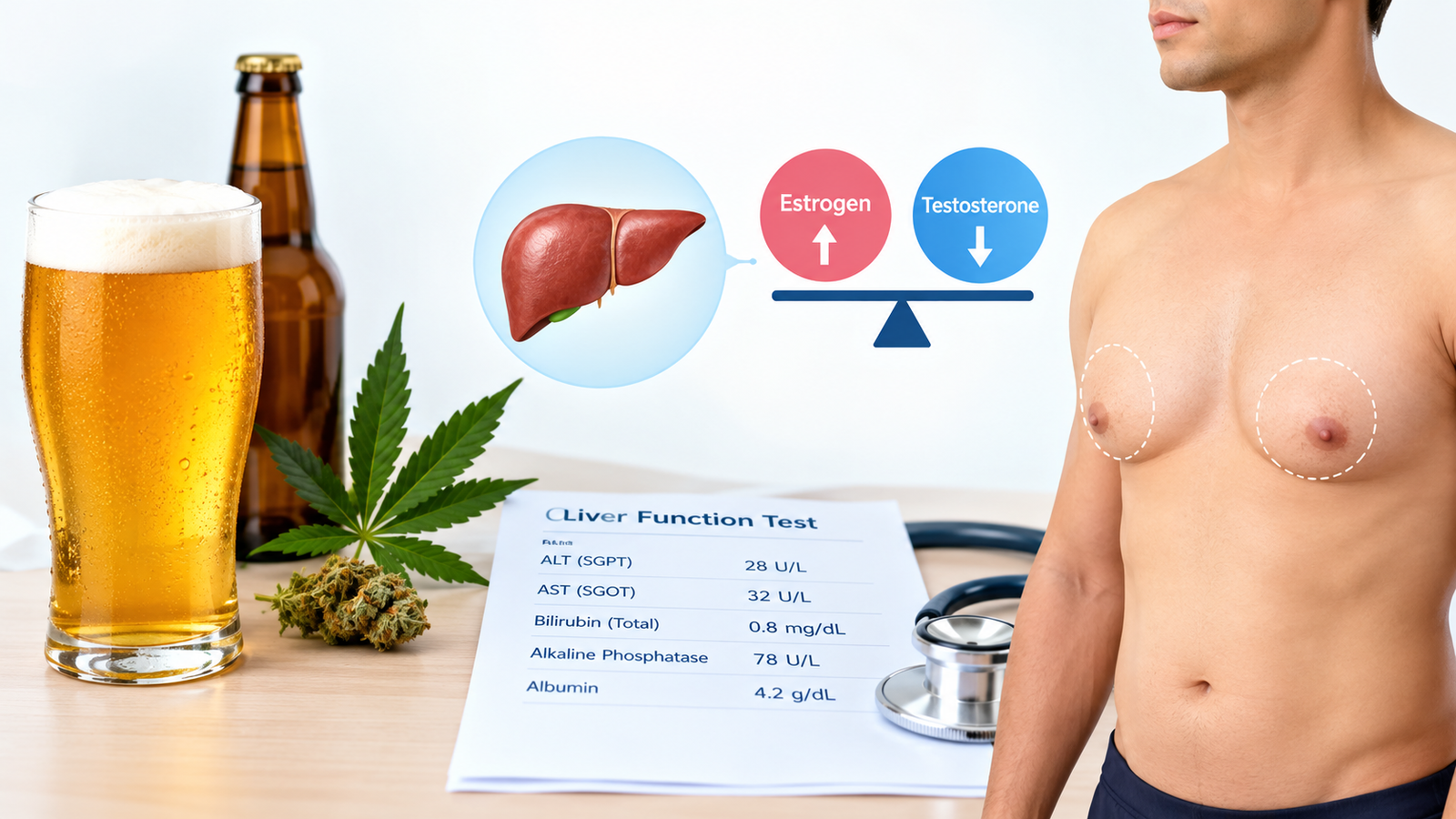
Chest enlargement on both sides in men can happen for several reasons, but gynecomastia is one of the most common causes. Gynecomastia refers to the enlargement of male breast glandular tissue, often because of changes in the balance between estrogen and testosterone.
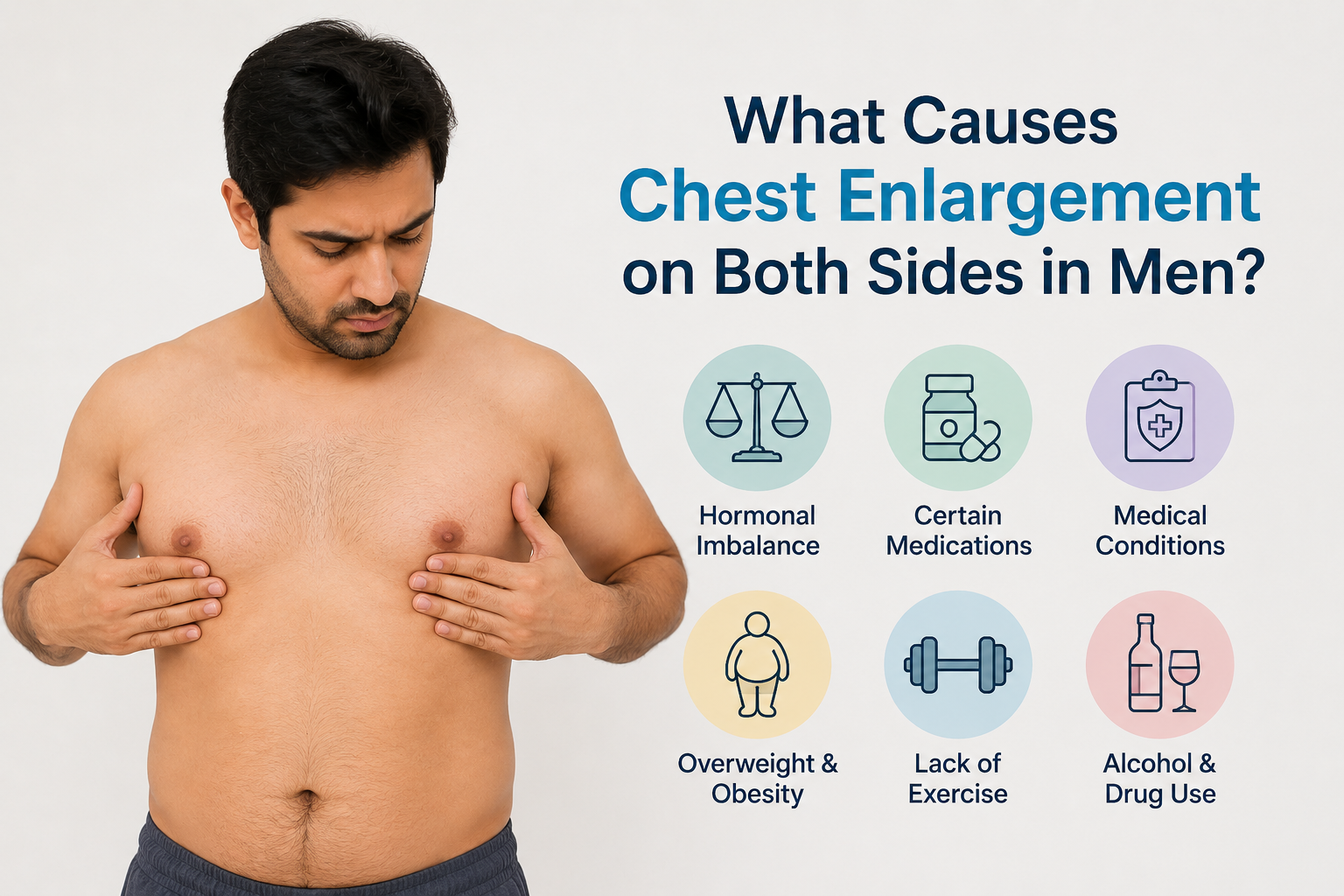
However, not every case of enlarged male breasts is gynecomastia. Increased chest fat, weight gain, hormonal changes, certain medications, and some medical conditions can also contribute to a larger chest.
What Causes Chest Enlargement on Both Sides?
1. Gynecomastia
Gynecomastia occurs when male breast glandular tissue grows. It can affect one or both sides of the chest.
When both sides become enlarged, the condition is called bilateral gynecomastia. The amount of enlargement can vary between the two sides, so one side may sometimes appear larger.
Gynecomastia can occur during:
- Puberty
- Adulthood
- Later life
- Periods of hormonal imbalance
2. Excess Chest Fat
Weight gain can increase fat deposits around the chest. This condition is sometimes called pseudogynecomastia because the enlargement mainly comes from fat rather than breast gland tissue.
Unlike true gynecomastia, excess fat does not necessarily involve enlargement of the breast gland.
3. Hormonal Changes
A balance between testosterone and estrogen helps regulate male breast tissue. If testosterone levels decrease or estrogen activity increases, breast tissue may become enlarged.
Hormonal changes can occur during puberty, aging, or because of certain health conditions.
4. Certain Medications
Some medications can contribute to gynecomastia. The effect depends on the specific medication and the individual's response.
If you notice chest enlargement after starting a medication, do not stop taking it without medical advice. Instead, discuss the change with your doctor.
5. Medical Conditions
Certain health conditions can affect hormone levels or how the body processes hormones. In some cases, these conditions may contribute to gynecomastia.
A doctor may recommend an examination and, when appropriate, blood tests or other investigations to identify an underlying cause.
6. Puberty
Temporary breast enlargement can occur in teenage boys because hormone levels change during puberty. In many cases, pubertal gynecomastia improves naturally as hormone levels stabilize.
Persistent or significant enlargement may require medical evaluation.
How Can You Tell If It Is Gynecomastia or Chest Fat?
The appearance alone cannot always determine the cause of chest enlargement.
With gynecomastia, there may be firm or rubbery glandular tissue beneath the nipple area. Excess chest fat tends to feel softer and is usually associated with overall weight gain.
However, these differences are not enough to make a diagnosis yourself. A medical examination can help determine whether the enlargement comes mainly from glandular tissue, fat, or a combination of both.
Can Chest Enlargement Affect Both Sides?
Yes. Chest enlargement on both sides in men is common with bilateral gynecomastia. However, the two sides do not always develop equally.
One side may have more glandular tissue or fat than the other, which can create some asymmetry.
When Should You See a Doctor?
Consider getting a medical evaluation if you notice:
- Persistent enlargement
- A firm lump beneath the nipple
- Significant pain or tenderness
- Rapid changes in breast size
- Enlargement mainly on one side
- Nipple discharge
- Skin changes around the nipple
- A new lump that concerns you
Most cases of male chest enlargement are not serious, but new or unusual changes deserve appropriate evaluation.
How Is Chest Enlargement Treated?
Treatment depends on the underlying cause.
Lifestyle Changes
If excess fat contributes to chest enlargement, weight management and regular exercise may help reduce overall body fat. However, exercise alone may not remove enlarged glandular tissue caused by gynecomastia.
Medical Management
If a medication, hormonal issue, or underlying medical condition contributes to the enlargement, treating the cause may help. Your doctor can determine whether additional investigations or medical treatment are appropriate.
Gynecomastia Surgery
When significant glandular tissue or excess skin persists, gynecomastia surgery may be considered. Depending on the patient's condition, treatment can involve removal of glandular tissue, liposuction of excess fat, or a combination of techniques.
Surgery aims to create a flatter, more masculine-looking chest while maintaining natural contours.
Can Gynecomastia Surgery Treat Both Sides?
Yes. When gynecomastia affects both sides, surgery can address the enlarged tissue and excess fat on both sides. The surgeon evaluates each side separately because the amount of tissue may differ.
At Elegance Clinic in Surat, Dr. Ashutosh Shah provides personalized gynecomastia treatment based on the patient's chest shape, tissue composition, degree of enlargement, and desired outcome.
Final Thoughts
Chest enlargement on both sides in men can result from gynecomastia, excess chest fat, hormonal changes, medications, puberty, or certain medical conditions. Identifying the underlying cause is important because treatment varies accordingly.
If chest enlargement persists despite weight management or causes discomfort or self-consciousness, a consultation with a qualified cosmetic or plastic surgeon can help determine whether medical management, lifestyle changes, or gynecomastia surgery may be appropriate.