

Swelling in a Newborn's Chest: What Is Normal, How Long It Lasts and the Signs That Need a Doctor
Breast-bud swelling is common in newborn boys and girls because of hormonal effects around birth. It usually reduces without treatment over weeks, although some swelling can last several months. Never squeeze or massage it. Redness, warmth, tenderness, increasing swelling, or an unwell baby needs prompt assessment by a paediatrician.
Finding a small lump beneath your baby’s nipple can be worrying. You may notice it during bathing or changing clothes, sometimes on one side before the other.
Parents asking “newborn chest lump normal or not” need two clear answers: mild breast-bud swelling can be normal, but not every chest lump has the same cause.
A baby younger than three months with a temperature of 38°C or higher needs urgent medical assessment. Do not wait for a routine appointment.
Why do newborns get breast swelling?
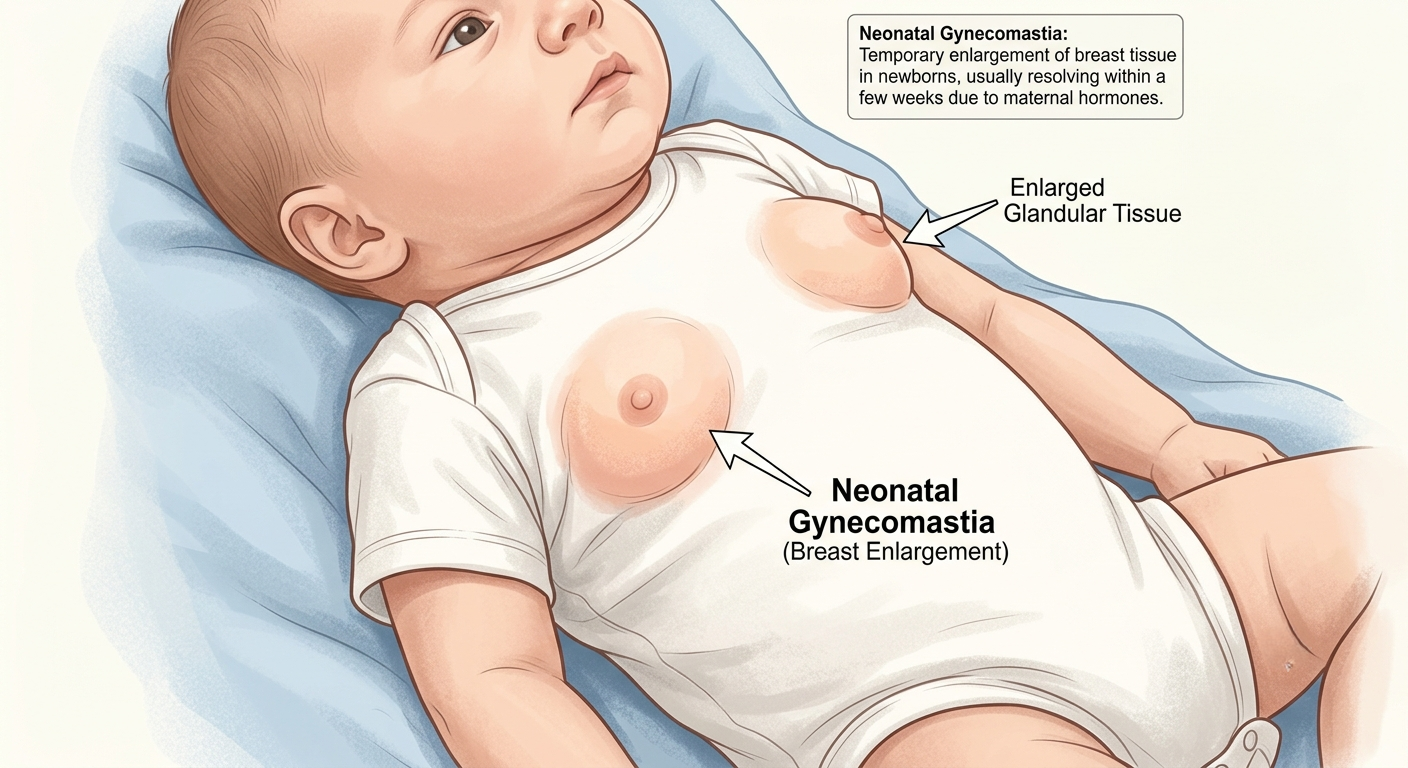
Hormones passing from the mother to the baby before birth can temporarily stimulate breast tissue. This can affect newborn boys and girls. A small amount of milk-like discharge may also occur.
The swelling is usually centred beneath the nipple and may feel like a small, firm breast bud. The term neonatal gynecomastia is sometimes used to describe this temporary enlargement.
Normal breast-bud swelling does not automatically mean the baby has a hormone disorder or needs treatment.
Read more about Neonatal gynecomastia.
How long does newborn breast swelling normally last?
Swelling often becomes less noticeable over the first few weeks. Some babies have breast tissue that remains noticeable for several months.
Paediatric guidance describes a common course of approximately two to four weeks, with some breastfed babies having residual swelling for up to six months. These are general patterns rather than a deadline for every child.
Mention the swelling at your baby’s routine check. Arrange an earlier review if it grows, becomes uncomfortable, or develops skin changes.
If breast buds remain beyond six months, or swelling disappears and later returns, discuss it with the paediatrician. Persistent swelling alone does not necessarily mean an emergency, but it deserves reassessment.
Why should you never squeeze or massage the swelling?
Do not squeeze the nipple, express milk, press the lump repeatedly, or massage the breast tissue.
These actions do not help the hormones leave the body or make the swelling settle faster. They can irritate the area and increase the risk of infection, including an abscess.
Avoid applying oils, herbal pastes, tight bandages or medicated creams unless the paediatrician recommends them.
Handle the area gently during normal bathing and dressing. If a little fluid leaks naturally, clean the surface gently without trying to express more.
Which signs suggest infection or another problem?
Normal breast-bud swelling should be distinguished from an inflamed, painful or rapidly changing area.
Concerning features include:
- Redness or spreading skin changes.
- Unusual warmth.
- Tenderness or crying when the area is touched.
- Increasing swelling.
- Pus-like or bloody nipple discharge.
- Fever or a baby who seems unwell.
A newborn breast infection can need treatment even without fever. Do not wait for all the symptoms to appear before seeking advice.
Parent checklist: what to do and how urgently
| Sign | Normal or concerning? | What to do | How urgently? |
|---|---|---|---|
| Small breast bud beneath the nipple; baby otherwise well | Can be a normal newborn change | Leave it alone and mention it at the routine check | Routine review |
| A few drops of milk-like fluid without inflammation | Can occur with normal hormonal changes | Do not squeeze; observe | Routine advice if uncertain |
| One side slightly larger, without pain or redness | Can occur | Mention it to the paediatrician | Routine review unless changing |
| Red, warm, painful or noticeably enlarging swelling | Possible infection or another problem | Arrange a paediatric examination | Same day |
| Pus-like or bloody discharge | Needs assessment | Do not express or treat at home | Urgent assessment |
| Temperature of 38°C or higher in a baby under three months | Concerning | Seek urgent medical care | Now |
| Breathing difficulty, blue lips, severe drowsiness or difficulty waking | Emergency warning signs | Go to emergency care | Immediately |
| Swelling persists beyond six months or returns later | Needs reassessment | Book a paediatric appointment | Prompt routine review |
For further reading, see Normal newborn swelling or a problem?.
What if the baby also has feeding or breathing problems?
Breast-bud swelling should not be used to explain away signs that your baby is unwell.
Seek immediate help for breathing difficulty, blue or grey lips, severe chest pulling-in during breathing, or a baby who is difficult to wake.
Poor feeding, fewer wet nappies, unusual lethargy or a marked change in behaviour also warrant urgent advice. Young babies can become unwell quickly, and fever is not always present.
A sunken breastbone, an outward-projecting chest or a lump away from the nipple is different from typical breast-bud swelling. A paediatrician can assess these findings separately.
baby breast lump doctor navsari: Which specialist should parents see first?
The paediatrician should usually be the first doctor for a newborn breast lump.
The assessment includes the swelling, skin, temperature, feeding, growth and overall condition. The paediatrician decides whether observation, investigation or specialist referral is appropriate.
A plastic surgeon is not routinely needed for normal newborn breast-bud swelling. If another structural or surgical condition is suspected, the paediatrician can arrange the relevant referral.
You may Contact the clinic for information about Elegance Clinic and Dr. Ashutosh Shah’s surgical services. However, an unwell newborn needs urgent paediatric care rather than waiting for a cosmetic or reconstructive consultation.
How is a newborn chest lump assessed?
The doctor asks when the lump appeared, whether it is growing and whether there is discharge, fever or feeding difficulty.
An examination helps establish whether the swelling sits beneath the nipple and resembles a breast bud, or whether another cause needs consideration.
Typical swelling may need no tests. If infection, an abscess or another lump is suspected, the doctor may arrange ultrasound or other investigations.
Avoid choosing infant chest swelling treatment from photographs alone. The baby’s age, symptoms and examination findings determine the next step.
Read What causes a baby chest lump.
When does a child’s chest swelling need surgery?
Normal newborn breast-bud swelling does not require surgery.
An infection may need antibiotics. If an abscess develops, a specialist may need to drain it. That decision follows examination and, when appropriate, imaging.
Other childhood chest conditions have separate treatment pathways. A visible chest difference does not automatically mean an operation is needed.
Parents should receive a clear explanation of the diagnosis, the reason for any treatment, and the follow-up plan.
Key takeaways
- Mild breast-bud swelling can occur in newborn boys and girls.
- It usually settles without medicine or surgery.
- Never squeeze, express or massage the area.
- Redness, warmth, pain, or increasing swelling needs prompt assessment.
- Fever of 38°C or higher in a baby under three months needs urgent care.
- The paediatrician is the usual first point of contact.