
Can Gynecomastia Be Treated Without Surgery?
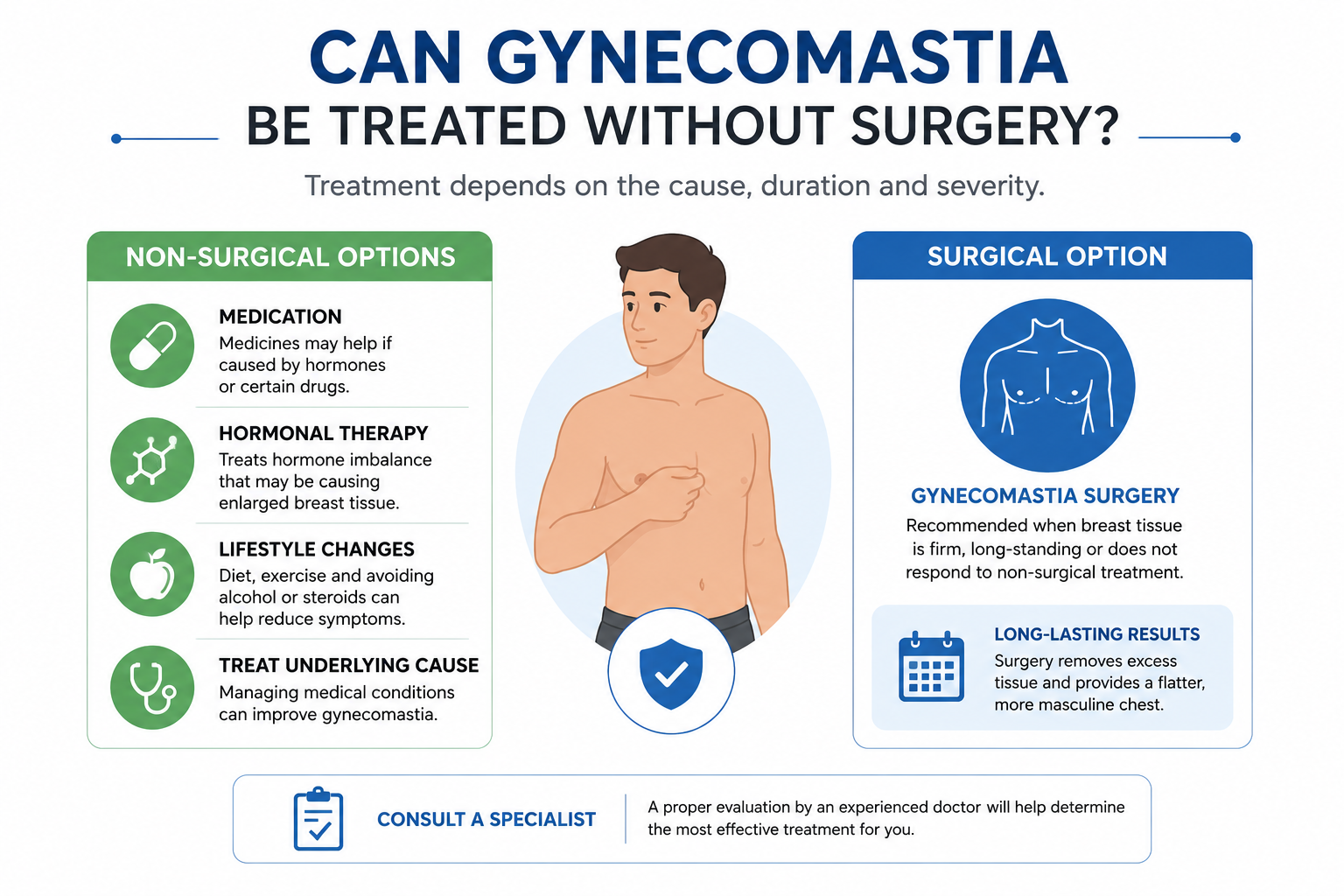
Yes, gynecomastia can sometimes be treated without surgery, but it depends on the underlying cause, the duration of the condition, and the type of breast tissue involved. In some cases, lifestyle changes, medications, or hormonal therapy may help reduce breast enlargement. However, these treatments are not effective for everyone, especially if excess glandular tissue has been present for a long time. A thorough evaluation by a qualified doctor is essential to determine the most appropriate treatment for your condition. Non-surgical treatment may be considered when: In these situations, addressing the root cause may reduce or stop further breast enlargement. If blood tests reveal a hormonal imbalance, your doctor may recommend hormonal therapy. Depending on the cause, treatment may aim to: Hormonal therapy is generally most effective during the early stages, before permanent glandular tissue develops. Certain medications may help selected patients, particularly when gynecomastia is recent and hormone-related. Medication may be considered if: Not everyone is a suitable candidate, and medications should only be taken under medical supervision. Non-surgical treatments are less likely to improve gynecomastia if: In these cases, gynecomastia surgery is often the most effective way to remove excess glandular tissue and restore a flatter, more masculine chest contour. Before recommending treatment, your doctor may perform: These evaluations help identify the cause of gynecomastia and determine whether non-surgical treatment or surgery is the most appropriate option. Many men delay seeking treatment because they assume the condition will disappear on its own. While some cases, particularly during puberty, may improve naturally, persistent gynecomastia should be assessed by a specialist. Early diagnosis can: Choosing the right specialist is an important step in treating gynecomastia. Dr. Ashutosh Shah is a Board-Certified Plastic, Reconstructive & Cosmetic Surgeon with 22+ years of surgical experience and extensive expertise in evaluating and treating male breast enlargement. At Gynecomastia India by Elegance Clinic, every patient undergoes a comprehensive assessment to determine whether non-surgical treatment, hormonal therapy, or surgery is the most appropriate option. Treatment recommendations are tailored to the underlying cause, stage of gynecomastia, and individual goals. Gynecomastia can be treated without surgery in selected cases, particularly when it is caused by hormonal changes or identified early. However, long-standing glandular gynecomastia usually does not respond to medication or hormonal therapy and may require surgery for lasting results. A consultation with an experienced specialist can help determine the treatment approach that best fits your condition.When Can Gynecomastia Be Treated Without Surgery?
Hormonal Therapy for Gynecomastia
Can Medication Help?
When Is Surgery the Better Option?
How Do Doctors Decide the Right Treatment?
Why Early Evaluation Matters
Why Choose Dr. Ashutosh Shah for Gynecomastia Treatment?
Why Patients Choose Gynecomastia India
Key Takeaway