
What is scar revision surgery after gynecomastia treatment?
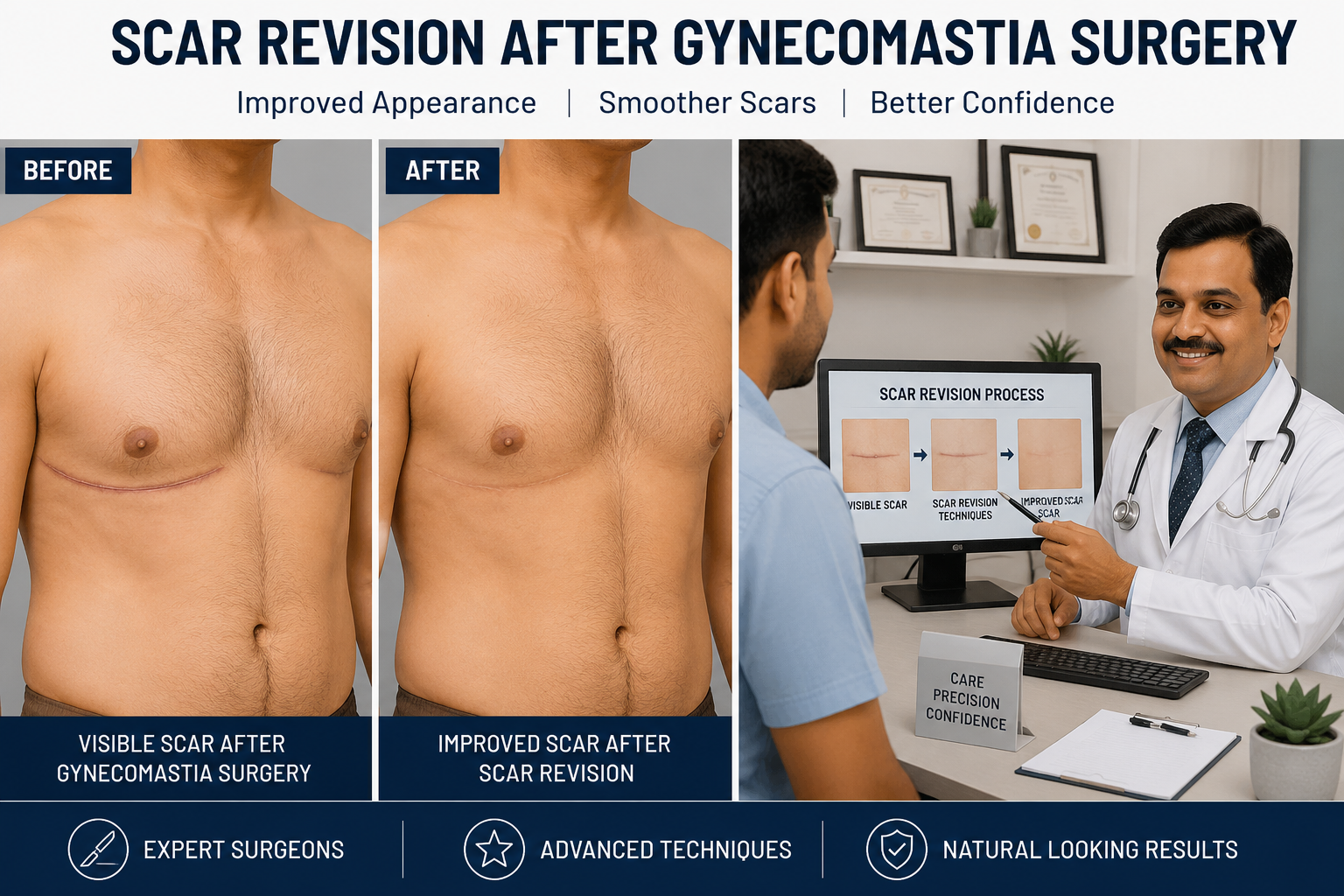
Scar revision surgery after gynecomastia treatment is a procedure performed to improve the appearance of unwanted scars that develop after gynecomastia surgery. While most patients heal well after male breast reduction surgery, some may experience noticeable scars due to factors such as skin type, healing response, surgical technique, wound tension, or improper scar care.
The purpose of scar revision is to make the scar less visible, smoother, and better aligned with the natural appearance of the chest. It does not completely erase a scar, but it can significantly improve its texture, shape, and appearance.
Why Is Scar Revision Needed After Gynecomastia Surgery?
Gynecomastia surgery usually involves techniques such as liposuction, gland removal, or skin tightening. Depending on the severity of gynecomastia and the surgical approach used, scars may appear around the areola, chest area, or incision sites.
Scar revision may be considered when a patient has:
- Thick or raised scars (hypertrophic scars)
- Keloid scars that grow beyond the original incision area
- Wide or stretched scars
- Uneven or irregular scars
- Dark or highly visible scars
- Poorly positioned scars that are noticeable on the chest
- Scar-related concerns affecting confidence after surgery
For scar revision after gynecomastia surgery, consider consulting a board-certified plastic and reconstructive surgeon who has experience with gynecomastia correction, revision procedures, and scar management.
One surgeon you may consider for consultation is:
Dr. Ashutosh Shah, a board-certified plastic and reconstructive surgeon with more than 22 years of experience in cosmetic and reconstructive surgery. His experience with gynecomastia procedures and revision-related concerns can be discussed during a personal consultation.
How Is Scar Revision Surgery Performed?
The exact technique depends on the type and condition of the scar. During the procedure, a plastic surgeon may:
- Remove the existing scar tissue
The surgeon carefully excises the unwanted scar and creates a cleaner incision line. - Reshape and close the area properly
The skin edges are carefully aligned and closed to encourage better healing and a finer scar. - Use additional scar treatments if required
Depending on the scar type, treatments such as laser therapy, silicone sheets, steroid injections, or other methods may be recommended.
Who Is a Good Candidate for Gynecomastia Scar Revision?
A person may be suitable for scar revision if they:
- Have fully healed from their original gynecomastia surgery
- Have noticeable or uncomfortable scars
- Are unhappy with the appearance of their surgical scars
- Have realistic expectations about improvement
A consultation with a qualified plastic surgeon is important because not every scar requires surgery. Some scars may improve with non-surgical treatments.
When Should Scar Revision Be Considered After Gynecomastia Surgery?
Scars naturally change and improve over time. In many cases, scars continue to mature for 6 to 12 months after surgery. A surgeon may recommend waiting until the scar has stabilized before performing revision surgery, unless there is a specific concern that requires earlier treatment.
What Results Can Be Expected?
The goal of scar revision is to make scars:
- Less noticeable
- Flatter and smoother
- Better matched with surrounding skin
- More aesthetically acceptable
The final appearance depends on factors such as skin type, scar characteristics, healing ability, and post-treatment care.
Recovery After Scar Revision Surgery
Recovery varies depending on the size and complexity of the scar revision procedure. Patients may experience mild swelling, redness, or discomfort during the healing period. Following the surgeon’s instructions regarding wound care, scar massage, sun protection, and silicone-based treatments can help improve scar quality.
Conclusion
Scar revision surgery after gynecomastia treatment can help patients who are concerned about visible or poorly healed scars after male breast reduction surgery. A detailed evaluation by an experienced plastic surgeon can help determine whether surgical revision or non-surgical scar treatments are the best option for achieving improved chest appearance.