

Male Breast Reduction Recovery Time: A Week-by-Week Guide
Male breast reduction recovery time varies according to the surgical technique, individual healing and postoperative care. The first days usually focus on rest, wound care and controlling swelling. Normal activities resume gradually, while the final chest contour becomes clearer as swelling settles.
Key Takeaways
-
Initial recovery involves swelling, bruising, discomfort and wound care.
-
Return to work depends on job demands and the extent of surgery.
-
Driving and gym activities require medical clearance.
-
Temporary numbness or sensitivity changes may occur.
-
Increasing pain, fever or sudden swelling requires medical attention.
-
Dr. Ashutosh Shah at Elegance Clinic can provide personalised aftercare instructions.
What Happens in the First Week?
The first week is an important stage of male breast reduction recovery time because the operated tissues are beginning to heal.
Recovery differs depending on whether surgery involved gland excision, liposuction, skin removal or a combination.
The first 24 hours
Patients may experience tiredness, chest tightness, swelling and discomfort.
Dressings protect the surgical area. Some patients receive a compression garment, while others may require drains.
If general anaesthesia or sedation was used, a responsible adult may need to accompany the patient home.
Follow discharge instructions and take prescribed medicines as directed.
Days 2–3
Bruising and swelling may become more noticeable during early healing.
Gentle walking may be encouraged when medically appropriate, but strenuous activity should be avoided.
Do not remove dressings, adjust drains or discontinue compression garments without medical instructions.
Days 4–7
Some discomfort may gradually improve, although swelling can remain.
Patients should continue wound care and avoid lifting heavy objects or placing unnecessary pressure on the chest.
The exact restrictions depend on the procedure and individual healing.
For additional information, read how long is the recovery for a male breast reduction.
Week-by-Week Recovery Table
| Week | What to Expect | Allowed | Avoid |
|---|---|---|---|
| Surgery day | Tiredness, swelling and discomfort | Rest and prescribed movement | Driving after anaesthesia |
| Week 1 | Bruising, tightness and early healing | Gentle walking if cleared | Heavy lifting and chest workouts |
| Week 2 | Swelling may gradually improve | Light routine if cleared | Strenuous exercise |
| Weeks 3–4 | Continued healing and contour changes | Surgeon-approved activities | Unapproved weight training |
| Weeks 5–6 | Ongoing tissue recovery | Gradual exercise if cleared | Exercising through pain |
| Following months | Scar maturation and swelling reduction | Normal routine as approved | Missing follow-up appointments |
Important: These are illustrative stages, not guaranteed clearance dates.
When Can You Return to Work and Driving?
Returning to work depends on the physical demands of the job, pain control and the surgical technique.
Desk-based work
Patients with sedentary jobs may be able to resume work before those who perform heavy physical tasks.
However, commuting, carrying bags and prolonged movement can still cause discomfort.
Physically demanding work
Jobs involving lifting, pushing, pulling or repetitive upper-body movements may require a longer recovery period.
Returning too early could place stress on healing tissues.
Driving after surgery
Driving should not resume while anaesthesia effects persist or while taking medicines that impair alertness.
Patients must be comfortable using their arms, steering and responding to an emergency without significant pain.
Planning time away from work
Discuss your job responsibilities before surgery so the surgeon can recommend suitable restrictions.
If possible, arrange help with shopping, household work and transport during early recovery.
When Is Exercise Safe Again?
Exercise should resume gradually rather than according to a fixed calendar.
The surgeon must assess healing before clearing strenuous activities.
Gentle walking
Light walking may be encouraged when medically appropriate because prolonged inactivity can increase postoperative risks.
Start with comfortable movement and follow individual instructions.
Cardiovascular exercise
Activities that increase heart rate substantially may need to wait until the surgeon confirms adequate healing.
Avoid pushing through pain or worsening swelling.
Weight training and chest workouts
Bench presses, push-ups, heavy lifting and other upper-body exercises can place pressure on healing tissues.
Restarting them too early may worsen discomfort or swelling.
Swimming and contact sports
Swimming should generally wait until wounds have healed and the surgeon approves water immersion.
Contact sports may require additional recovery because of the risk of impact.
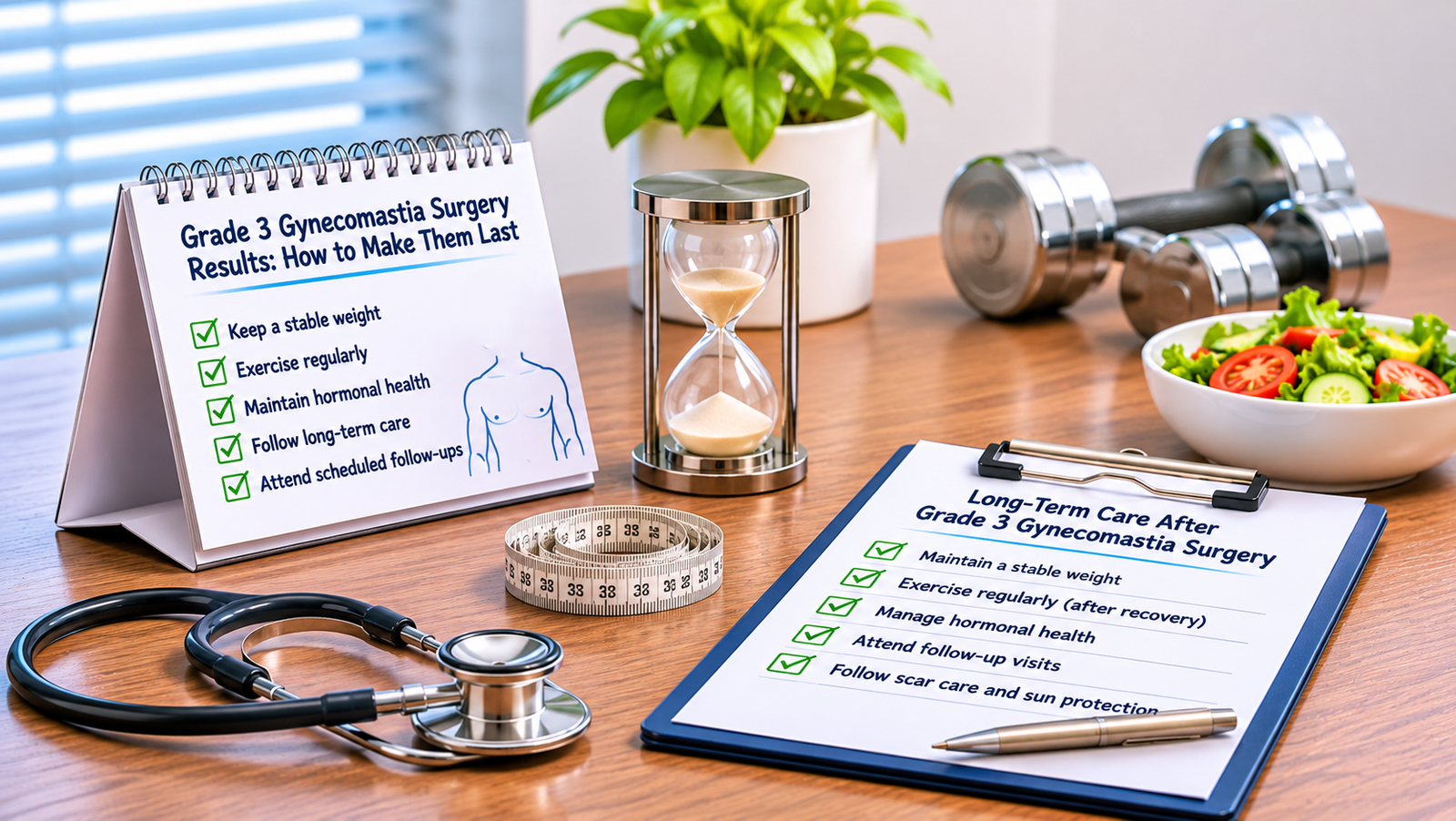
Maintaining a healthy weight may support long-term chest contour, but exercise does not reliably remove established glandular tissue.
The guide on male breast enlargement components causing gynecomastia explains the different tissues involved.
What Swelling, Pain or Numbness Is Normal?
Some swelling, bruising, tenderness and temporary sensation changes are expected after many surgical procedures.
However, their severity and duration vary between patients.
Swelling
Swelling develops as the body responds to surgical tissue changes.
It may affect the appearance of the chest during early recovery.
Compression garments may be prescribed to support healing, but their use and duration should follow the surgeon's instructions.
Pain and tightness
Mild to moderate discomfort may occur after surgery.
Prescribed pain medicines should be taken according to medical instructions.
Pain that suddenly increases or does not respond to treatment requires assessment.
Numbness and sensitivity
Temporary numbness, tingling or altered nipple sensation can occur because surgery affects tissues and small nerves.
Sensation may improve gradually, although some changes can persist.
Patients with nipple discomfort can also read painful nipple in men causes male nipple reduction treatment.
When does the chest look normal?
The early appearance does not represent the final result.
Swelling decreases gradually, while scars and surrounding tissues continue changing.
Which Signs Mean You Should Call the Clinic?
Recognising warning signs is an essential part of male breast reduction aftercare.
Contact your treating team promptly if you notice:
-
Rapidly increasing swelling, particularly on one side.
-
Bleeding that continues or repeatedly soaks dressings.
-
Increasing redness, warmth or unusual wound discharge.
-
Fever or chills.
-
Pain that becomes progressively worse.
-
Wound separation or concerning skin colour changes.
-
New symptoms that differ significantly from your discharge instructions.
When is emergency care necessary?
Severe chest pain, difficulty breathing, fainting or uncontrolled bleeding requires immediate emergency medical attention.
Do not wait for a routine appointment if serious symptoms occur.
Why are follow-ups important?
Postoperative reviews allow the surgeon to assess wounds, swelling, scar development and chest contour.
The follow-up schedule depends on the operation and individual healing.
For appointments or postoperative concerns, visit contact us.
Male Breast Reduction in Anand: Recovery and Follow-Up Planning
Patients travelling for surgery should arrange postoperative support and follow-up appointments before treatment.
Recovery planning should include transportation, accommodation if required and access to medical assistance.
Before the procedure
Discuss your medical history, current medicines, previous surgery and work requirements.
Ask about expected dressings, compression garments and activity restrictions.
Planning the return journey
Patients should not assume that travelling immediately after surgery is appropriate.
Travel clearance depends on anaesthesia recovery, pain control and the risk of complications.
Follow-up arrangements
At Elegance Clinic, Dr. Ashutosh Shah can discuss an individual recovery and review plan after assessment.
Patients should confirm whether in-person follow-ups are necessary and how to obtain help if symptoms develop after returning home.
Preparing your home
Arrange comfortable clothing, prescribed medicines and assistance with activities that may involve lifting or reaching.
Keep emergency contact information accessible.
Good preparation can make postoperative care easier, although it cannot guarantee faster healing.
Conclusion
Male breast reduction recovery time depends on the procedure, overall health and individual healing.
The first days focus on rest and wound care, followed by a gradual return to work, driving and exercise.
Following postoperative instructions, recognising warning signs and attending scheduled reviews are important for safe recovery.
Dr. Ashutosh Shah at Elegance Clinic can provide personalised advice based on the surgical plan and postoperative assessment.
For who is suitable and how the operation is planned, see adult gynecomastia surgery.