
How long do grade 3 gynecomastia surgery results last?
How long grade 3 gynecomastia surgery results last depends on the surgical technique, hormonal health, ageing and lifestyle. Results can be long-lasting when patients maintain a stable weight and address underlying causes. Avoiding smoking, protecting surgical scars and attending follow-up appointments can help maintain the outcome.
Key Takeaways
-
Grade 3 gynecomastia surgery can provide long-lasting chest contour improvement.
-
Surgically removed glandular tissue generally does not return, although remaining tissue can enlarge.
-
Significant weight gain and hormonal changes may affect results.
-
Regular exercise and healthy eating help maintain chest proportions.
-
Touch-up surgery may be considered for persistent contour irregularities.
-
Long-term care and follow-ups support recovery and result maintenance.
Are Results Permanent or Temporary?
Grade 3 gynecomastia surgery addresses significant male breast enlargement that may involve glandular tissue, excess fat and loose skin.
Depending on individual anatomy, treatment may involve liposuction, gland excision and excess skin removal. These techniques aim to create a more proportionate chest contour.
Patients wondering how long grade 3 gynecomastia surgery results last should understand that surgically removed glandular tissue generally does not grow back. However, remaining glandular tissue may enlarge under certain hormonal conditions.
Fat cells removed during liposuction are permanently removed, but remaining fat cells can increase in size with weight gain.
Advanced gynecomastia may require more extensive treatment than mild enlargement. Read puffy nipple only treating grade 1 gynecomastia without overtreating it to understand how treatment approaches differ according to severity.
Although results can last for many years, surgery does not prevent natural ageing, weight fluctuations or future hormonal changes.
What Makes Results Last Longer?
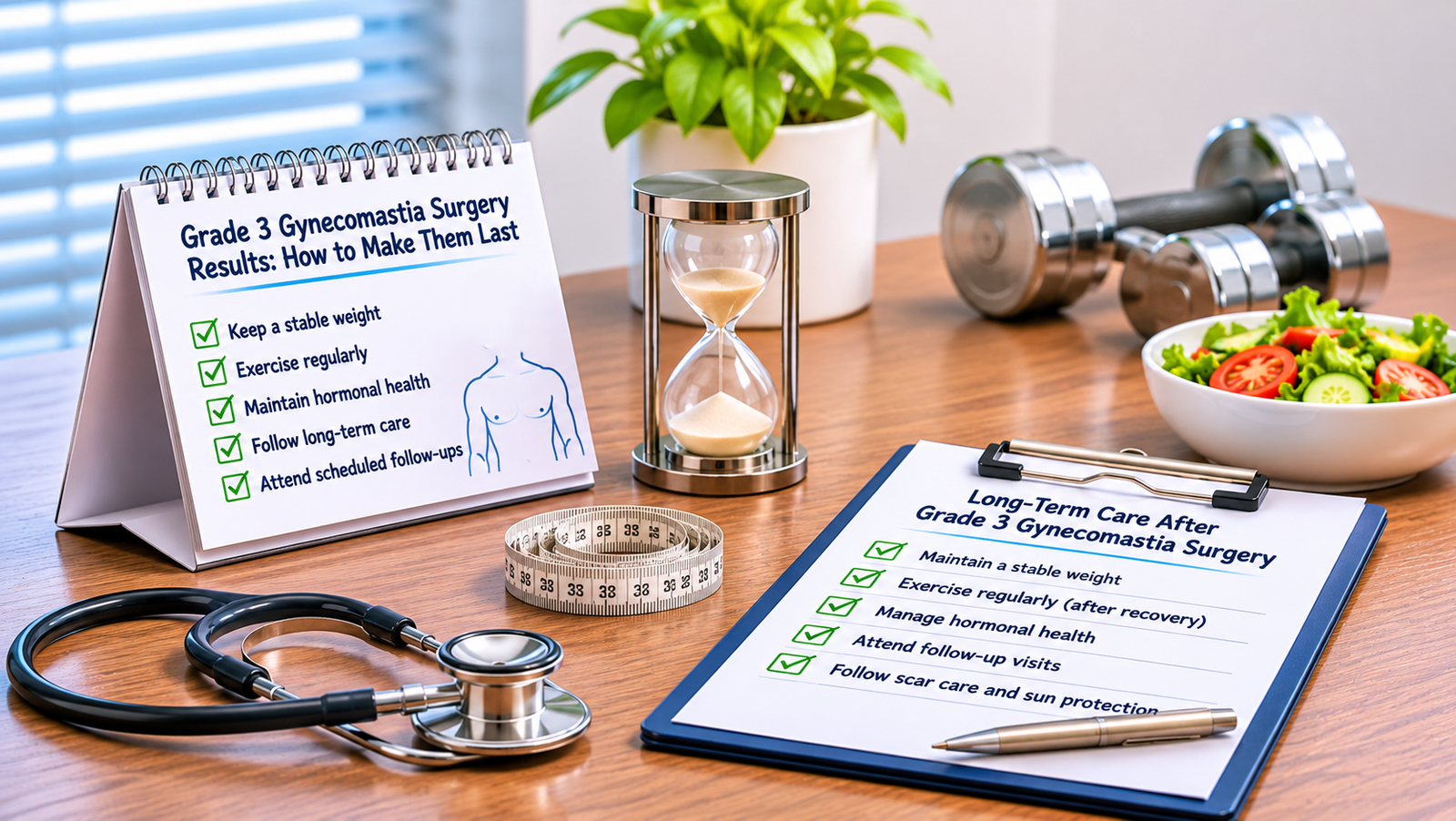
Maintaining a healthy lifestyle plays an important role in preserving postoperative chest contour.
Maintain a stable body weight
Significant weight gain can increase fat deposits around the chest. A balanced diet and sustainable weight management help maintain body proportions.
Exercise regularly after recovery
Regular physical activity supports weight management, muscle development and general health.
Chest exercises should only be resumed after surgical clearance. Returning to strenuous training too early may interfere with healing.
Maintain hormonal health
Hormonal imbalance can contribute to male breast enlargement. Patients with underlying hormonal conditions should receive appropriate medical assessment and treatment.
Read what is gynecomastia to understand the underlying causes of glandular enlargement.
Avoid smoking
Smoking can interfere with blood circulation and wound healing. Avoiding tobacco supports tissue recovery and may reduce wound-related complications.
Follow appropriate scar care
Protect healed surgical scars from excessive sun exposure and use scar treatments recommended by your surgeon.
Longevity Table: What Helps and What Harms Results?
| Factor | Helps | Harms |
|---|---|---|
| Body weight | Maintaining stable weight | Significant weight fluctuations |
| Exercise | Regular activity after recovery | Premature strenuous exercise |
| Hormonal health | Appropriate medical management | Untreated hormonal imbalance |
| Nutrition | Balanced, nutritious meals | Excessive calorie intake |
| Smoking | Avoiding tobacco | Smoking and nicotine exposure |
| Scar care | Approved treatments and sun protection | Excessive UV exposure |
| Medicines | Medical supervision | Unsupervised anabolic steroid use |
| Follow-ups | Scheduled medical assessments | Ignoring persistent symptoms |
What Can Change Results Over Time?
Several factors influence how long grade 3 gynecomastia surgery results last. Some are manageable, while others are part of natural physical changes.
Significant weight gain
Weight gain can increase fat accumulation around the chest, even after successful surgery.
This does not necessarily indicate that glandular gynecomastia has returned.
Natural ageing
Skin gradually loses elasticity with age. This may contribute to changes in chest firmness and contour.
Patients who previously required extensive skin removal may also experience changes in skin tightness over time.
Hormonal changes
Hormonal disorders, certain medicines and anabolic steroid use can contribute to enlargement of remaining glandular tissue.
Patients should discuss suspected medication-related changes with their doctor rather than stopping prescribed medicines independently.
Changes in muscle mass
Increased or reduced chest muscle mass can influence overall chest appearance.
Understanding realistic chest proportions is important when evaluating surgical outcomes. Read the ideal male chest for additional information about chest contour and proportions.
When Might a Touch-Up Be Needed?
Not every patient requires additional treatment after grade 3 gynecomastia surgery. However, some individuals may consider a touch-up or revision procedure.
Possible reasons include:
-
Persistent chest asymmetry.
-
Residual glandular tissue or fatty deposits.
-
Noticeable contour irregularities.
-
Excess skin remaining after healing.
-
Uncomfortable or prominent surgical scars.
-
Changes associated with substantial weight loss or gain.
Early postoperative swelling can temporarily affect chest appearance. Patients should avoid judging the outcome before adequate healing has occurred.
A touch-up may involve limited liposuction, scar revision, gland excision or additional skin management, depending on the concern.
Revision surgery carries its own risks and recovery requirements. It should only be considered after a detailed examination and discussion of realistic expectations.
Dr. Ashutosh Shah at Elegance Clinic can assess whether further treatment is appropriate or whether additional healing time may naturally improve the appearance.
How to Plan Long-Term Care
Understanding how long grade 3 gynecomastia surgery results last also involves knowing how to care for the treated area after recovery.
During the initial healing period, follow instructions regarding wound care, compression garments, sleeping positions and activity restrictions.
Once recovery progresses, focus on sustainable lifestyle habits rather than short-term changes.
Maintain a balanced diet, exercise regularly and monitor significant weight fluctuations. Avoid unsupervised hormone supplements and anabolic steroids.
Attend scheduled follow-ups to assess chest contour, scar development, and healing progress.
Seek medical advice if you notice new breast enlargement, persistent tenderness, nipple discharge or an unusual lump.
Sudden swelling, increasing redness or severe pain during postoperative recovery requires prompt medical assessment.
Grade 3 gynecomastia surgery in Jamnagar: Maintaining Your Results
Patients considering treatment should discuss both the immediate surgical outcome and long-term result maintenance during their consultation.
At Elegance Clinic, Dr. Ashutosh Shah can assess chest anatomy, skin elasticity, glandular enlargement and factors that may influence future results.
An individualised treatment plan helps establish realistic expectations regarding chest contour, scars and recovery.
Patients seeking guidance about treatment options, follow-up appointments or changes in previous surgical results can contact us to arrange a consultation.
Conclusion
How long grade 3 gynecomastia surgery results last depends on surgical planning, hormonal health, weight stability and long-term lifestyle habits.
Although surgery can provide lasting improvement, natural ageing and physical changes may influence chest appearance.
Consult Dr. Ashutosh Shah at Elegance Clinic for personalised guidance about treatment options, recovery and maintaining long-term surgical results.
To see how Dr. Ashutosh Shah plans each grade, read about gynecomastia surgery in Surat.