
Can One Sided Gynecomastia Go Away Without Surgery?
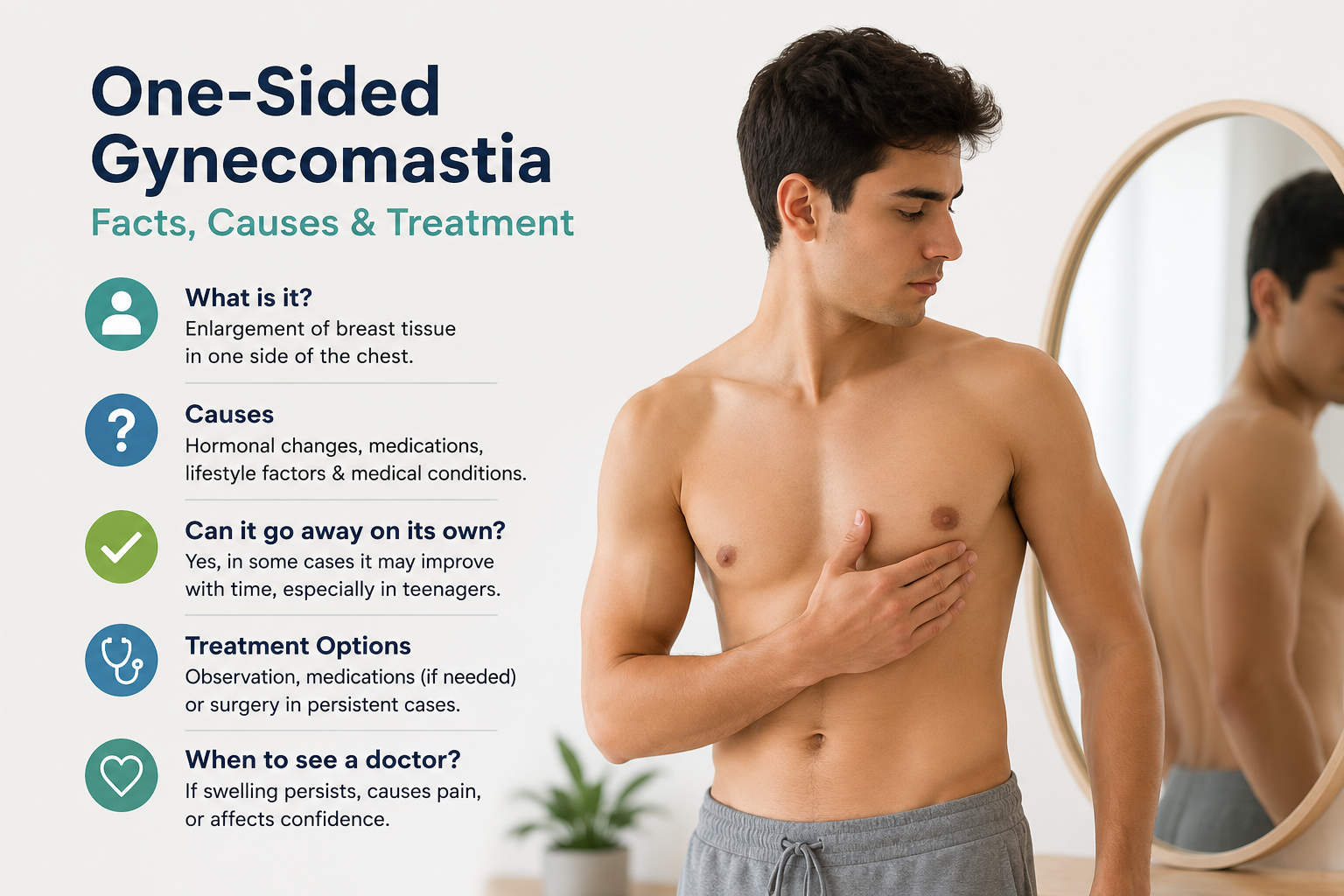
Yes, one-sided gynecomastia can sometimes go away without surgery, especially if it is caused by temporary hormonal changes during puberty. In many teenagers, the enlarged breast tissue gradually reduces over 6 months to 2 years as hormone levels stabilize. However, if the swelling persists, becomes painful, or continues to increase in size, a medical evaluation is important to identify the underlying cause and determine the most appropriate treatment.
Understanding One-Sided Gynecomastia
One-sided gynecomastia, also known as unilateral gynecomastia, is the enlargement of glandular breast tissue in only one breast. Although gynecomastia commonly affects both sides of the chest, it is not unusual for one side to be more noticeable than the other.
This condition is different from excess chest fat (sometimes called pseudogynecomastia). True gynecomastia involves the growth of glandular tissue and is often linked to hormonal changes or certain medical conditions.
What Causes One-Sided Gynecomastia?
Several factors can contribute to the development of one-sided gynecomastia, including:
- Hormonal changes during puberty
- Natural hormonal changes with aging
- Certain prescription medications
- Anabolic steroid use
- Thyroid disorders
- Liver or kidney disease
- Low testosterone levels
- Obesity combined with glandular tissue enlargement
- Rare medical conditions affecting the breast
Because breast enlargement on one side may occasionally have causes other than gynecomastia, it should always be evaluated by a qualified healthcare professional.
Can One-Sided Gynecomastia Go Away on Its Own?
In many adolescents, the answer is yes.
Puberty-related gynecomastia often improves naturally as hormone levels return to normal. During this period, doctors may recommend observation rather than immediate treatment, especially if the enlargement is mild and not causing significant discomfort.
However, spontaneous improvement becomes less likely if:
- The breast enlargement has been present for more than one to two years.
- The tissue feels firm and well established.
- The breast continues to enlarge over time.
- Pain or tenderness persists.
- The condition causes emotional distress or affects daily life.
Adults are generally less likely than teenagers to experience complete resolution without treatment, particularly if glandular tissue has been present for a long time.
Are There Non-Surgical Treatment Options?
Treatment depends on the underlying cause.
In some cases, your doctor may recommend:
- Regular observation and follow-up
- Treating an underlying hormonal or medical condition
- Reviewing medications that may contribute to breast enlargement
- Weight management if excess body fat is also present
It is important to understand that while exercise and weight loss can reduce overall body fat, they usually do not eliminate enlarged glandular breast tissue.
When Is Surgery Recommended?
Surgery may be considered when:
- The enlargement does not improve after an appropriate observation period.
- Pain or tenderness continues despite conservative management.
- The enlarged breast affects self-confidence or quality of life.
- The condition interferes with physical activities.
- Medical treatment is unlikely to provide significant improvement.
The decision to proceed with surgery should always be based on a thorough medical evaluation and a discussion of the expected benefits and possible risks.
How Is One-Sided Gynecomastia Diagnosed?
Diagnosis begins with a detailed medical history and physical examination.
Depending on your symptoms, your doctor may also recommend:
- Blood tests to evaluate hormone levels
- Ultrasound or mammography in selected cases
- Additional imaging or investigations if another underlying condition is suspected
A proper diagnosis helps distinguish gynecomastia from other conditions that may require different treatment.
Why Experience Matters in Treating Gynecomastia
Not every patient with one-sided gynecomastia requires surgery. The most important step is identifying the underlying cause before deciding on treatment.
According to Dr. Ashutosh Shah, who has more than 22 years of clinical experience, every patient should receive a detailed evaluation before any treatment recommendation is made. Factors such as age, medical history, hormonal status, duration of symptoms, and physical examination findings all play an important role in choosing the most appropriate management plan.
At Elegance Clinic, treatment decisions are based on clinical evidence and each patient's individual needs. Patients are encouraged to understand all available treatment options so they can make informed decisions about their care.
When Should You See a Doctor?
You should seek medical evaluation if:
- Only one breast continues to enlarge.
- The swelling lasts longer than one year.
- You experience persistent pain or tenderness.
- A hard lump develops.
- There is nipple discharge or skin changes.
- The breast enlargement increases rapidly.
Early assessment helps identify the underlying cause and allows treatment to begin if necessary.
Conclusion
One-sided gynecomastia can sometimes resolve without surgery, particularly in adolescents experiencing temporary hormonal changes. However, persistent breast enlargement should not be ignored, as proper evaluation is essential to determine the underlying cause and the most suitable treatment.
If you're concerned about one-sided gynecomastia or would like to understand your treatment options, scheduling a consultation can provide clarity. Dr. Ashutosh Shah at Elegance Clinic offers comprehensive evaluations and personalized treatment recommendations based on each patient's individual condition.