
Unequal Chest Swelling in Males Normal? Causes and Treatment
Chest appearance plays an important role in a man's confidence and body image. Therefore, when one side of the chest appears larger, swollen, or more prominent than the other, it can cause concern and raise many questions. One of the most common questions men ask is: "Is unequal chest swelling in males normal?"
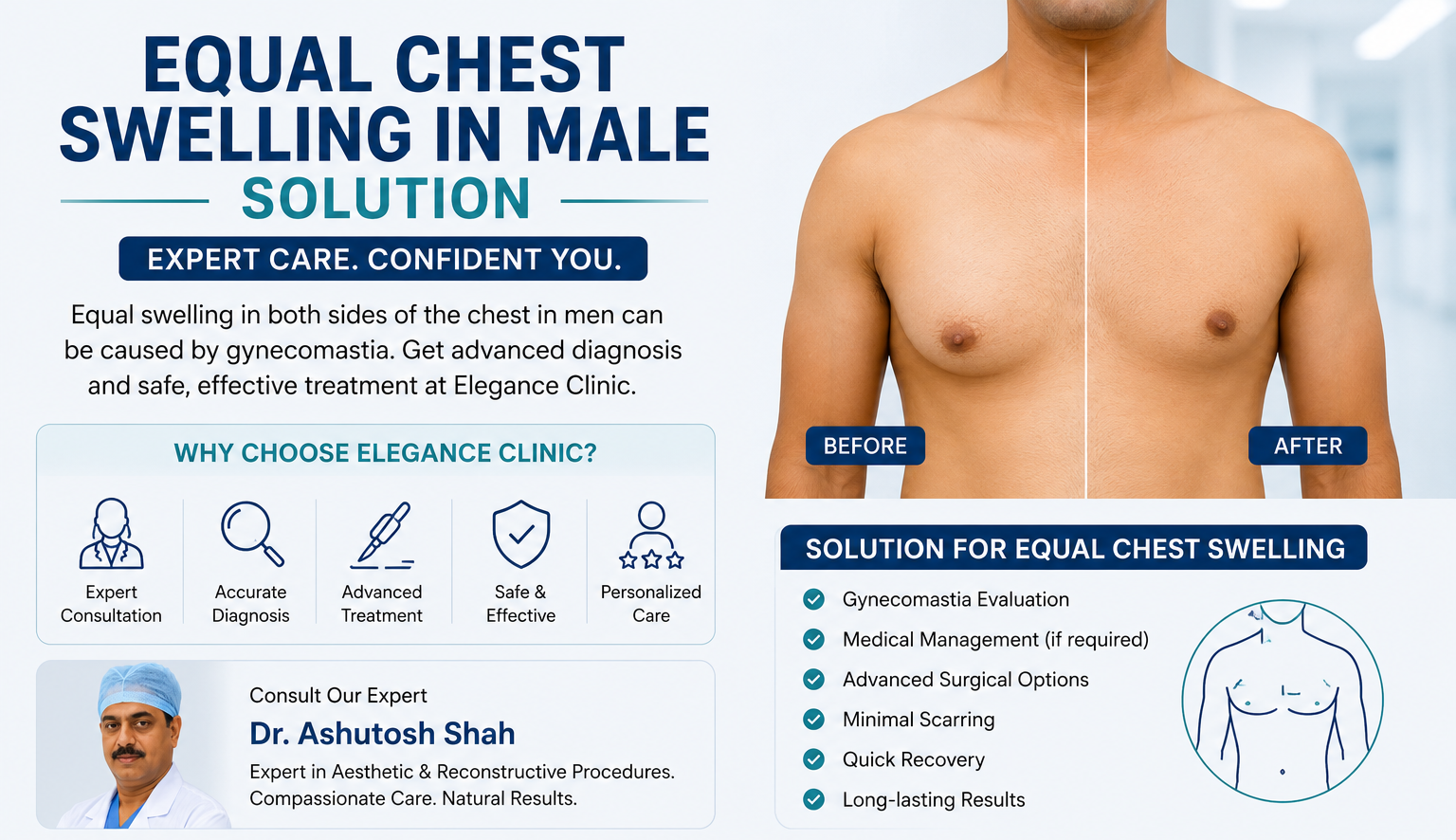
The answer depends on the underlying cause. While mild chest asymmetry can be completely normal, significant swelling on one or both sides of the chest may indicate an underlying condition that requires medical evaluation. In some cases, the swelling may be related to Gynecomastia, a condition characterized by the enlargement of male breast tissue.
At Elegance Clinic, Dr. Ashutosh Shah evaluates the cause of chest swelling and recommends the most appropriate treatment based on the patient's condition.
What Is Unequal Chest Swelling in Males?
Unequal chest swelling refers to a condition where one side of the chest appears larger, fuller, or more swollen than the other. The difference may be subtle in some individuals, while in others it can be clearly noticeable.
Although minor differences between the left and right sides of the body are common, significant chest asymmetry should not be ignored, especially if it develops suddenly or is accompanied by pain or discomfort.
Is Unequal Chest Swelling Normal?
In some cases, yes.
A slight difference in chest shape or muscle size can be completely normal and may result from:
- Natural body asymmetry
- Uneven muscle development
- Dominant hand usage
- Genetic factors
However, if the swelling becomes noticeable, increases over time, or causes discomfort, medical evaluation is recommended.
Common Causes of Unequal Chest Swelling in Males
Several conditions can lead to chest asymmetry or swelling.
1. Gynecomastia
One of the most common causes is Gynecomastia, a condition in which glandular breast tissue enlarges in males due to hormonal imbalances.
Gynecomastia may affect:
- One side of the chest (Unilateral Gynecomastia)
- Both sides of the chest (Bilateral Gynecomastia)
In many cases, one side may appear larger than the other even when both sides are affected.
2. Bilateral Gynecomastia
Bilateral Gynecomastia occurs when enlarged breast tissue develops on both sides of the chest.
Although both sides are involved, the enlargement is not always symmetrical. Consequently, one side may appear larger or more swollen than the other.
This condition can affect teenagers, young adults, and older men.
3. Hormonal Imbalance
Hormones play a crucial role in breast tissue development.
An imbalance between:
- Estrogen
- Testosterone
can stimulate breast tissue growth and lead to chest enlargement.
4. Weight Gain and Excess Fat
Sometimes chest enlargement is caused by fat accumulation rather than glandular tissue.
This condition is often referred to as pseudo-gynecomastia.
As a result, one side of the chest may appear larger due to uneven fat distribution.
5. Medications
Certain medications can contribute to male breast enlargement, including:
- Steroids
- Hormonal medications
- Some antidepressants
- Certain heart medications
Therefore, a detailed medical history is important during evaluation.
6. Medical Conditions
Certain health conditions may also contribute to chest swelling, such as:
- Liver disorders
- Kidney disease
- Thyroid disorders
- Testicular conditions
Symptoms Associated with Unequal Chest Swelling
Symptoms may vary depending on the underlying cause.
Common symptoms include:
- One side of the chest appears larger
- Swelling beneath the nipple
- Tenderness or pain
- Firm tissue under the areola
- Chest asymmetry
- Self-consciousness about appearance
- Discomfort while wearing fitted clothing
Additionally, some patients experience emotional distress and reduced self-confidence.
When Should You See a Doctor?
Medical evaluation is recommended if:
- Swelling develops suddenly
- The size difference continues to increase
- Pain or tenderness is present
- A lump is felt beneath the nipple
- Chest asymmetry affects confidence
- Symptoms persist for several months
Early diagnosis often leads to better treatment outcomes.
How Is Unequal Chest Swelling Diagnosed?
A thorough assessment helps determine the underlying cause.
The diagnostic process may include:
Medical History
The doctor reviews symptoms, medications, and medical conditions.
Physical Examination
Chest tissue is examined to identify glandular enlargement or fat accumulation.
Hormonal Evaluation
Blood tests may be recommended if a hormonal imbalance is suspected.
Imaging Tests
In selected cases, ultrasound or other imaging studies may be advised.
Treatment Options for Unequal Chest Swelling in Males
Treatment depends on the underlying cause and severity of the condition.
1. Observation and Monitoring
In adolescents, mild gynecomastia may resolve on its own over time.
Therefore, observation may be recommended initially.
2. Lifestyle Modifications
If excess fat contributes to chest enlargement, doctors may recommend:
- Weight management
- Regular exercise
- Healthy diet
- Strength training
These measures may improve chest appearance in some individuals.
3. Medical Management
When hormonal issues are identified, treatment may focus on correcting the underlying imbalance.
4. Gynecomastia Surgery
For persistent glandular enlargement, surgery may provide the most effective and long-lasting solution.
Gynecomastia surgery helps:
- Remove excess glandular tissue
- Improve chest contour
- Restore a more masculine chest appearance
- Enhance self-confidence
5. Bilateral Gynecomastia Treatment
When both sides of the chest are affected, Bilateral Gynecomastia Treatment may be recommended.
This procedure focuses on:
- Removing enlarged glandular tissue from both sides
- Creating a balanced chest contour
- Improving symmetry
- Enhancing overall appearance
As a result, patients often experience significant improvement in chest shape and confidence.
Benefits of Bilateral Gynecomastia Treatment
Patients may experience several advantages, including:
- Improved chest symmetry
- Flatter and firmer chest appearance
- Better body proportions
- Enhanced self-esteem
- Improved clothing fit
- Long-lasting results
Furthermore, many patients report increased confidence in social and professional settings.
Recovery After Bilateral Gynecomastia Treatment
Recovery varies from person to person.
However, most patients can expect:
- Mild swelling during the initial days
- Gradual improvement over several weeks
- Return to routine activities within a short period
- Continued improvement in chest contour as healing progresses
Following post-treatment instructions helps optimize results.
Why Choose Elegance Clinic?
At Elegance Clinic, patient care is focused on accurate diagnosis, personalized treatment planning, and achieving natural-looking results.
Dr. Ashutosh Shah carefully evaluates each patient's condition and recommends the most suitable treatment option, including advanced solutions for Gynecomastia and Bilateral Gynecomastia.
The goal is to help patients achieve improved chest contour, enhanced confidence, and long-term satisfaction.
Conclusion
While mild chest asymmetry can be normal, noticeable or persistent unequal chest swelling in males should not be ignored. Conditions such as Gynecomastia and Bilateral Gynecomastia are among the most common causes and may require professional evaluation and treatment.
If you are concerned about one side of your chest appearing larger than the other, consulting Dr. Ashutosh Shah at Elegance Clinic can help identify the cause and determine the most effective treatment plan. Early diagnosis and appropriate treatment can significantly improve both chest appearance and self-confidence.